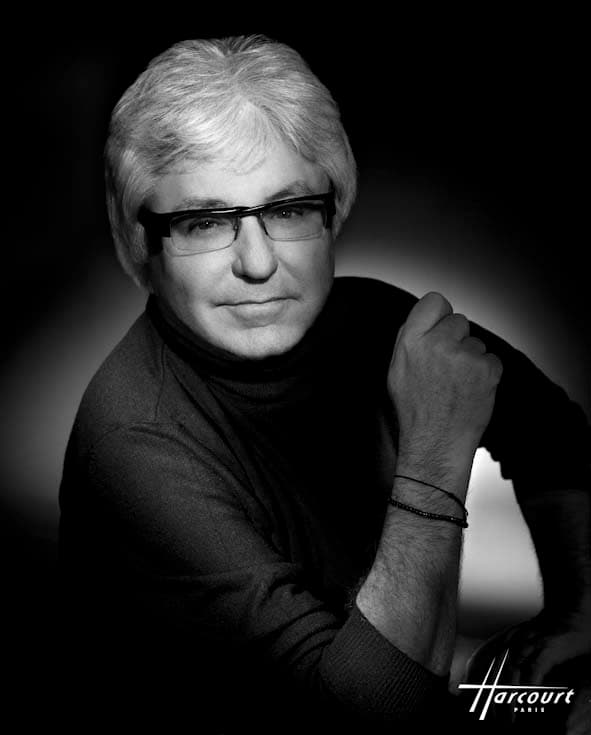
Cerrone
High-drama French disco with a heavy, driving kick drum and lush orchestral sweeps. It is the sound of a midnight dance floor that never wants the sun to rise.
High-drama French disco with a heavy, driving kick drum and lush orchestral sweeps. It is the sound of a midnight dance floor that never wants the sun to rise.
Cerrone is the architect of the epic, cinematic disco experience. His music feels like a high-budget 1970s film set in a futuristic nightclub, where every beat is a statement and every string arrangement is a tidal wave. It is unapologetically grand, merging the primal thud of a rock drummer's kick drum with the sophisticated sheen of European synthesizers and full orchestras.
What sets him apart is the sheer scale of his ambition. While his contemporaries were making three-minute radio hits, Cerrone was crafting side-long suites that told stories through rhythm and atmosphere. His signature 'four-on-the-floor' style is heavier and more aggressive than American soul-disco, leaning into a mechanical precision that paved the way for modern house and techno.
Start with 'Supernature' to hear the perfect marriage of sci-fi synths and disco grooves. If you want the pure, erotic essence of his early work, the title track of 'Love in C Minor' is an essential seventeen-minute journey that defined the Eurodisco sound.
Marc Cerrone (French pronunciation: [maʁk sɛʁɔn]; born 24 May 1952) is a French disco drummer, composer, record producer and creator of concerts. Cerrone is a producer of 1970s and 1980s disco songs. He has sold over 30 million albums worldwide, including over four million copies in France, and eight million copies of Supernature. The single "Love in C Minor" (1976) reached No. 3 and was in the charts for two months, selling three million copies. With "Supernature" (1977), Cerrone merged symphonic orchestration with synthesisers. At the 1978 Billboard Disco Forum, Cerrone received six awards, including Disco Artist of the Year. In addition to Love in C Minor, Cerrone's Paradise and Supernature, Marc Cerrone enjoyed success in Europe with albums such as Cerrone IV: The Golden Touch (1978), Where Are You Now (1983), The Collector (1985), Human Nature (1994) and more recently with the dance albums Hysteria (2002) and Celebrate (2007). Cerrone is also known for live performances. In 1991, he played on the show Harmony to celebrate the launch of Japan's first high-definition TV satellite. The rock opera was played to over 800,000 spectators at Tokyo harbour. Cerrone adapted "Harmony" for the theatre. In 1992, the musical Dreamtime, which was based on an original story by Cerrone, ran for 140 shows on Broadway at New York's Ed Sullivan Theater. Cerrone has recorded and performed with Nile Rodgers, Toto, Laura Branigan, Jocelyn Brown, La Toya Jackson and Axelle Red. His music has been sampled by artists such as the Avalanches, Bob Sinclar, the Beastie Boys and Run-DMC.
Shares disco, funk (subgenres); maximalist, orchestral arrangement, analog warmth (production style)
Shares disco, funk (subgenres); euphoric, confident, energetic (moods)
Shares disco, funk (subgenres); euphoric, confident, energetic (moods)
Shares disco, funk (subgenres); studio polished, analog warmth, maximalist (production style)
Shares disco, funk (subgenres); studio polished, orchestral arrangement, analog warmth (production style)
Shares disco, funk (subgenres); orchestral arrangement, analog warmth, maximalist (production style)
Shares disco, funk (subgenres); euphoric, confident, energetic (moods)
Shares disco (subgenres); euphoric, confident, energetic (moods)
Shares disco, funk (subgenres); euphoric, confident, energetic (moods)
Shares disco, funk (subgenres); maximalist, orchestral arrangement, analog warmth (production style)
Shares disco, funk, euphoric, stargazing (subgenre)
Shares disco, funk, euphoric, orchestral arrangement (subgenre)
Cassette uses generative AI to enrich its catalog. How we use AI →


