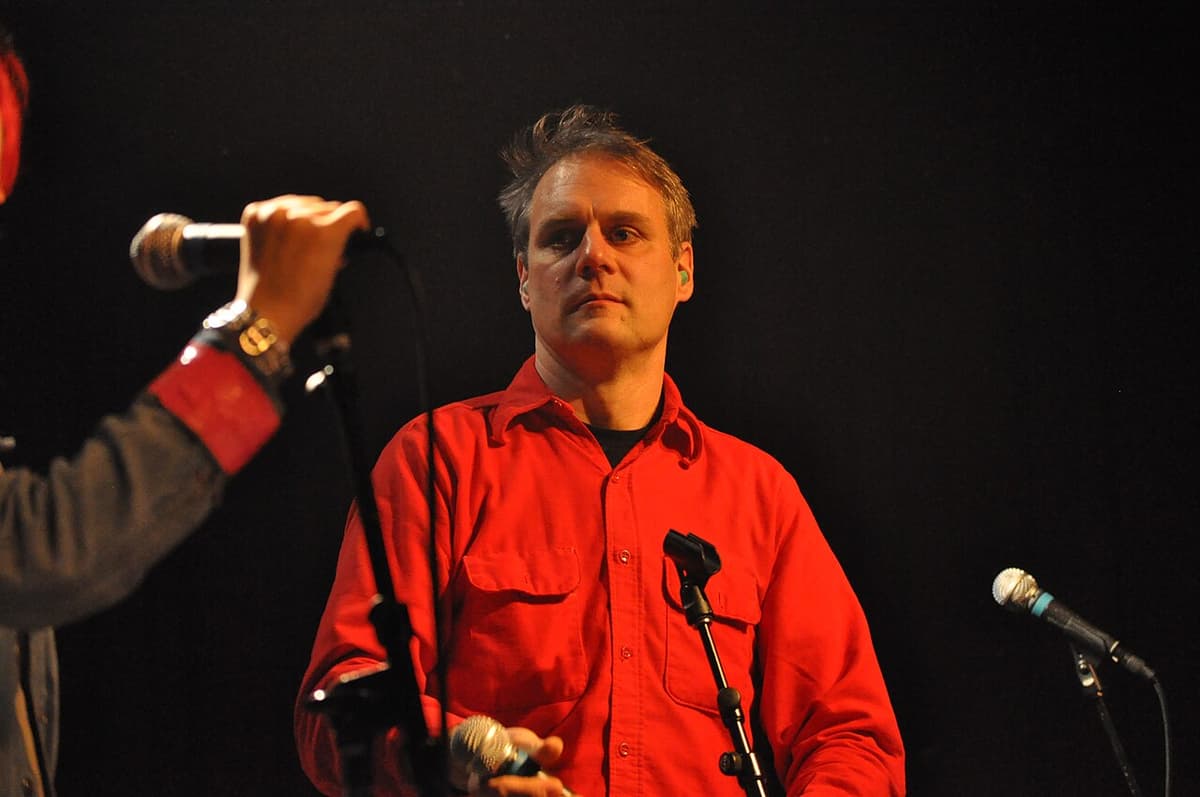
The Halo Benders
Dual-vocal indie rock where deep baritone and high tenor collide in messy, beautiful counterpoint. Lo-fi charm with a restless, creative heart.
Dual-vocal indie rock where deep baritone and high tenor collide in messy, beautiful counterpoint. Lo-fi charm with a restless, creative heart.
The Halo Benders sound like a brilliant accident occurring in real time. It is the sonic equivalent of two different conversations happening at once that somehow resolve into a single, profound truth. The music is anchored by the deep, resonant, and often deadpan baritone of Calvin Johnson, which provides a steady earthiness to the soaring, melodic, and slightly frantic tenor of Doug Martsch. Underneath this vocal tug-of-war is a bed of classic Pacific Northwest indie rock: jangly guitars, driving but unpolished rhythms, and a sense of effortless cool.
What truly distinguishes the band is their commitment to independence. Not just as a business model, but as a compositional technique. Johnson and Martsch famously wrote their lyrics and melodies separately, often singing entirely different songs over the same instrumental track. This creates a unique tension where the listener's brain has to choose which thread to follow, only to be rewarded when the two voices occasionally lock into a surprising, jagged harmony. It is lo-fi music that feels expansive rather than small.
Start with 'God Don't Make No Junk' to hear the rawest version of this experiment. It captures the mid-90s Olympia scene perfectly, blending the primitive charm of Beat Happening with the burgeoning guitar wizardry that Martsch would later perfect in Built to Spill. It is essential listening for anyone who loves music that prioritizes personality and spontaneity over studio perfection.
The Halo Benders was a band formed in 1994 as a side project by Calvin Johnson of Beat Happening and Doug Martsch of Built to Spill. They released their first album, God Don't Make No Junk, in 1994. They followed up in 1996 with Don't Tell Me Now and in 1998 with The Rebels Not In. Following a hiatus through the early 2000s, the Halo Benders reformed in March 2007 for a pair of shows at the Visual Arts Collective in Boise, Idaho. The band featured Doug Martsch, Ralf Youtz, Calvin Johnson, Brett Netson, and Stephen Gere. November 2010, a reformed version with Doug, Calvin, Ralf Youtz and Wayne Flower appeared for a benefit for Friends of Mia, a child who had started an organization to help children with cancer and their families before herself passing away of cancer, at the Capitol Theater in Olympia, WA. All three of the band's albums were released on Johnson's Olympia record label, K Records.
Shares indie rock, garage rock, indie pop (subgenres); lo fi, analog warmth, bedroom production (production style)
Shares indie rock, garage rock, indie pop (subgenres); lo fi, analog warmth, bedroom production (production style)
Shares lo fi, analog warmth, bedroom production (production style); playful, wistful, restless (moods)
Shares indie rock, garage rock, indie pop (subgenres); playful, wistful, restless (moods)
Shares lo fi, analog warmth, bedroom production (production style); indie rock, indie pop (subgenres)
Shares indie rock, garage rock, indie pop (subgenres); lo fi, analog warmth, bedroom production (production style)
Shares indie rock, garage rock, indie pop (subgenres); lo fi, analog warmth, bedroom production (production style)
Shares indie rock, garage rock, indie pop (subgenres); lo fi, analog warmth, bedroom production (production style)
Shares indie rock, garage rock, indie pop (subgenres); lo fi, analog warmth, bedroom production (production style)
Shares indie rock, garage rock, indie pop (subgenres); lo fi, analog warmth, bedroom production (production style)
Shares lo-fi, garage rock, stripped back, indie rock (signature)
Shares garage rock, stripped back, indie rock, bedroom production (subgenre)
Cassette uses generative AI to enrich its catalog. How we use AI →


