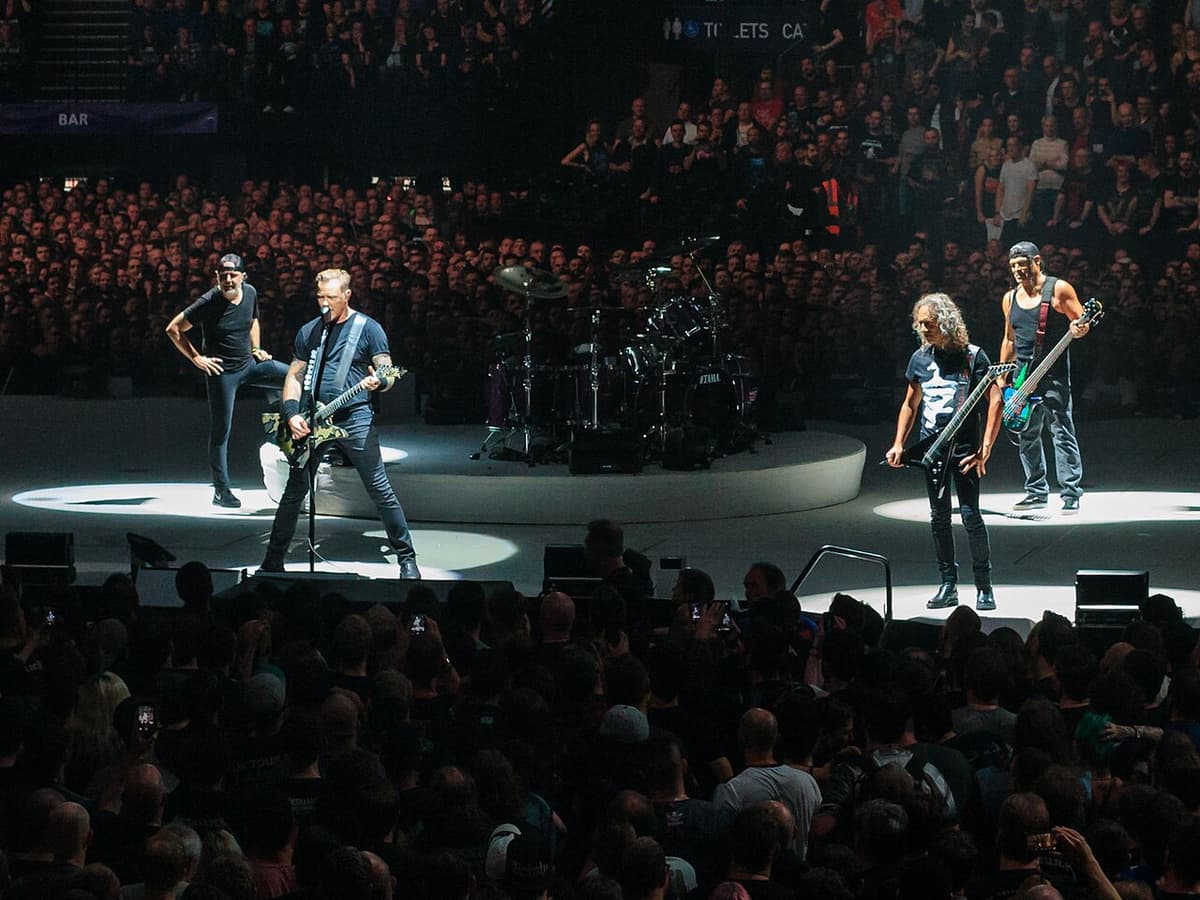
Metallica
Aggressive, precision-engineered riffs and thunderous rhythms. The definitive sound of heavy metal evolution, from thrash speed to stadium-sized anthems.
Aggressive, precision-engineered riffs and thunderous rhythms. The definitive sound of heavy metal evolution, from thrash speed to stadium-sized anthems.
Formed in Los Angeles in 1981 by vocalist/guitarist James Hetfield and drummer Lars Ulrich, Metallica became the defining architects of thrash metal.
Anchored by their fast tempos, complex arrangements, and aggressive musicianship, the band relocated to San Francisco and established themselves alongside Slayer, Megadeth, and Anthrax. While their early catalog codified the underground metal landscape, their self-titled 1991 album shifted them into a massive, mainstream rock force. Through decades of lineup changes, legal battles, and stylistic shifts, the core songwriting partnership of Hetfield and Ulrich remains the band's driving engine.
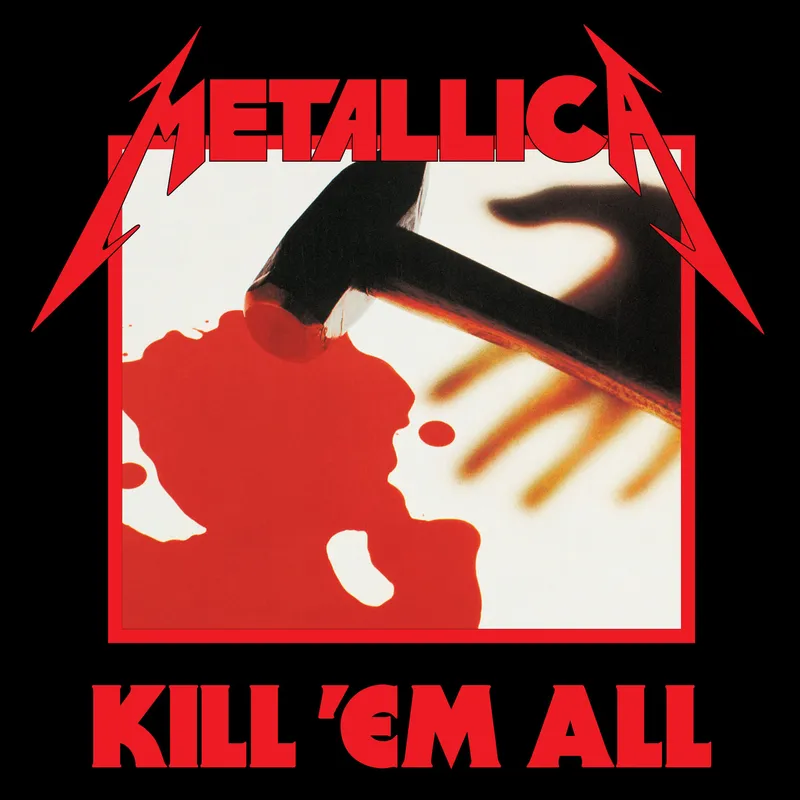
A frantic, caffeinated energy vibrates through this debut, stripping away the polished artifice of early-80s heavy metal in favor of sheer velocity. Recorded on a shoestring budget in upstate New York, the album pairs a thin, biting guitar mix with a relentless triplet gallop that feels closer to raw hardcore punk than traditional arena rock. The vocals possess a high-pitched, snarling grit, delivering predatory, down-picked riffs with a defiant basement-show intensity.

A cavernous, icy scale defines this sophomore effort, recorded in Denmark with a signature European reverb that transforms aggressive speed into something architectural and permanent. Classical music theory enters the songwriting, introducing complex harmonies, acoustic guitar passages, and extended instrumental sections that expand the boundaries of the genre without sacrificing its raw bite. The lyrical focus shifts toward execution, nuclear war, and mental isolation, delivered with a commanding, gravelly vocal roar.

A dry, clinical precision replaces raw chaos on this third outing, transforming aggressive speed into a meticulously calculated architecture of sound. The guitars are mixed with a biting clarity that emphasizes relentless, downpicked rhythmic engines, while complex time signatures and multi-part structures elevate the compositions into something symphonic. A deep sense of atmosphere looms over the record, trading simple aggression for a claustrophobic exploration of institutional isolation and unseen, manipulative forces.

The one where the riffs are genius but you can't hear the bass.
Nine tracks of clinical, complex thrash metal. Defined by its dry, bass-light production and sprawling, mathematical song structures that tackle systemic rot.
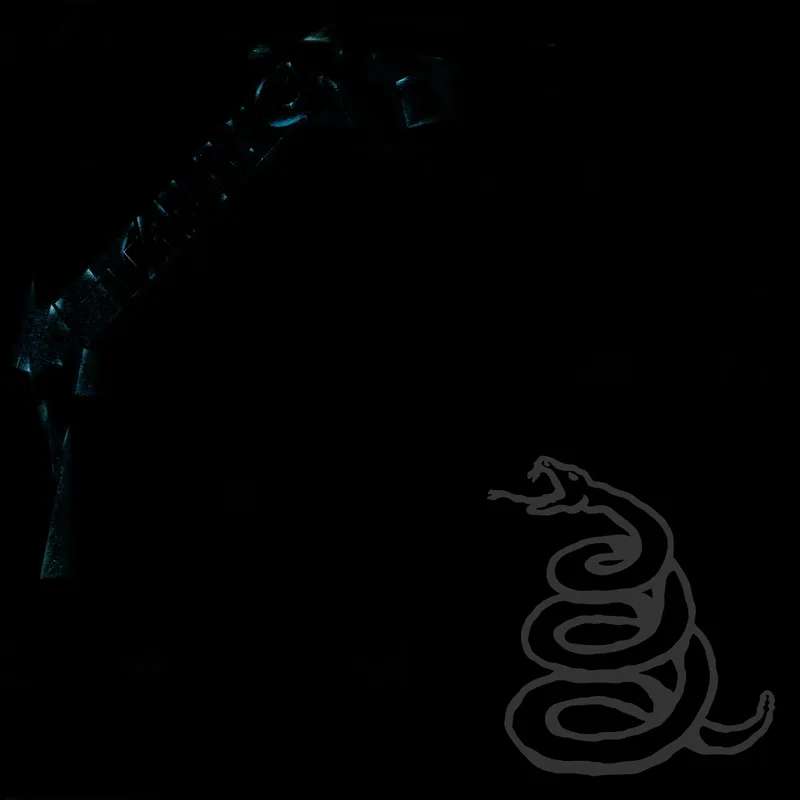
A massive, slow-rolling gravity replaces the frantic speed of the past, trading jagged edges for an impenetrable, high-gloss armor. By stepping away from hyper-complex arrangements, the focus shifts to the resonance of single, perfectly struck chords and the sheer physical weight of the rhythm section. The production creates a vast, dark interior space where every snare hit lands like a controlled explosion and the guitars are carved from granite. This is a deliberate pivot toward a brooding, psychological intensity, proving that a slower tempo can feel far more intimidating than a high-velocity sprint.

It's Metallica's 'desert rock' phase where they traded the speed for a heavy, bluesy groove.
A pivot toward blues-infused hard rock and southern grit. Gone is the thrash speed, replaced by mid-tempo grooves, warm analog tones, and vulnerable storytelling.

It's the one where they traded the speed for a heavy southern swagger and a hurdy-gurdy.
A high-octane collision of southern-fried hard rock and introspective blues. Gritty, groove-heavy, and far removed from the band's thrash metal roots.

It's the sound of the world's biggest metal band having a public breakdown and recording every second of it.
A polarizing, raw document of a band in crisis. Defined by its metallic snare tone and lack of solos, it is seventy minutes of unfiltered emotional purging.
It's the sound of a multi-million dollar band having a mid-life crisis in a garage, and it's glorious chaos.
Abrasive, unpolished, and intensely raw. This record trades stadium precision for a metallic, garage-rehearsal sound and lyrics that feel like a therapy session.

It's the record where they finally remembered how to play fast and actually use their guitar solos again.
A relentless return to high-speed thrash roots. Dense, hyper-compressed riffs meet sprawling eight-minute compositions and blistering wah-soaked solos.

It's the record where they finally remembered how to be the fastest band on the planet again.
A massive double-disc return to form. Precision-engineered thrash riffs meet stadium-sized grooves with a bone-shaking, modern production crunch.
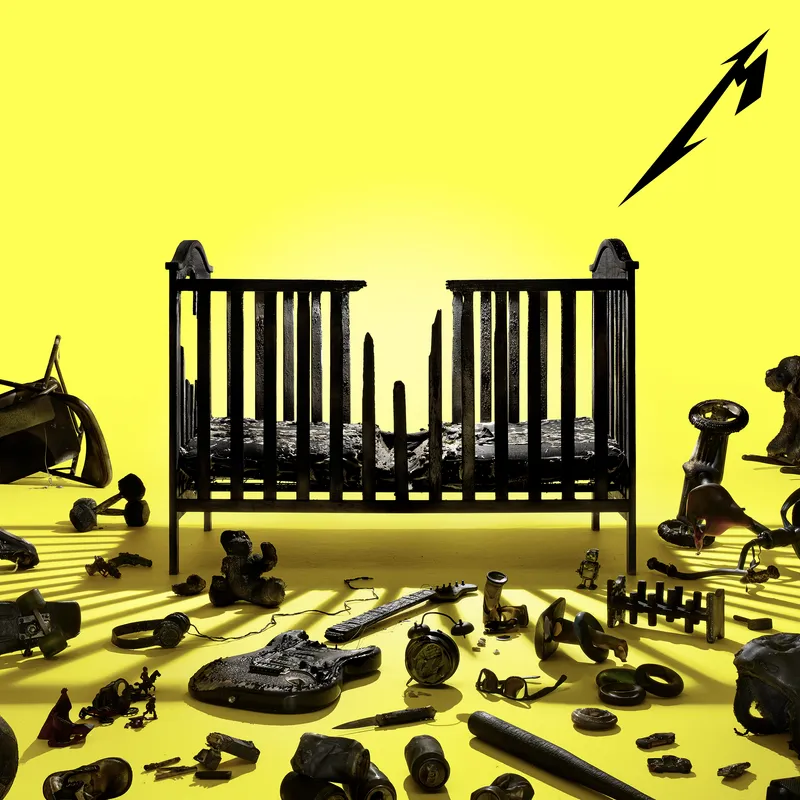
It's seventy-seven minutes of the best downpicking in the business and James Hetfield finally talking about his demons.
Seventy-seven minutes of titanium-plated modern metal. A dense, riff-heavy exploration of childhood trauma and the weight of the first eighteen years of life.
The band remains an active, stadium-filling institution, operating with a weathered endurance that keeps them firmly anchored at the center of heavy music.
Their modern output is a massive, loud affair, balancing the sheer weight of their mid-tempo era with a mature, reflective outlook on their own history. Rather than chasing the frantic speed of their youth, they have settled into a steady, industrial-grade momentum that honors their legacy while continuing to tour and record on their own terms.
Shares thrash metal, progressive metal, heavy metal, electric guitar (signature)
Shares thrash metal, progressive metal, heavy metal, electric guitar (signature)
Shares thrash metal, progressive metal, heavy metal, electric guitar (signature)
Shares thrash metal, heavy metal, electric guitar, hard rock (signature)
Shares thrash metal, heavy metal, alternative metal, focused_work (signature)
Shares thrash metal, progressive metal, heavy metal, alternative metal (subgenre)
Cassette uses generative AI to enrich its catalog. How we use AI →