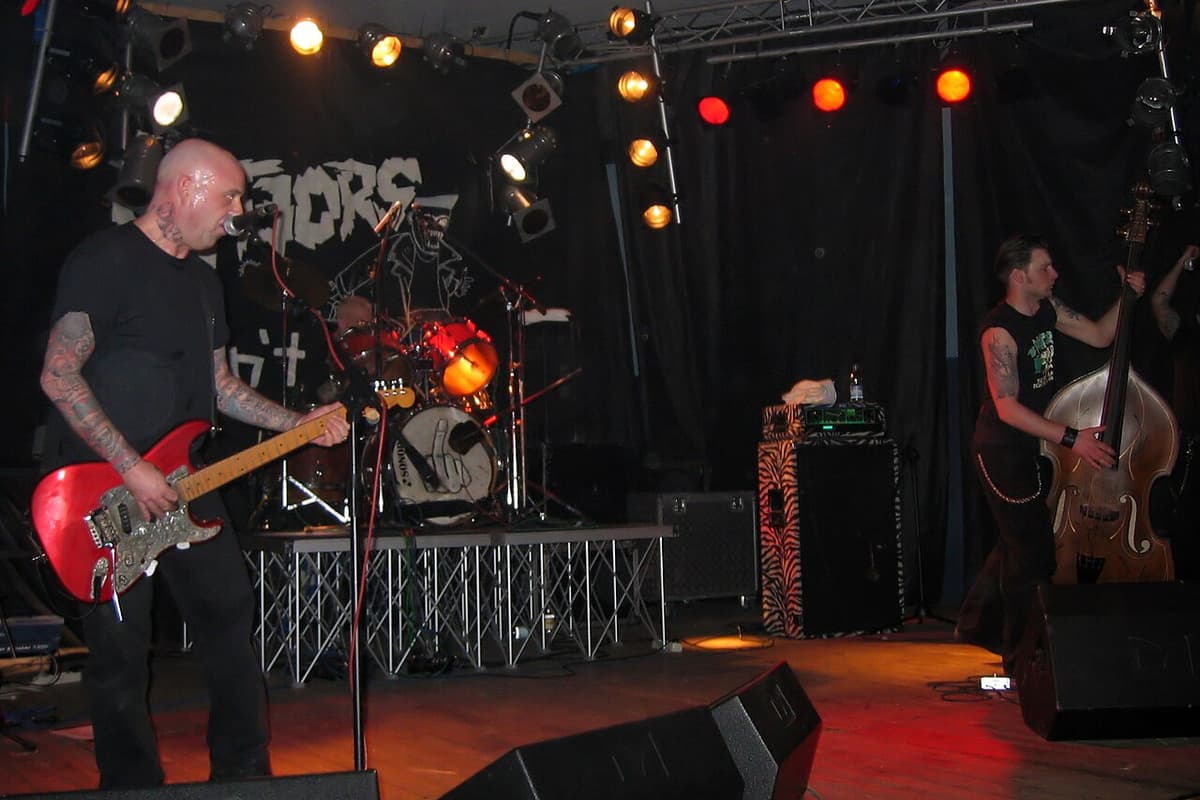
The Meteors
Aggressive rockabilly speed meets horror-movie camp. Slapped upright bass and gritty punk energy for the late-night wrecking crew.
Aggressive rockabilly speed meets horror-movie camp. Slapped upright bass and gritty punk energy for the late-night wrecking crew.
The Meteors sound like a 1950s greaser gang that rose from the grave with a collection of punk records and a serious grudge. It is a high-velocity collision of vintage rock and roll swing and the jagged, serrated edge of 1980s London punk. The music is defined by the percussive, frantic slap of the upright bass and guitars that oscillate between clean surf-rock twang and distorted garage-rock filth.
What truly sets them apart is their uncompromising commitment to the 'Psychobilly' identity they helped forge. While their peers might lean into the kitsch of the genre, The Meteors maintain a genuine sense of menace and speed. P. Paul Fenech’s vocals are snarls of horror-obsessed poetry, delivered with a frantic urgency that makes the supernatural themes feel like a lived-in reality rather than a costume.
Start with 'In Heaven' to hear the foundational blueprint of the genre. It captures the raw, unpolished energy of a band inventing a new world out of the scraps of the old one. From there, 'Corpse Grinder' offers a more refined but no less aggressive look at their mid-career peak, perfect for anyone who wants their rock and roll with a side of graveyard dirt.
The Meteors are an English psychobilly band formed in 1980. Originally from London, England, they are one of the pioneers of the psychobilly subgenre — which fuses punk rock with rockabilly — its distinctive sound and style. "Starting in the neo-rockabilly scene, the Meteors were initially shunned for being too spooky and mean. Excuses for exclusion from rockabilly concerts varied from the band having too extreme of a sound to their drummer having green hair." The Meteors blended elements of punk rock, 1960s garage band surf music, rockabilly, and horror film themes in their music and are thought to be one of the first bands to use the label 'Psychobilly' to define a genre and musical style, though the term is used as a lyrical motif as part of the narrative in the Johnny Cash and The Tennessee Three song, "One Piece at a Time".
Shares rebellious, aggressive, playful (moods); punk rock, rockabilly (subgenres)
Shares rockabilly, punk rock, garage rock (subgenres); dive bar, basement show, urban night (atmosphere)
Shares rockabilly, punk rock, garage rock (subgenres); lo fi, analog warmth, reverb heavy (production style)
Shares rockabilly, punk rock, surf rock (subgenres); rebellious, energetic, aggressive (moods)
Shares punk rock, rockabilly (subgenres); raspy, gravelly, intense (vocal style)
Shares rockabilly, punk rock, garage rock (subgenres); lo fi, analog warmth (production style)
Shares rockabilly, punk rock, surf rock (subgenres); rebellious, aggressive, playful (moods)
Shares rockabilly, punk rock, garage rock (subgenres); raspy, gravelly, intense (vocal style)
Shares rockabilly, garage rock, punk rock (subgenres); lo fi, analog warmth (production style)
Shares rockabilly, punk rock, surf rock (subgenres); rebellious, playful, energetic (moods)
Shares slapped upright bass percussion, psychobilly, upright bass, rockabilly (detail)
Shares psychobilly, upright bass, rockabilly, eerie (signature)
Cassette uses generative AI to enrich its catalog. How we use AI →


