Rose Rose
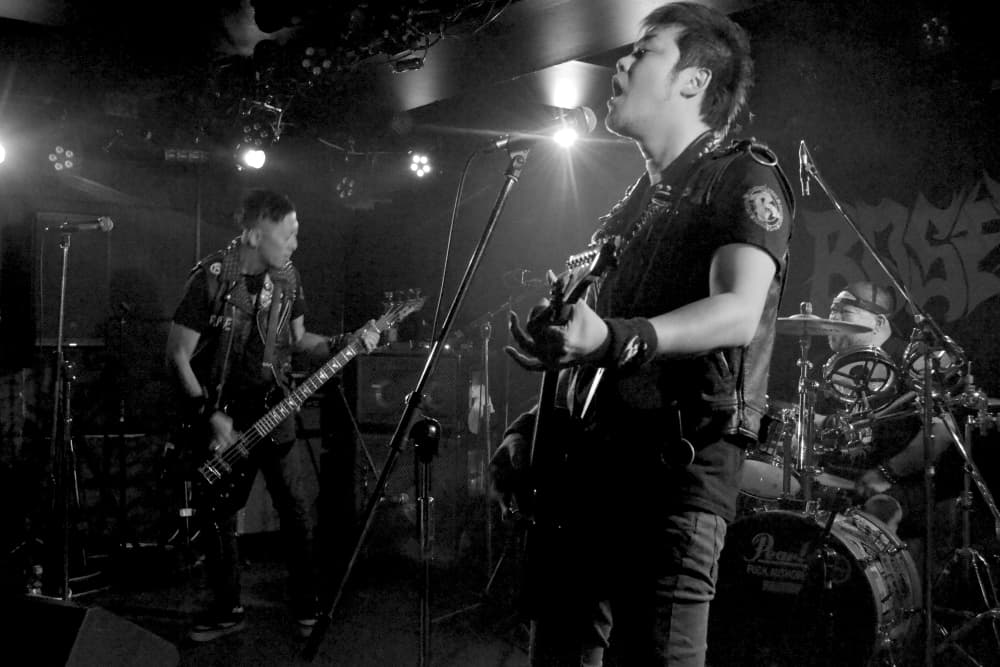
High-velocity Japanese crossover that slams hardcore punk urgency into thrash metal precision. Raw, relentless, and built for the pit.
High-velocity Japanese crossover that slams hardcore punk urgency into thrash metal precision. Raw, relentless, and built for the pit.
Rose Rose sounds like a high-speed collision between a skate park and a scrap metal yard. Their music is defined by a breathless velocity that refuses to settle into a single lane, constantly oscillating between the rhythmic gallop of 80s thrash and the chaotic, jagged edges of hardcore punk. The guitars are thin and sharp, cutting through the mix like a buzzsaw, while the drumming provides a frantic, d-beat foundation that occasionally explodes into grindcore-adjacent blast beats.
What makes them truly distinctive is their 'skate-thrash' DNA, a specific sub-strain of crossover that prioritizes momentum and kinetic energy over technical polish. Unlike their Western contemporaries who often leaned into more structured heavy metal, Rose Rose maintains a distinctly Japanese sense of 'noise' and raw intensity. The vocals are a manic, high-pitched bark that feels less like singing and more like a desperate attempt to keep pace with the instrumental onslaught.
Start with 'Mosh of Ass' to hear the band at their most foundational and feral. It captures the mid-80s transition where punk was becoming something much heavier and faster. If you want to hear how they've refined that chaos over forty years, the 2023 release 'Eye to Eye' proves they haven't lost a single step of their original speed.
Shares crossover, aggressive, running, thrash metal (signature)
Shares crossover, aggressive, thrash metal, hardcore punk (signature)
Shares crossover, thrash metal, death metal, hardcore punk (signature)
Shares crossover, aggressive, thrash metal, hardcore punk (signature)
Shares crossover, aggressive, thrash metal, hardcore punk (signature)
Shares crossover, aggressive, thrash metal, hardcore punk (signature)
Shares crossover, aggressive, thrash metal, death metal (signature)
Shares thrash metal, hardcore punk, urgent, nasal (subgenre)
Cassette uses generative AI to enrich its catalog. How we use AI →