Pankow
Gritty, defiant East Berlin rock that pairs the jagged energy of post-punk with sharp social commentary. Restless music for navigating changing landscapes.
Gritty, defiant East Berlin rock that pairs the jagged energy of post-punk with sharp social commentary. Restless music for navigating changing landscapes.
Pankow sounds like the friction between a rigid system and a restless spirit. Their music is built on a foundation of muscular, blues-inflected rock that frequently veers into the sharp, angular territory of post-punk. There is a tangible sense of urgency in the rhythm section, often topped by guitars that alternate between atmospheric washes and percussive, staccato stabs. It is music that feels lived-in, capturing the gray-scale aesthetic of 1980s Berlin while maintaining a fiery, internal heat.
What truly sets them apart is the vocal delivery of André Herzberg, which carries a theatrical, almost cabaret-like intensity. He does not just sing; he narrates, pleads, and confronts, turning lyrics about boredom and state-imposed stagnation into high-stakes drama. The production avoids the glossy sheen of Western 80s pop, opting instead for a dry, direct sound that emphasizes the band's tight interplay and the weight of their words. It is sophisticated art-rock that never loses its street-level grit.
Newcomers should start with 'Aufruhr in den Augen', their 1988 masterpiece. It captures the band at their creative and political peak, offering a perfect entry point into their world of subversive melodies and rhythmic tension. It is the sound of a band realizing the world is about to change and documenting the pressure before the break.
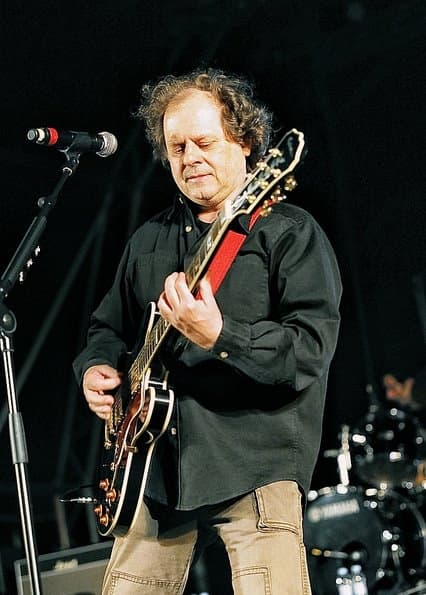
Pankow are a German rock band, founded in East Berlin in 1981. Their name came from the Berlin district of Pankow, which was once home to most of the officials of the East German government. The band's original lineup consisted of Jürgen Ehle, André Herzberg, Rainer Kirchmann, Jäcki Reznicek and Frank Hille. Other members were Stefan Dohanetz, Ingo York and Jens Jensen. As their lyrics often contained criticism of the East German regime, they frequently encountered problems releasing their music. "Like many writers, they were among the established names of aesthetic subversion," the journalist Christoph Dieckmann wrote in a 1999 article published in Rolling Stone. With the fall of the Iron Curtain and the associated open access to media outside Germany Pankow also moved briefly into the focus of the Anglo-American journalism. The U.S. historian Timothy W. Ryback, known for his 1990 published book Rock around the bloc: a history of rock music in Eastern Europe and the Soviet Union, characterized Pankow as one of two most prestigious and most professional groups of East Berlin's rock music scene, writing that they "originally showed the influence of the Rolling Stones, but has developed into a dynamic band that combines the energy of the Clash with the innovation of the Talking Heads." In the song "Langeweile" ("Boredom"), the criticism was expressed in the words "Seen the same country too long, heard the same language too often, waited too long, hoped too much, bowed down to the old men too often". The song "Paule Panke" was banned by the state-run Amiga record label, while "Langeweile" was banned from radio airplay; however, the band performed both at every concert. Pankow has occasionally been compared with the Rolling Stones and have implemented many musical styles and theatrical projects in their history. On November 3, 2011, Pankow commenced a 30-year anniversary tour.
Shares alternative rock, post-punk, new wave (subgenres); analog warmth, live recording, studio polished (production style)
Shares post-punk, new wave, alternative rock (subgenres); urban night, basement show, fog (atmosphere)
Shares alternative rock, post-punk, art rock (subgenres); analog warmth, live recording, studio polished (production style)
Shares defiant, restless, brooding (moods); live recording, analog warmth, studio polished (production style)
Shares defiant, urgent, restless (moods); live recording, analog warmth, dry intimate (production style)
Shares live recording, analog warmth, dry intimate (production style); alternative rock, art rock, post-punk (subgenres)
Shares alternative rock, post-punk, new wave (subgenres); urgent, defiant, restless (moods)
Shares post-punk, new wave, art rock (subgenres); defiant, restless, brooding (moods)
Shares post-punk, social commentary, new wave, urgent (signature)
Cassette uses generative AI to enrich its catalog. How we use AI →