Guilherme Arantes
Elegant piano-led pop that defined the sound of Brazilian television. Sophisticated melodies, warm analog synths, and a deep sense of tropical nostalgia.
Elegant piano-led pop that defined the sound of Brazilian television. Sophisticated melodies, warm analog synths, and a deep sense of tropical nostalgia.
Guilherme Arantes creates music that feels like a permanent sunset over a Brazilian coastline. It is sophisticated, piano-driven pop that balances the technical precision of a classical musician with the emotional directness of a master songwriter. His sound is defined by lush arrangements, where shimmering synthesizers and grand piano melodies wrap around lyrics that explore romance, nature, and the passage of time.
What truly sets him apart is his ability to blend the complexity of progressive rock with the accessibility of soft rock. While his songs were massive radio hits, a closer listen reveals intricate keyboard layering and harmonic choices that elevate them above standard pop fare. There is a specific warmth to his 80s production that feels both expensive and intimate, capturing a unique intersection of high-fidelity studio craft and heartfelt performance.
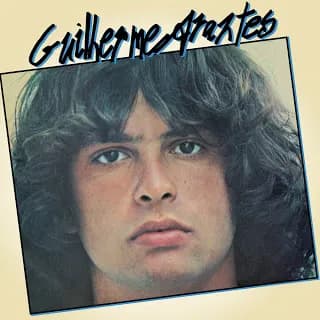
For those new to his catalog, starting with his 1976 self-titled debut or the 1985 hit album Despertar is essential. These records showcase his transition from a prog-leaning architect of sound to the definitive voice of the Brazilian 'telenovela' aesthetic, providing the perfect entry point into his world of melodic elegance.
Guilherme Arantes (Portuguese pronunciation: [ɡiˈʎɛʁmi aˈɾɐ̃tʃis]) is a Brazilian singer-songwriter and pianist. He is a Steinway Artist. As a teenager, he was a member of the band "Polissonante", which also featured Brazilian actor Kadu Moliterno on bass guitar. In 1969, Arantes started the band Moto Perpétuo with fellow students from USP's architecture course. It was with Moto Perpétuo that Arantes got his first taste of touring and recording in a studio. The band split up in 1974 as Arantes wanted to pursue a more personal, emotional pop style of music. Arantes dropped out of university to dedicate himself to his solo career, and in 1976, his song "Meu Mundo e Nada Mais" (My world and nothing more) was picked by Rede Globo to feature in the soundtrack for the telenovela Anjo Mau. The song was a hit, and Arantes toured the country for the first time. His first self-titled album was released the same year on Globo's Som Livre label. The song "Cuide-se Bem" (Take good care) from the same record, was also picked by Globo for another telenovela, Duas Vidas. Arantes went on to write another 23 songs for Globo's telenovelas, with most of them becoming radio hits. Besides his solo work, he has also written songs for artists such as Gang 90 & Absurdettes, Elis Regina, Marina Lima, Roberto Carlos, Gal Costa, Caetano Veloso, Emilio Santiago, Simone, Ceu, Nando Reis, Alaide Costa, and Maria Bethânia. His album "Condição Humana" was elected the best of 2014 Premio Multishow, best of 2010 Decade in the RedBull list. His album Flores & Cores (Flowers & Colors) was elected the 13th best Brazilian album of 2017 by the Brazilian edition of Rolling Stone. In 2021 the album "A Desordem dos Templários" was released during the covid pandemics emergence. Since then, Guilherme is living in the medieval city of Avila, in Spain, and is preparing a new record to be released in the beginning of 2026, when a big tour will mark the 50th anniversary of career.

Shares nostalgic, romantic, hopeful (moods); studio polished, analog warmth, orchestral arrangement (production style)

Shares studio polished, analog warmth, orchestral arrangement (production style); nostalgic, romantic, contemplative (moods)
Shares soft rock, synth-pop (subgenres); baritone, crooning, gentle (vocal style)

Shares studio polished, analog warmth, orchestral arrangement (production style); nostalgic, romantic, hopeful (moods)

Shares soft rock, synth-pop (subgenres); studio polished, analog warmth, orchestral arrangement (production style)

Shares studio polished, analog warmth, layered dense (production style); nostalgic, romantic, contemplative (moods)

Shares art pop, soft rock, progressive rock (subgenres); studio polished, analog warmth, orchestral arrangement (production style)
Shares nostalgic, contemplative, hopeful (moods); studio polished, analog warmth, layered dense (production style)
Shares soft rock, ocean, golden hour, romantic (signature)
Cassette uses generative AI to enrich its catalog. How we use AI →