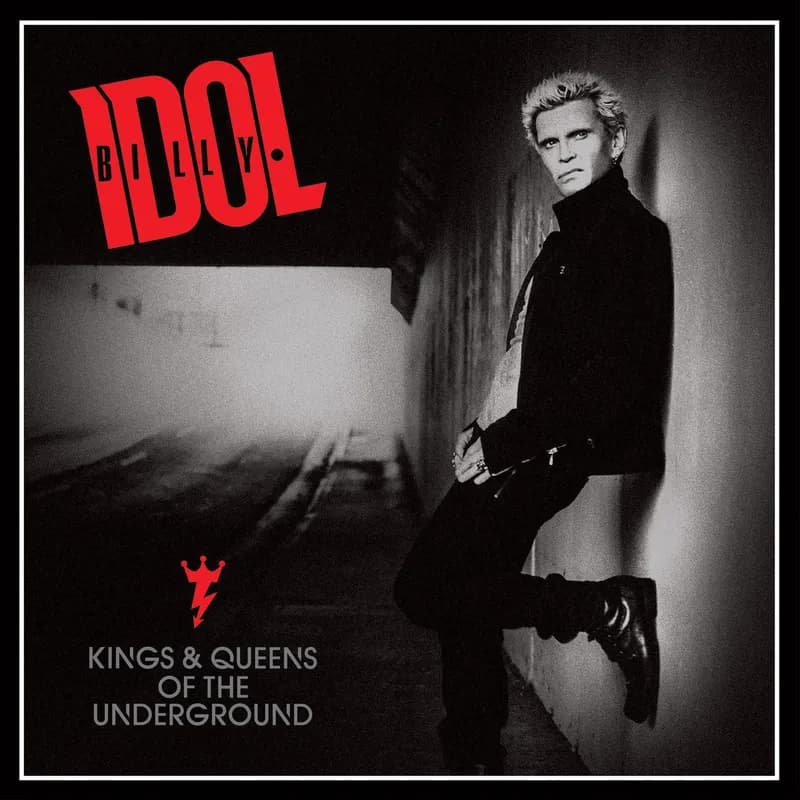
Billy Idol
Gritty baritone sneers meet neon-soaked synth-rock. High-energy anthems for leather jackets, midnight drives, and unapologetic rebellion.
Gritty baritone sneers meet neon-soaked synth-rock. High-energy anthems for leather jackets, midnight drives, and unapologetic rebellion.
Billy Idol represents the successful commercial evolution of UK punk into a global pop-rock phenomenon. Emerging from the Bromley Contingent and fronting Generation X, Idol was initially criticized by punk purists for his 'bubblegum' sensibilities.
However, his move to New York in 1981 and collaboration with producer Keith Forsey and guitarist Steve Stevens allowed him to pioneer a 'dance-rock' hybrid that defined the early MTV era. His sound identity is built on a foundation of 50s rock and roll swagger, filtered through punk aggression and 80s technological maximalism. Stevens' innovative use of the Lexicon PCM 41 for rhythmic echoes and pitch-shifting became a signature production element. Critically, Idol is viewed as a master of the 'Second British Invasion,' bridging the gap between the raw energy of The Sex Pistols and the polished synth-pop of Duran Duran. His 1993 album Cyberpunk remains a cult-classic experiment in early digital culture, while his later work has seen him settle into a role as a legacy rock icon who maintains a high-energy live presence.
Shares defiant, energetic, brooding (moods); urban_night, dive_bar, road_trip (atmosphere)
Shares defiant, energetic, rebellious (moods); basement_show, urban_night, dive_bar (atmosphere)
Shares defiant, energetic, brooding (moods); dive_bar, urban_night, basement_show (atmosphere)
Shares rebellious, confident, energetic (moods); punk rock, hard rock (subgenres)
Shares defiant, energetic, brooding (moods); dive_bar, basement_show, road_trip (atmosphere)
Shares studio_polished, layered_dense, hi_fi (production style); energetic, confident, defiant (moods)
Cassette uses generative AI to enrich its catalog. How we use AI →