This is the sound of a basement party in 1966 that never quite ended. It is defined by a thin, piercing organ sound that cuts through a thick layer of grit and teenage angst. The rhythm section is locked into a relentless, almost hypnotic stomp that feels both primitive and perfectly calculated. It is music that captures the exact moment when pop melody met the raw, unpolished energy of the street.
What truly sets them apart is the enigmatic presence of Question Mark himself. His vocals are delivered with a nasal, slightly detached sneer that predates the punk movement by a decade. The repetition in the songwriting creates a trance-like effect, turning simple tales of heartbreak into something far more obsessive and strange. The influence of Chicano rock adds a subtle rhythmic swing that distinguishes them from their British Invasion contemporaries.
Start with the essential 1966 album 96 Tears. The title track is a masterclass in minimalist tension, but the rest of the record reveals a band capable of surprising soulfulness and frantic energy. It is the definitive document of the garage rock era, capturing a lightning-in-a-bottle moment of American musical history.
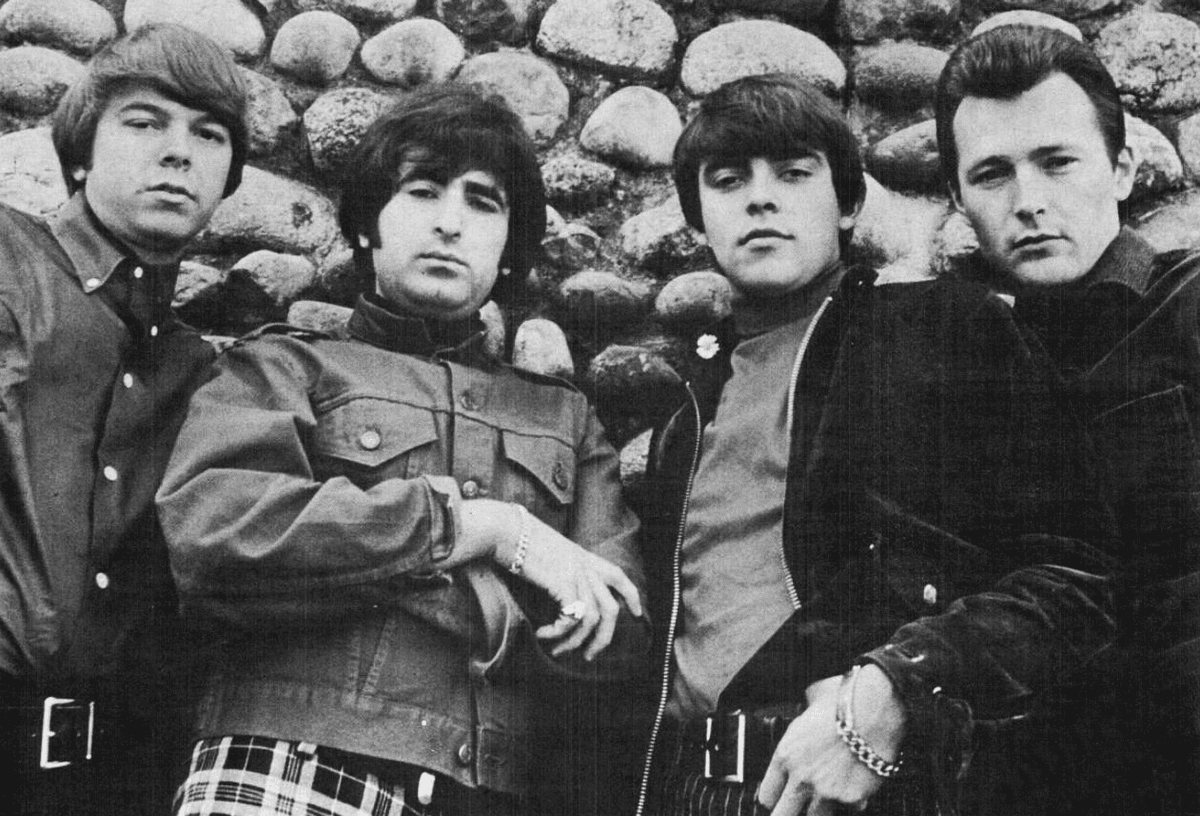
? and the Mysterians (Question Mark and the Mysterians or The Mysterians) are an American garage rock band from Bay City and Saginaw in Michigan, initially active between 1962 and 1969. Much of the band's music consisted of electric organ-driven garage rock and an enigmatic image inspired by the 1957 Japanese science fiction film The Mysterians. In addition, the band's sound was also marked by the raw, resonating lead vocals of "?" (Question Mark, the stage name of Rudy Martínez), making Question Mark and the Mysterians one of the earliest groups whose musical style is described as punk rock. Their music and imagery were highly influential on later bands. The band signed to Pa-Go-Go Records (based in San Antonio, Texas and run by Rudy "Tee" Gonzales) in 1966 and released its first and most acclaimed single, "96 Tears", in the early part of that year. "96 Tears" became a number one hit on the Billboard Hot 100 and propelled the group to a 15-month period of national prominence. Their debut album, 96 Tears, followed. Though Question Mark and the Mysterians were unable to replicate their success with their later recordings, and are thus deemed a "one-hit wonder", they did manage to reach the singles charts on five occasions. They disbanded in 1969, but have regrouped and released additional material over the years. "96 Tears" was listed at number 210 on the 2004 Rolling Stone list The 500 Greatest Songs of All Time.


Shares garage rock, psychedelic rock, art rock (subgenres); dive bar, basement show, urban night (atmosphere)
Shares garage rock, psychedelic rock, pop rock (subgenres); lo fi, analog warmth, stripped back (production style)
Shares garage rock, psychedelic rock (subgenres); lo fi, analog warmth, live recording (production style)
Shares lo fi, analog warmth, stripped back (production style); dive bar, basement show, urban night (atmosphere)
Shares lo fi, analog warmth, stripped back (production style); dive bar, basement show, urban night (atmosphere)
Shares garage rock, psychedelic rock, pop rock (subgenres); lo fi, analog warmth, live recording (production style)
Shares lo fi, analog warmth, stripped back (production style); dive bar, basement show, urban night (atmosphere)
Shares garage rock, psychedelic rock (subgenres); lo fi, analog warmth, stripped back (production style)
Shares garage rock, psychedelic rock, art rock (subgenres); lo fi, analog warmth, live recording (production style)
Shares garage rock, psychedelic rock (subgenres); dive bar, basement show, urban night (atmosphere)
Cassette uses generative AI to enrich its catalog. How we use AI →