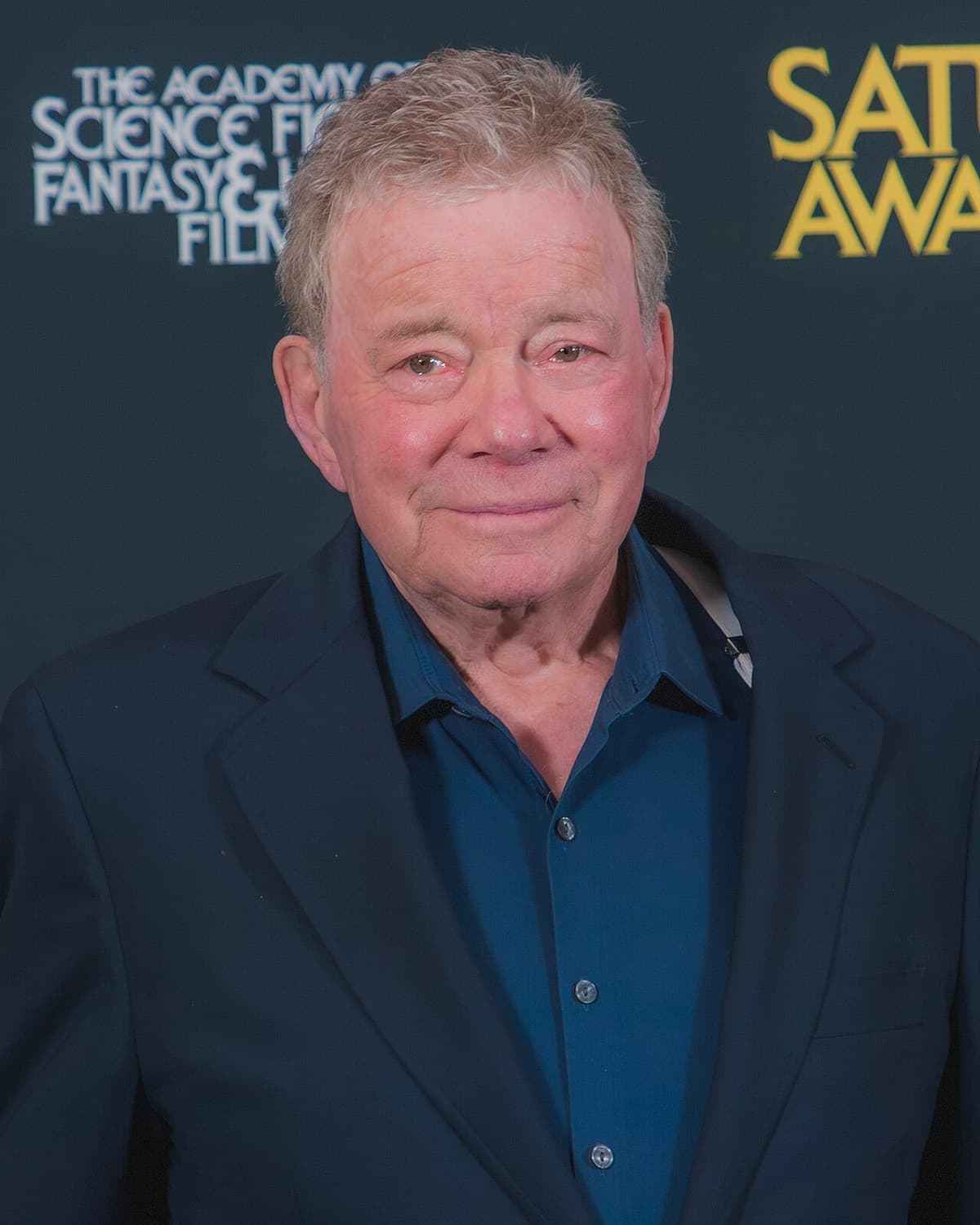
William Shatner
Dramatic spoken-word delivery meets lush indie-pop production. A singular blend of high-camp irony and surprisingly vulnerable existential storytelling.
Dramatic spoken-word delivery meets lush indie-pop production. A singular blend of high-camp irony and surprisingly vulnerable existential storytelling.
Listening to William Shatner is a journey through the uncanny valley of celebrity performance. It begins with the familiar staccato cadence of Captain Kirk, a delivery so parodied it feels like a caricature. But as the music swells, usually under the guidance of sophisticated producers like Ben Folds, the joke begins to dissolve. You find yourself caught between a laugh and a genuine emotional reaction as he tackles themes of aging, regret, and the absurdity of fame.
What makes his work distinctive is the total commitment to the bit. Shatner doesn't sing; he interprets. He treats a Pulp lyric or a David Bowie verse like a Shakespearean soliloquy, finding weird pockets of meaning through sheer force of personality. The production is often surprisingly high-caliber, featuring lush arrangements and guest spots from serious musicians that ground his theatricality in legitimate art-pop territory.
Start with the album 'Has Been'. It is the definitive proof that his musical career is more than a novelty. The track 'Common People' is a high-energy masterpiece of class-warfare drama, while 'Real' serves as a poignant, self-aware deconstruction of his own legendary status. It is the perfect entry point for anyone who thinks they already know what a Shatner record sounds like.
William Shatner (born March 22, 1931) is a Canadian actor. In a career spanning seven decades, he is best known for his portrayal of Captain James T. Kirk in the Star Trek franchise, from his 1966 debut as the captain of the starship Enterprise in the second pilot of the first Star Trek television series to his final appearance as Captain Kirk in the seventh Star Trek feature film, Star Trek Generations (1994). Shatner began his screen acting career in Canadian films and television productions before moving into guest-starring roles in various American television shows. He appeared as Captain Kirk in all the episodes of Star Trek: The Original Series, 21 of the 22 episodes of Star Trek: The Animated Series, and the first seven Star Trek movies. He has written a series of books chronicling his experiences before, during and after his time in a Starfleet uniform. He has also co-written several novels set in the Star Trek universe and a series of science fiction novels, the TekWar sequence, that were adapted for television. Outside Star Trek, Shatner played the eponymous veteran police sergeant in T. J. Hooker (1982–1986), hosted the reality-based television series Rescue 911 (1989–1996), guest starred on the detective series Columbo, and acted in the comedy film Miss Congeniality (2000). Shatner's television career after his last appearance as Captain Kirk embraces comedy, drama and reality shows. In seasons 4 and 5 of the NBC series 3rd Rock from the Sun, he plays the alien "Big Giant Head" to whom the main characters report. From 2004 until 2008, he starred as attorney Denny Crane in the final season of the legal show The Practice and the entire run of its spinoff, Boston Legal. The role of Denny Crane won Shatner two Emmy Awards, one for his contributions to each series. In 2016, 2017 and 2018, he starred in both seasons of NBC's Better Late Than Never, a comical travel series in which a band of elderly celebrities toured east Asia and Europe. Aside from acting, Shatner has had a career as a recording artist, starting with his 1968 album, The Transformed Man. Shatner's cover versions of songs are dramatic recitations of their lyrics rather than musical performances: the most notable are his versions of the Beatles' "Lucy in the Sky with Diamonds", Bob Dylan's "Mr. Tambourine Man", and Elton John's "Rocket Man". His most successful album was his third, Seeking Major Tom (2011), which includes covers of Pink Floyd's "Learning to Fly", David Bowie's "Space Oddity" and Queen's "Bohemian Rhapsody". In 2021, Shatner flew into space aboard Blue Origin NS-18, a Blue Origin sub-orbital mission. At age 90 he became the oldest person to fly in space and one of the first 600 to do so. In 2024 Ed Dwight, also age 90, but 48 days older than Shatner, flew on the suborbital Blue Origin NS-25 spaceflight.
Cassette uses generative AI to enrich its catalog. How we use AI →


