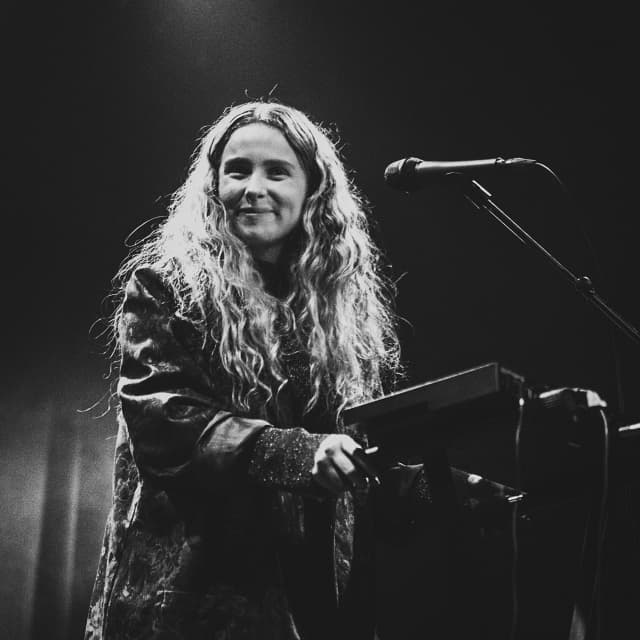
White Sea
Shimmering, cinematic pop with soaring operatic vocals and lush synth landscapes. It feels like a neon-lit drive through a city that never sleeps.
Shimmering, cinematic pop with soaring operatic vocals and lush synth landscapes. It feels like a neon-lit drive through a city that never sleeps.
White Sea sounds like the most dramatic moment of a 1980s coming-of-age film reimagined for a modern dance floor. Morgan Kibby creates vast, shimmering soundscapes where every synth line feels like a streak of neon light and every drum beat carries the weight of a heartbeat. The music is unashamedly big, favoring massive choruses and lush, reverb-drenched production that fills every corner of the room.
What truly sets White Sea apart is Kibby's vocal prowess. Having cut her teeth with M83, she understands how to use her voice as both a lead instrument and a textural layer. She frequently stacks her vocals into towering walls of sound, blending operatic precision with the raw emotionality of indie pop. The result is a sonic experience that feels both intimate and infinite, capturing the specific ache of urban loneliness and the thrill of late-night escapism.
Start with the album In Cold Blood. It perfectly encapsulates the project's ability to balance high-concept electronic production with deeply relatable songwriting. Tracks like Future This and Prague showcase the soaring melodies and cinematic scope that have made Kibby a sought-after collaborator for some of the biggest names in music.
Morgan Grace Kibby (born May 3, 1984) is an American singer, songwriter, record producer, composer, and former actress based in Los Angeles, California. She is best known as a member and collaborator of the French electronic group M83 between 2008 and 2015. Prior to joining M83, she was the frontwoman of the Romanovs, releasing one studio album in 2005. In 2014, Kibby began recording and releasing material under the moniker White Sea. Following her departure from M83, Kibby began collaborating with Panic! at the Disco in a songwriting and session capacity, contributing to the albums Death of a Bachelor (2016), Pray for the Wicked (2018) and Viva Las Vengeance (2022). In 2019, Kibby contributed keyboards, moog bass and backing vocals to the title track of Harry Styles's second studio album Fine Line, and in 2020, she co-wrote and produced the orchestral interludes on Lady Gaga's sixth studio album, Chromatica (2020), with a 26-piece orchestra. In 2023, Kibby provided the original music for the Amazon TV series, The Power.
Shares ethereal, belting, vocal layering (vocal style); indie pop, electropop, synth-pop (subgenres)
Shares electropop, dream pop, synth-pop (subgenres); euphoric, melancholic, wistful (moods)
Shares electropop, dream pop, synth-pop (subgenres); reverb heavy, studio polished, layered dense (production style)
Shares electropop, dream pop, synth-pop (subgenres); studio polished, reverb heavy, layered dense (production style)
Shares indie pop, electropop, dream pop (subgenres); keys/synth, drum machine, electric guitar (instrumentation)
Shares dream pop, synth-pop, art pop (subgenres); studio polished, reverb heavy, layered dense (production style)
Shares electropop, dream pop, synth-pop (subgenres); reverb heavy, layered dense, studio polished (production style)
Shares electropop, synth-pop, art pop (subgenres); maximalist, layered dense, studio polished (production style)
Shares dream pop, vocal layering, art pop, synth-pop (signature)
Cassette uses generative AI to enrich its catalog. How we use AI →