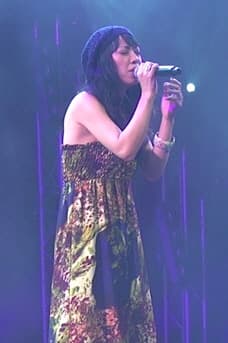
いとうかなこ
Dramatic, high-stakes J-pop with a sci-fi edge. Powerful vocals meeting intricate synths to create the feeling of a mystery unfolding in a digital city.
Dramatic, high-stakes J-pop with a sci-fi edge. Powerful vocals meeting intricate synths to create the feeling of a mystery unfolding in a digital city.
Kanako Ito creates music that feels like the emotional climax of a high-concept thriller. Her voice is a force of nature, characterized by a distinctive, wide vibrato and a piercing clarity that cuts through dense, electronic-heavy arrangements. It is music that occupies the intersection of human fragility and technological coldness, often shifting between soaring, triumphant choruses and haunting, minor-key verses that suggest a lingering sense of dread.
What truly sets her apart is her association with the 'Science Adventure' series, which has infused her discography with a specific brand of intellectual intensity. Her songs often feature complex rhythmic structures and 'glitchy' production elements that mirror themes of time travel, psychological collapse, and digital conspiracy. Unlike standard J-pop, her work prioritizes a cinematic sense of scale and narrative weight over simple radio friendliness.
For those new to her sound, 'Hacking to the Gate' is the essential starting point. It perfectly encapsulates her ability to blend frantic energy with a sense of cosmic importance. From there, exploring her work for Nitro+ reveals a darker, more experimental side of her artistry that leans into gothic and industrial influences.
Kanako Itō (いとう かなこ, Itō Kanako; born March 28, 1973) is a female Japanese singer from Utsunomiya, Tochigi, Japan. She has sung a large number of songs that have been used in a variety of video games, visual novels, and anime. Itō has sung songs for many visual novels, one song in particular being "Kanashimi no Mukō e" (悲しみの向こうへ), the "bad end" ending theme to the visual novel School Days. Itō has also sung songs for a drama CD and anime adaptations of School Days. She has sung songs for the games Kikokugai: The Cyber Slayer, Saya no Uta, Demonbane, Higurashi no Naku Koro ni Matsuri, Chaos;Head, Chaos;Child, Steins;Gate, and Robotics;Notes, along with the anime series Please Twins!, Myself; Yourself, Hatenkō Yūgi and Occultic;Nine. Her song "DD" on her single "A Wish for the Stars" has her singing in French. In April 2012, she made her American performance debut at Anime Boston. She returned to the United States for an appearance at Sakura-Con in 2015.
Shares studio polished, layered dense, digital clarity (production style); art pop, synth-pop, alternative rock (subgenres)
Shares studio polished, layered dense, digital clarity (production style); intense, melancholic, urgent (moods)
Shares art pop, synth-pop, alternative rock (subgenres); studio polished, layered dense, digital clarity (production style)
Shares studio polished, layered dense, digital clarity (production style); synth-pop, art pop (subgenres)
Shares studio polished, layered dense, digital clarity (production style); alternative rock, art pop (subgenres)
Shares studio polished, layered dense, digital clarity (production style); synth-pop, alternative rock, darkwave (subgenres)
Shares studio polished, digital clarity, orchestral arrangement (production style); intense, melancholic, urgent (moods)

Shares art pop, synth-pop, darkwave (subgenres); studio polished, layered dense, digital clarity (production style)
Shares studio polished, layered dense, digital clarity (production style); urban night, rainy day, stargazing (atmosphere)
Shares art pop, synth-pop, alternative rock (subgenres); studio polished, layered dense, orchestral arrangement (production style)
Shares art pop, urgent, orchestral arrangement, synth-pop (signature)
Shares art pop, midnight, synth-pop, alternative rock (signature)
Cassette uses generative AI to enrich its catalog. How we use AI →


