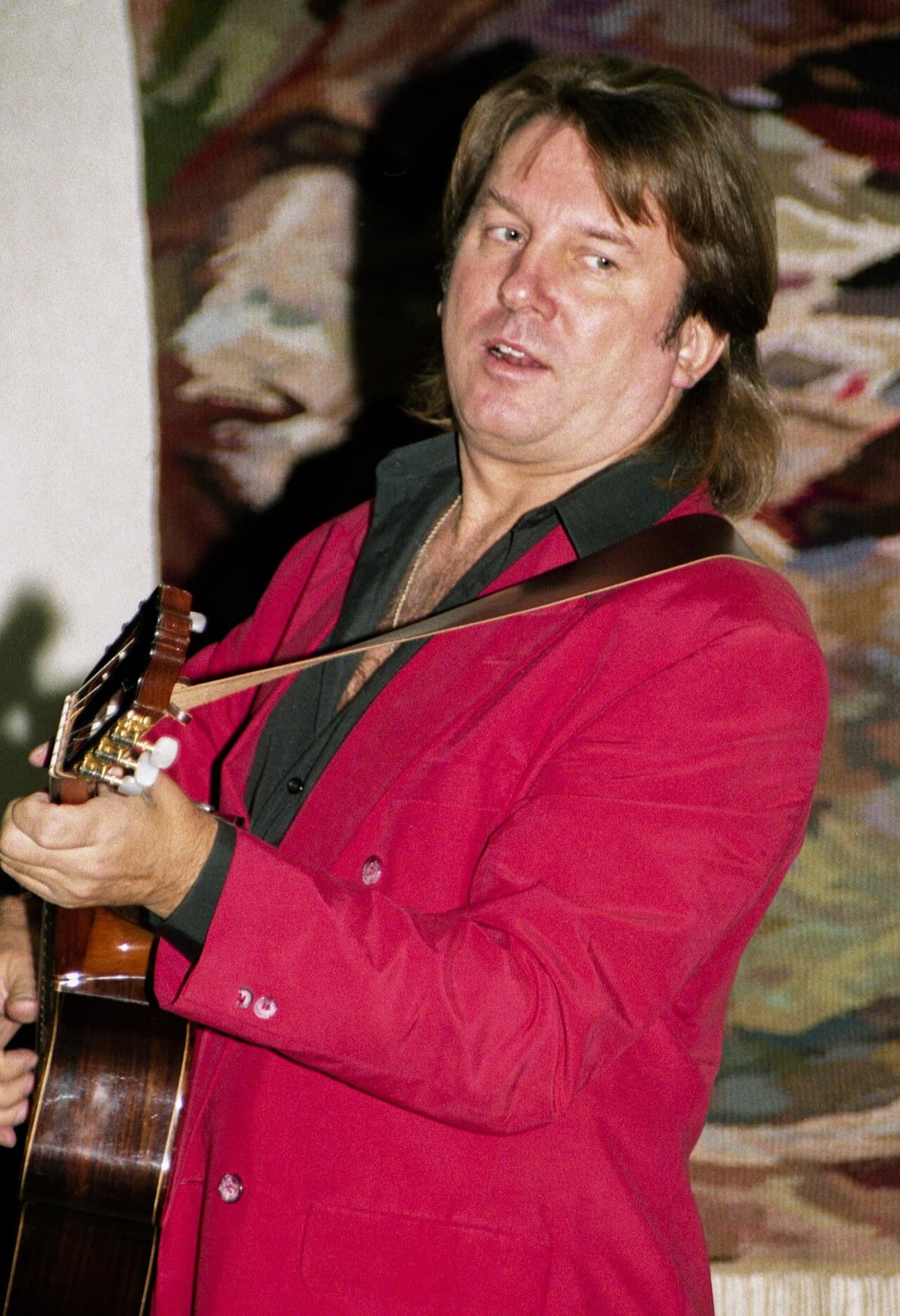
Юрий Лоза
Gentle Soviet-era rock that feels like a long conversation on a moving train. Warm acoustic guitars and baritone stories for quiet, reflective journeys.
Gentle Soviet-era rock that feels like a long conversation on a moving train. Warm acoustic guitars and baritone stories for quiet, reflective journeys.
Yuri Loza creates a sound that is fundamentally tethered to the concept of the journey, both literal and metaphorical. His music occupies a unique space between the intellectual depth of the Russian 'bard' tradition and the polished melodicism of 1980s soft rock. It is music that feels lived-in, characterized by warm analog production, steady rhythms, and a sense of unhurried observation.
What sets Loza apart is his ability to turn mundane observations into existential reflections. While his contemporaries in the Soviet rock scene often leaned toward rebellion or heavy synth-pop, Loza maintained a grounded, almost folk-like intimacy even when backed by a full studio band. His voice acts as a steady guide through tales of small towns, long roads, and the passage of time.
Start with his 1988 album 'Chto skazano, to skazano' to hear his most iconic work. It captures the essence of late-Soviet melancholy and the universal feeling of being in transit, anchored by his most famous hit about a small raft that serves as a metaphor for the human soul.
Yuri Eduardovich Loza (Russian: Юрий Эдуардович Лоза; born February 1, 1954, in Sverdlovsk, Soviet Union) is a Russian singer, poet, and composer. In 1983, he moved to Moscow with the purpose to enter the Russian Academy of Theatre Arts, but failed the entry exams and joined the rock band, Zodchiye. Soon his songs became the majority of the band's repertoire. Since 1987, Loza has been singing solo. Loza has been a proponent of the Flat Earth theory and has denied the occurrence of spaceflights. In January 2023, Yuri was on the list of people who fell under the new sanctions of Ukraine.
Shares soft rock, classic rock, pop rock (subgenres); analog warmth, studio polished, hi fi (production style)
Shares nostalgic, melancholic, wistful (moods); soft rock, pop rock (subgenres)
Shares analog warmth, studio polished, hi fi (production style); soft rock, pop rock (subgenres)

Shares soft rock, classic rock, pop rock (subgenres); analog warmth, studio polished (production style)
Shares analog warmth, studio polished, hi fi (production style); soft rock, pop rock (subgenres)
Shares nostalgic, melancholic, wistful (moods); analog warmth, studio polished, hi fi (production style)

Shares soft rock, classic rock, pop rock (subgenres); analog warmth, studio polished, hi fi (production style)
Cassette uses generative AI to enrich its catalog. How we use AI →