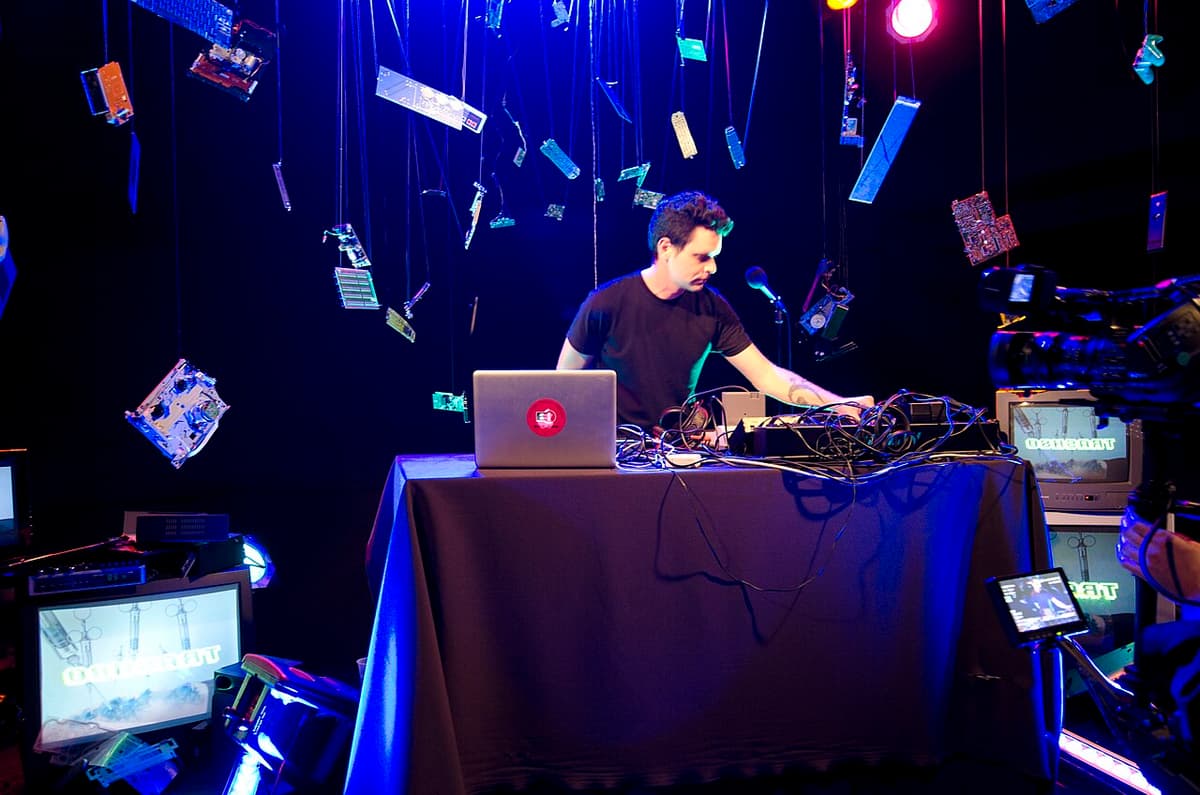
Trash80
Crystalline 8-bit melodies that bridge the gap between retro hardware and deep, modern melancholy. High-definition nostalgia for a digital world that never quite was.
Crystalline 8-bit melodies that bridge the gap between retro hardware and deep, modern melancholy. High-definition nostalgia for a digital world that never quite was.
Trash80 sounds like the ghost of a 1989 handheld console dreaming of the deep ocean. It is music built from the limitations of the past, using the sharp, square-wave chirps and buzzy basslines of the Game Boy to construct surprisingly lush and emotional soundscapes. There is a specific tension between the 'toy' nature of the instruments and the genuine, often heartbreaking weight of the compositions.
What sets Timothy Lamb apart from the broader chiptune scene is his restraint and melodic sophistication. While his peers often lean into the frantic energy of arcade games, Trash80 explores the 'bitpop' intersection, where catchy synth-pop structures meet ambient drift. Under the Tresk moniker, he even strips away the electronics entirely for haunting piano pieces that retain that same lonely, digital soul.
Start with the Icarus EP. It is the definitive statement of his sound, moving from the driving, propulsive energy of the title track to the more reflective, shimmering textures that have made him a legend in the micromusic community. It is the perfect entry point for anyone who thinks 8-bit music is just for high scores.
Trash80 is a micromusic/bitpop project from Timothy Robert Lamb (born on March 5, 1979), a pioneer of independent Game Boy music. He has published several songs online under a Creative Commons license (BY-NC-ND) under the Trash80 and Tresk banners. Whereas many Trash80 songs are ambient soundscapes featuring the use of Game Boy sounds, Tresk songs feature simple piano lines. Most prominently, Lamb's music has been featured on the soundtrack of the real-time strategy game Darwinia. The name "Trash80" is a reference to a slang term for the Tandy / Radio Shack computer model (now defunct) TRS-80 (model 1/2/3/4/4p). In 2003 the EP Hologram was released. and in May 2008 the EP Icarus was released. In the Fall of 2008, Trash80 unveiled the ArduinoBoy, a relatively cheap and easy-to-assemble device that allows MIDI synchronization with a Game Boy running the proper software. As the name implies, it is based on the Arduino open-source microcontroller.
Shares synth-pop, ambient techno, electronica (subgenres); instrumental only, processed (vocal style)
Shares synth-pop, ambient techno, electronica (subgenres); instrumental only, processed (vocal style)
Shares synth-pop, glitch (subgenres); instrumental only, processed (vocal style)
Shares lo fi, bedroom production, digital clarity (production style); instrumental only, processed (vocal style)
Shares lo fi, bedroom production, digital clarity (production style); synth-pop, ambient techno, glitch (subgenres)
Shares lo fi, bedroom production, digital clarity (production style); glitch, ambient techno, synth-pop (subgenres)
Shares synth-pop, electronica, glitch (subgenres); lo fi, bedroom production, minimalist (production style)
Shares lo fi, bedroom production, digital clarity (production style); synth-pop, glitch (subgenres)
Shares instrumental only, processed (vocal style); stargazing, urban night, solitude (atmosphere)
Shares lo fi, bedroom production, digital clarity (production style); synth-pop, glitch (subgenres)
Shares sunrise, electronica, ambient techno, instrumental only (atmosphere)
Shares lo fi, glitch, instrumental only, focused work (signature)
Cassette uses generative AI to enrich its catalog. How we use AI →

