The Shivers inhabit that specific, lonely space between country tradition and indie-rock restlessness. Their sound is defined by a certain mid-nineties grit, where the twang of a Telecaster feels less like a celebration and more like a sigh. It is music that sounds like it was recorded in a room with high ceilings and old floorboards, capturing the natural resonance of wooden instruments and tired voices.
What truly sets them apart is the lack of artifice. While many alt-country acts lean into theatrical outlaw tropes, The Shivers maintain a grounded, almost suburban sense of melancholy. The production is spacious and dry, allowing the interplay between the rhythm section and the melodic, often reverb-heavy guitar work to breathe without being crowded by modern studio polish.
Start with 'The Buried Life' to experience their peak songwriting. It is an essential document of the 90s alt-country movement, perfect for listeners who find beauty in the frayed edges of a song and the quiet weight of everyday regrets.
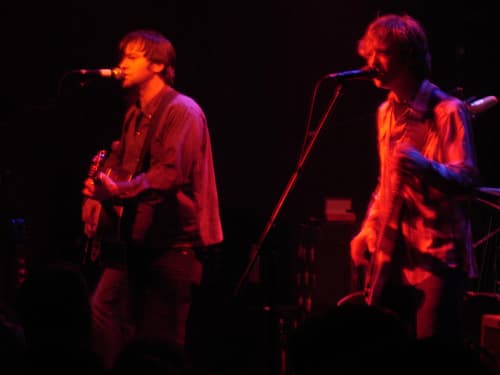
The Shivers were an American alternative country group. They were formed in 1989 in Austin, Texas by founding members Carey Kemper and Kelly Bell, and released two albums internationally on Restless Records (US) and Glitterhouse Records (Europe) in 1994 and 1996. Though originally from Austin, they were primarily based alternately out of Portland, Oregon and Minneapolis, Minnesota. The band applied for and was granted copyright status for the brand (™) The Shivers in 1994. The Shivers were very favorably reviewed for their work in Rolling Stone in both the United States and in Europe. Their first record, The Shivers, was released in 1994 to widespread positive response both in the US and the UK, and their second record, The Buried Life (Restless 72915–2) was released in 1996, where it was praised by the alternative country movement both in the US and Europe. It was named to the Top-10 Best Albums of 1996 by Country Guitar magazine, and New Country, Mojo and Alternative Press also praised it. and others) Both albums were recorded by Tom Herbers at his Third Ear Studios in Minneapolis and at Dead Aunt Thelma's Studio in Portland.


Shares analog warmth, live recording, dry intimate (production style); dive bar, dusk, road trip (atmosphere)
Shares americana, indie rock (subgenres); analog warmth, live recording, stripped back (production style)
Shares americana, indie rock (subgenres); melancholic, wistful, brooding (moods)
Shares americana, indie rock (subgenres); dive bar, dusk, road trip (atmosphere)
Shares melancholic, wistful, brooding (moods); raspy, baritone, raw (vocal style)
Shares analog warmth, live recording, dry intimate (production style); americana, indie rock (subgenres)
Shares analog warmth, live recording, dry intimate (production style); americana, indie rock (subgenres)
Shares analog warmth, live recording, stripped back (production style); dive bar, dusk, road trip (atmosphere)
Shares americana, pedal steel, wistful, analog warmth (signature)
Cassette uses generative AI to enrich its catalog. How we use AI →