The Scaffold
Witty, vaudevillian pop that blends Liverpool beat energy with deadpan spoken-word poetry. Perfect for fans of British humor and surrealist storytelling.
Witty, vaudevillian pop that blends Liverpool beat energy with deadpan spoken-word poetry. Perfect for fans of British humor and surrealist storytelling.
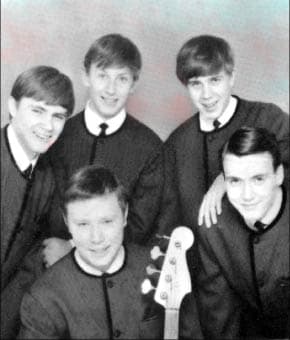
The Scaffold occupy a unique corner of the 1960s British landscape, existing somewhere between a Merseybeat band, a comedy troupe, and a high-brow poetry circle. Their sound is inherently theatrical, often utilizing the bright, brassy arrangements of the Abbey Road era to deliver lyrics that are by turns absurd, sentimental, and biting. It is music that refuses to take itself seriously while being crafted by some of the most serious creative minds of the era.
What truly distinguishes them is the interplay between Mike McGear's pop sensibilities, Roger McGough's literary precision, and John Gorman's comic timing. Unlike typical novelty acts, their records often featured world-class session musicians, giving their surrealist nursery rhymes a sophisticated sonic backbone. The result is a 'music hall' aesthetic updated for the psychedelic generation, where a simple singalong melody might suddenly veer into abstract verse.
To understand their charm, start with 'Lily the Pink' for the quintessential British singalong experience, then move to 'Thank U Very Much' to hear their gift for observational irony. For those seeking their more experimental side, their live recordings and later collaborations with members of Wings reveal a group that was deeply embedded in the heart of the UK's most fertile musical decade.
The Scaffold are a comedy, poetry and music trio from Liverpool, England, consisting of musical performer Mike McGear, poet Roger McGough and comic entertainer John Gorman. They are perhaps most notable for their successful singles "Thank U Very Much" (1967) and the UK Christmas number 1 "Lily the Pink" (1968). Since initially disbanding in 1977, the group have occasionally re-formed for performances and projects.
Shares traditional pop, baroque pop, psychedelic rock (subgenres); playful, nostalgic, wistful (moods)
Shares studio polished, orchestral arrangement, analog warmth (production style); playful, wistful, joyful (moods)

Shares traditional pop, psychedelic rock, baroque pop (subgenres); studio polished, orchestral arrangement, analog warmth (production style)
Shares studio polished, orchestral arrangement, analog warmth (production style); traditional pop, baroque pop (subgenres)

Shares playful, nostalgic, wistful (moods); studio polished, orchestral arrangement, analog warmth (production style)

Shares studio polished, orchestral arrangement, analog warmth (production style); traditional pop, baroque pop (subgenres)
Shares traditional pop, baroque pop (subgenres); studio polished, orchestral arrangement, analog warmth (production style)
Shares playful, nostalgic, joyful (moods); traditional pop, baroque pop (subgenres)
Shares baroque pop, traditional pop, psychedelic rock, orchestral arrangement (subgenre)
Cassette uses generative AI to enrich its catalog. How we use AI →