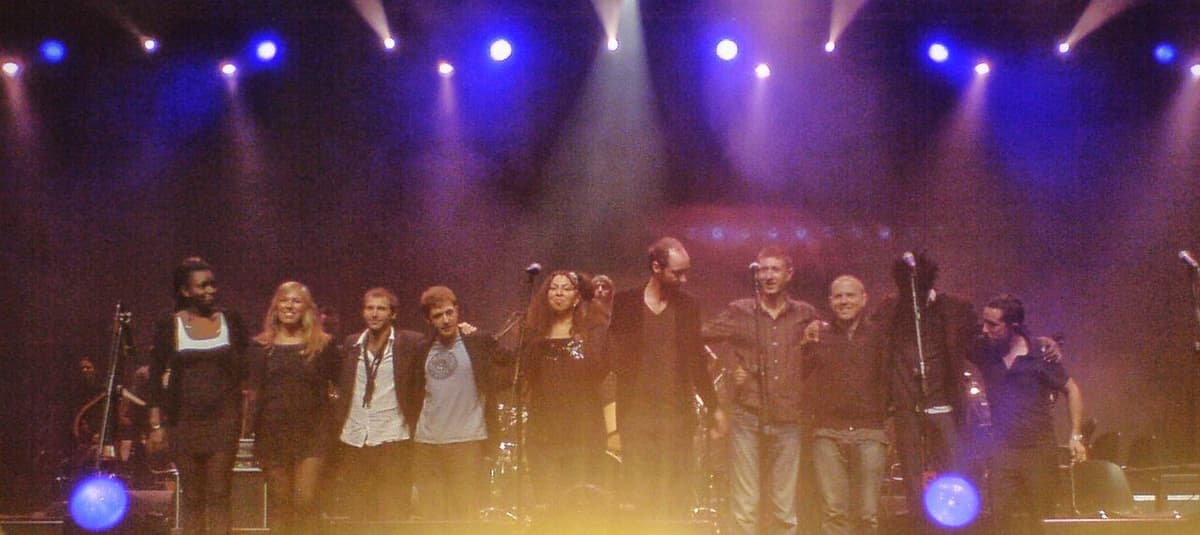
The Cinematic Orchestra
Sweeping orchestral arrangements meet dusty hip-hop production. Nu jazz that feels like a black-and-white film score for your most introspective late-night moments.
Sweeping orchestral arrangements meet dusty hip-hop production. Nu jazz that feels like a black-and-white film score for your most introspective late-night moments.
The Cinematic Orchestra, founded by Jason Swinscoe in 1999, represents a pivotal bridge between the UK's Ninja Tune electronic scene and the broader world of contemporary jazz and film scoring. Their sound identity is defined by a hybrid methodology: Swinscoe directs live musicians in improvisational sessions, then samples and reassembles that footage into structured compositions.
This process creates a 'nu jazz' aesthetic that prioritizes mood and texture over traditional soloing. Historically, they are significant for legitimizing the use of electronic production techniques within jazz frameworks, influencing a generation of 'chamber-electronic' artists. Their career arc moved from the sample-heavy, breakbeat-adjacent textures of 'Motion' toward the more refined, orchestral, and vocal-centric songwriting of 'Ma Fleur' and 'To Believe'. Critical consensus often highlights their ability to evoke visual narrative without dialogue, a skill that led to high-profile commissions for films like 'Man with a Movie Camera'. They remain a cornerstone of the Ninja Tune catalog and a primary reference point for the intersection of jazz, ambient, and downtempo music.
Shares upright bass, spiritual jazz, library, cello (signature)
Shares spiritual jazz, nu jazz, saxophone, haunting (subgenre)
Shares vinyl crackle as percussion, upright bass, nu jazz, saxophone (detail)
Shares nu jazz, saxophone, upright bass, ambient techno (signature)
Shares upright bass, nu jazz, saxophone, ambient techno (signature)
Shares spiritual jazz, nu jazz, saxophone, upright bass (subgenre)
Shares upright bass, nu jazz, serene, downtempo (signature)
Shares nu jazz, turntables, upright bass, downtempo (signature)
Shares sample_based, nu jazz, saxophone, upright bass (signature)
Shares spiritual jazz, nu jazz, saxophone, ambient techno (subgenre)
Cassette uses generative AI to enrich its catalog. How we use AI →


