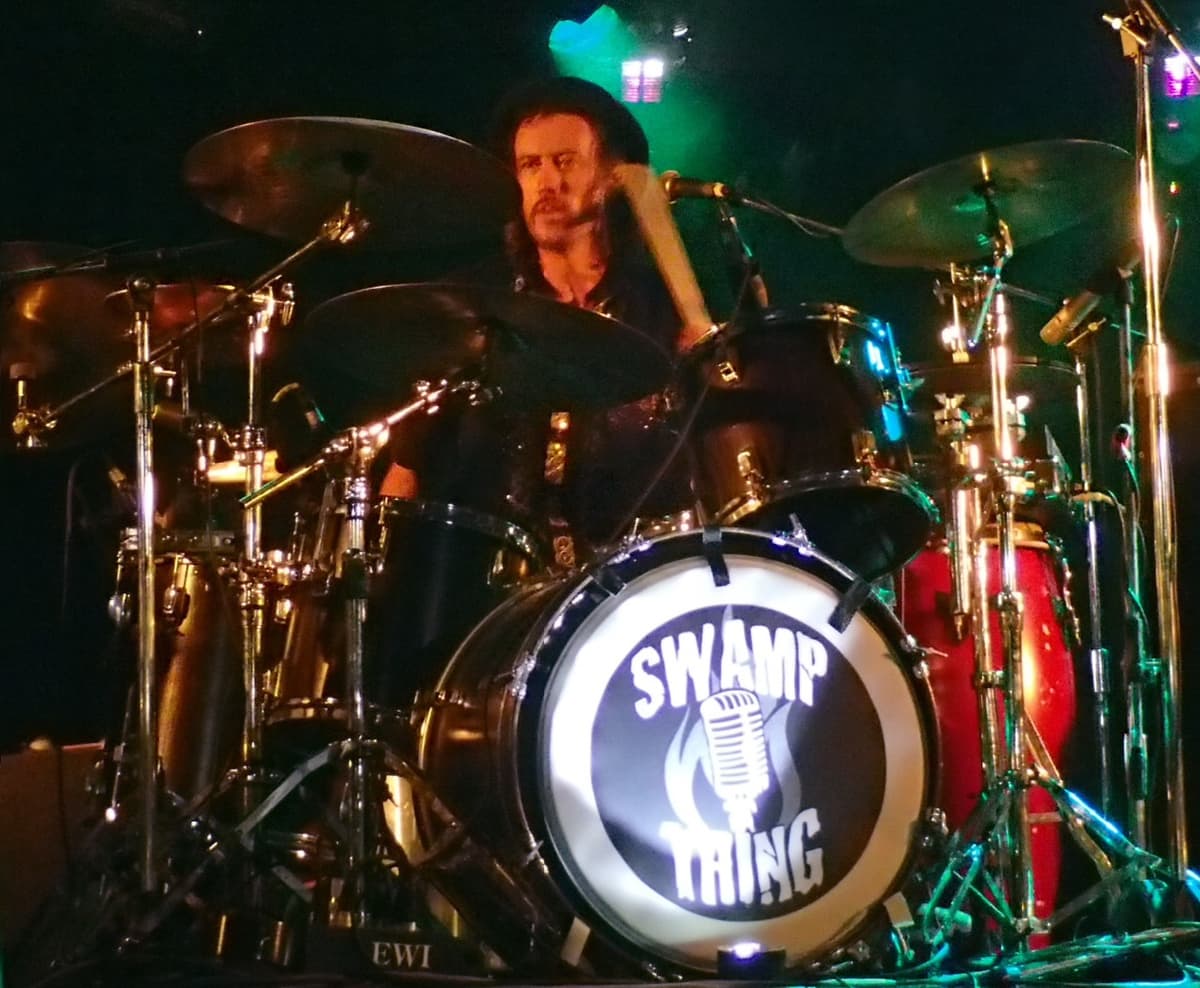
Swamp Thing
High-velocity blues rock with a heavy percussive heart. Gritty, soulful guitar riffs and foot-stomping rhythms built for open roads and loud rooms.
High-velocity blues rock with a heavy percussive heart. Gritty, soulful guitar riffs and foot-stomping rhythms built for open roads and loud rooms.
Swamp Thing sounds like the mechanical heart of a steam engine fueled by Delta blues and New Zealand grit. It is music that feels physically heavy, driven by a massive percussive foundation that refuses to stay in the background. The interplay between the searing, soulful guitar work and the relentless, complex drumming creates a wall of sound that belies their status as a mere duo.
What distinguishes them is the 'soulful spook' they bring to the blues-rock template. While many duos lean into garage-rock minimalism, Swamp Thing leans into a thick, swampy atmosphere and technical proficiency. Michael Barker's background in the John Butler Trio is evident in the way the rhythm section feels like a lead instrument, while Grant Haua's vocals carry a weathered, authentic weight that sounds like it was forged in a different century.
Start with 'Balladeer' to hear the raw chemistry of their debut. It captures the essence of their live energy, moving from high-speed blues shuffles to deeper, more atmospheric grooves that showcase their ability to fill every corner of the frequency spectrum without a bass player.
Swamp Thing is a New Zealand blues rock duo who define themselves as a "two-man blues roots juggernaut from New Zealand", and consist of Michael Barker (formerly of the John Butler Trio) and Grant Haua.
Shares live recording, analog warmth, stripped back (production style); blues rock, americana (subgenres)
Shares blues rock, americana, classic rock (subgenres); raspy, gravelly, intense (vocal style)
Shares americana, blues rock (subgenres); live recording, analog warmth, stripped back (production style)
Shares blues rock, americana, classic rock (subgenres); dive bar, road trip, bonfire (atmosphere)
Shares blues rock, americana, classic rock (subgenres); live recording, analog warmth, stripped back (production style)
Cassette uses generative AI to enrich its catalog. How we use AI →