Slagsmålsklubben
Hyperactive Swedish bitpop that sounds like a vintage arcade game having a party in a basement club. High-energy, melodic, and gloriously chaotic synth-pop.
Hyperactive Swedish bitpop that sounds like a vintage arcade game having a party in a basement club. High-energy, melodic, and gloriously chaotic synth-pop.
Imagine the sound of a Game Boy being played through a massive festival sound system. Slagsmålsklubben (SMK) crafts a world where 8-bit nostalgia meets the driving energy of European dance floors. Their music is a kaleidoscope of bright, brittle synth leads and frantic drum machine patterns that feel both DIY and meticulously composed.
What truly sets them apart is their sense of humor and communal energy. While many electronic acts lean into cold minimalism, SMK embraces a messy, maximalist joy. The tracks often feature unexpected melodic shifts and 'blip-blop' textures that evoke the feeling of a chaotic, pixelated adventure where the stakes are low but the fun is constant.
Start with 'Den svenske disco' for the definitive introduction to their sound. It captures the transition from their early experimental roots into the polished, melodic powerhouses that made them legends of the Swedish indie-electronic scene.
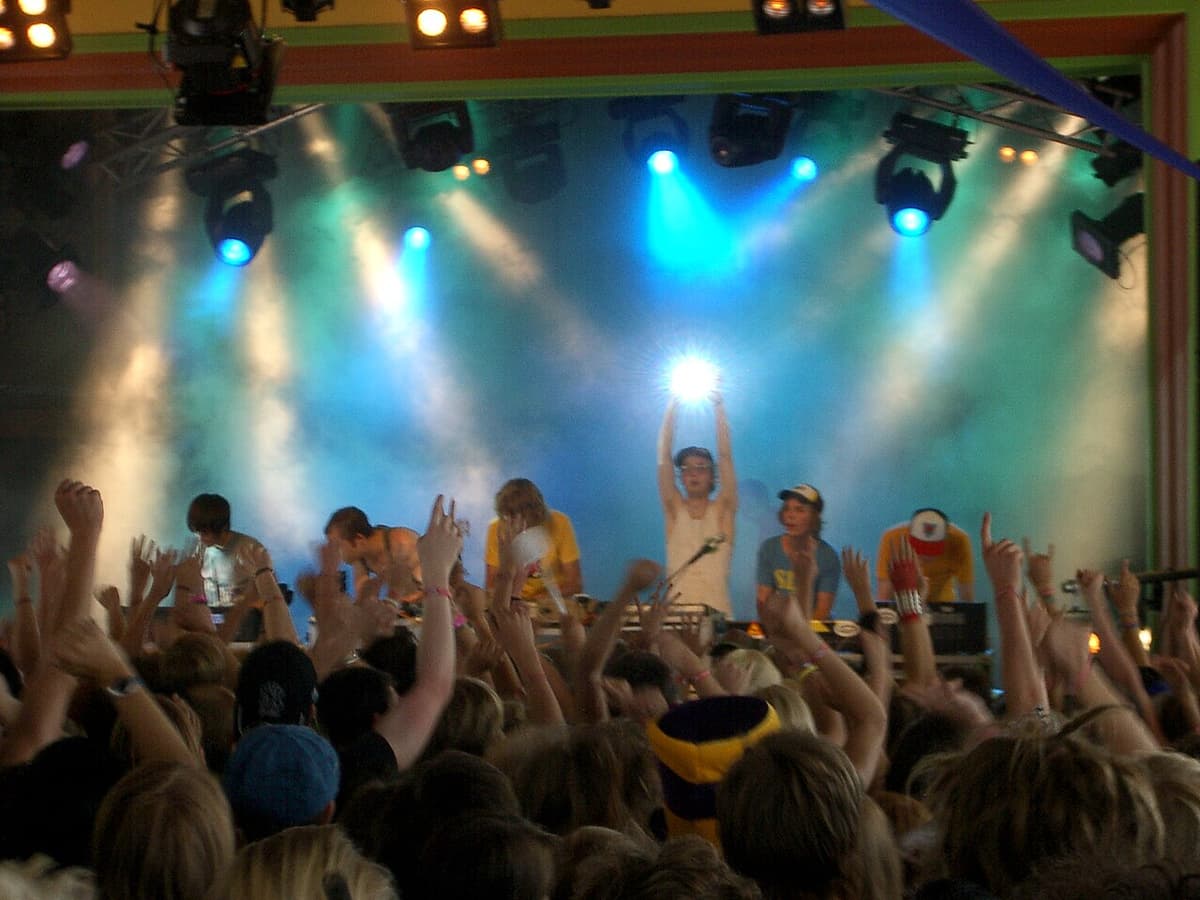
Slagsmålsklubben (Swedish pronunciation: [ˈslâksmoːlsˌklɵbːɛn]; often abbreviated as SMK) was a Swedish electronic music group from Norrköping, Östergötland. The group's name is a comically literal Swedish translation of the title of the novel and film Fight Club by Chuck Palahniuk. They have released five studio albums so far. Along with their side projects 50 Hertz and Häxor och porr (Witches and Porn), they were featured on Björk's 2005 remix album Army of Me: Remixes and Covers. SMK's members are Björn Anders Nilsson, Hannes Stenström, Joakim "Beebop" Nybom, Joni Mälkki, Kim Nilsson and Frej Larsson. The members of the band have many side projects, such as 50 Hertz, which features many of SMK's members, Din Stalker, Hannes' solo project, and Offerprästers orkester, one of Frej's solo projects. In 2005, the entire band moved to Berlin. As of 2011, all members have returned to Stockholm, and now share a mansion together with an on-site recording studio where they have recorded and mastered their fourth studio album, The Garage.
Shares synth-pop, electronica, glitch (subgenres); playful, joyful, energetic (moods)
Shares synth-pop, electronica (subgenres); playful, joyful, energetic (moods)
Shares synth-pop, electronica, dance-pop (subgenres); playful, joyful, energetic (moods)
Shares synth-pop, electronica, glitch (subgenres); absent, processed, instrumental only (vocal style)
Shares absent, processed, instrumental only (vocal style); playful, joyful, energetic (moods)
Shares synth-pop, electronica, dance-pop (subgenres); playful, nostalgic, energetic (moods)
Shares synth-pop, electronica, glitch (subgenres); playful, joyful, energetic (moods)
Shares synth-pop, electronica, dance-pop (subgenres); playful, joyful, nostalgic (moods)
Shares playful, energetic, joyful (moods); digital clarity, maximalist, drum machine (production style)
Shares synth-pop, electronica, dance-pop (subgenres); digital clarity, maximalist, lo fi (production style)
Shares bitpop, electronica, glitch, playful (signature)
Shares bitpop, electronica, glitch, playful (signature)
Cassette uses generative AI to enrich its catalog. How we use AI →


