Anthony 'Shake' Shakir makes music that feels like the inner workings of a clock found in a scrapyard. It is techno in its purest, most uncompromising form, stripped of the glossy commercial sheen that often defines the genre. The sound is defined by a specific kind of 'machine funk' - rhythms that are rigid and electronic yet possess a human, almost stumbling swing that keeps the listener slightly off-balance.
What sets Shake apart is his refusal to follow the standard four-on-the-floor blueprints. His tracks often feature unexpected syncopation, dusty samples, and melodic fragments that feel like they were captured from a passing radio signal. There is a deep soulfulness buried beneath the metallic percussion, a remnant of the Motown and funk influences that permeate the Detroit aesthetic. It sounds like a bedroom producer tinkering with gear until the machines start to breathe.
For those looking to dive in, his 90s output offers the best entry point into this rugged sonic world. It is music for people who appreciate the beauty in the unpolished and the complex. It works best in moments of solitary focus or late-night movement where the atmosphere needs to be tense, intelligent, and deeply rhythmic.
Anthony "Shake" Shakir, who also uses the aliases Sequence 10 and Da Sampla, is an American techno producer, best known for his contributions to Detroit techno. Shakir began producing in 1981, and worked with Detroit musicians such as Derrick May and Carl Craig for many of their early Metroplex releases. Shakir appeared under the name Sequence 10 on the Virgin Records compilation Techno: The New Dance Sound of Detroit. While many of his peers on the Detroit scene have worked to increase their profile in Europe, Shakir never gravitated toward this scene, working more closely with the second wave of Detroit techno musicians such as Mike Banks and Claude Young. He formed the labels Frictional in 1995 and Puzzlebox in 1996, the latter with Keith Tucker. Among Shakir's credits are remixes for Telex and Inner City, as well as co-production of the Urban Tribe's 1998 album for Mo Wax, The Collapse of Modern Culture.
Shares techno, minimal techno (subgenres); absent, processed, instrumental only (vocal style)
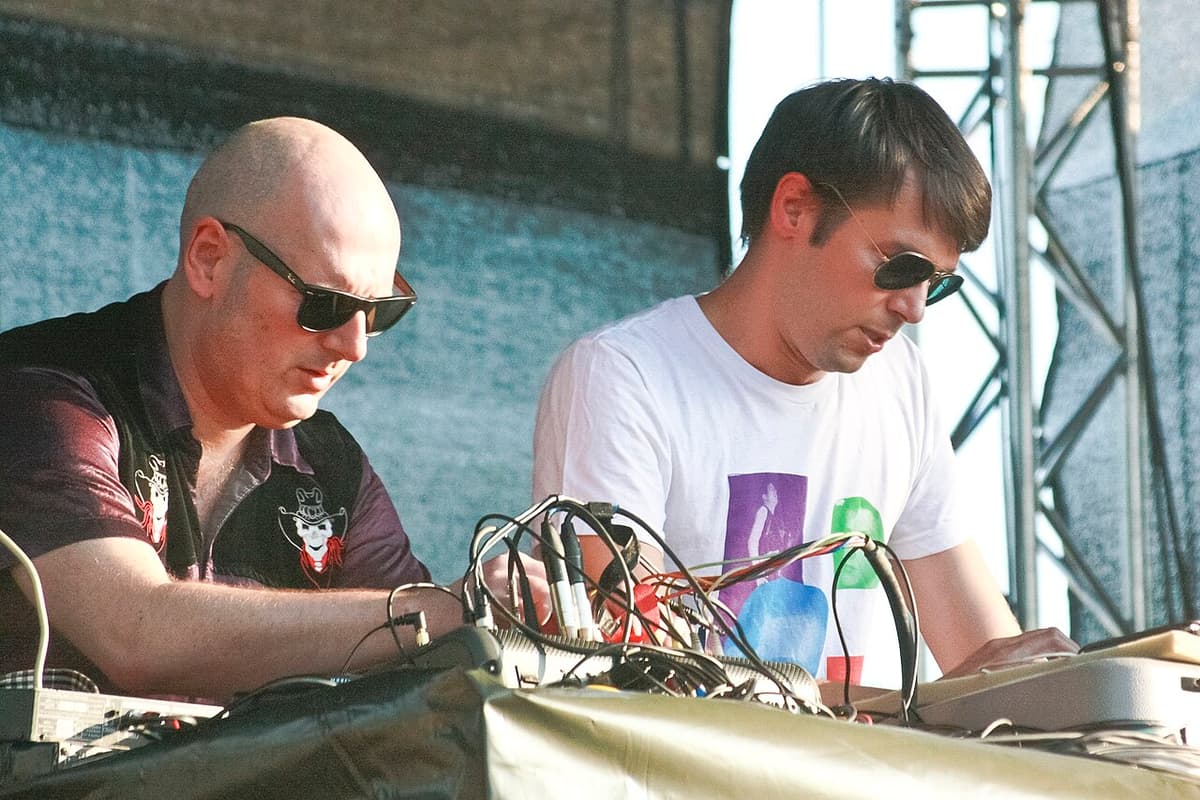
Shares techno, minimal techno, downtempo (subgenres); restless, mysterious, brooding (moods)
Shares techno, minimal techno (subgenres); absent, processed, instrumental only (vocal style)
Shares techno, minimal techno, downtempo (subgenres); restless, mysterious, brooding (moods)
Shares restless, mysterious, brooding (moods); techno, minimal techno (subgenres)
Shares techno, minimal techno, downtempo (subgenres); absent, processed, instrumental only (vocal style)
Shares minimalist, analog warmth, drum machine (production style); mysterious, restless, contemplative (moods)
Shares techno, minimal techno (subgenres); restless, mysterious, intense (moods)
Shares techno, minimal techno (subgenres); mysterious, restless, intense (moods)
Shares techno, restless, minimal techno, instrumental only (signature)
Cassette uses generative AI to enrich its catalog. How we use AI →