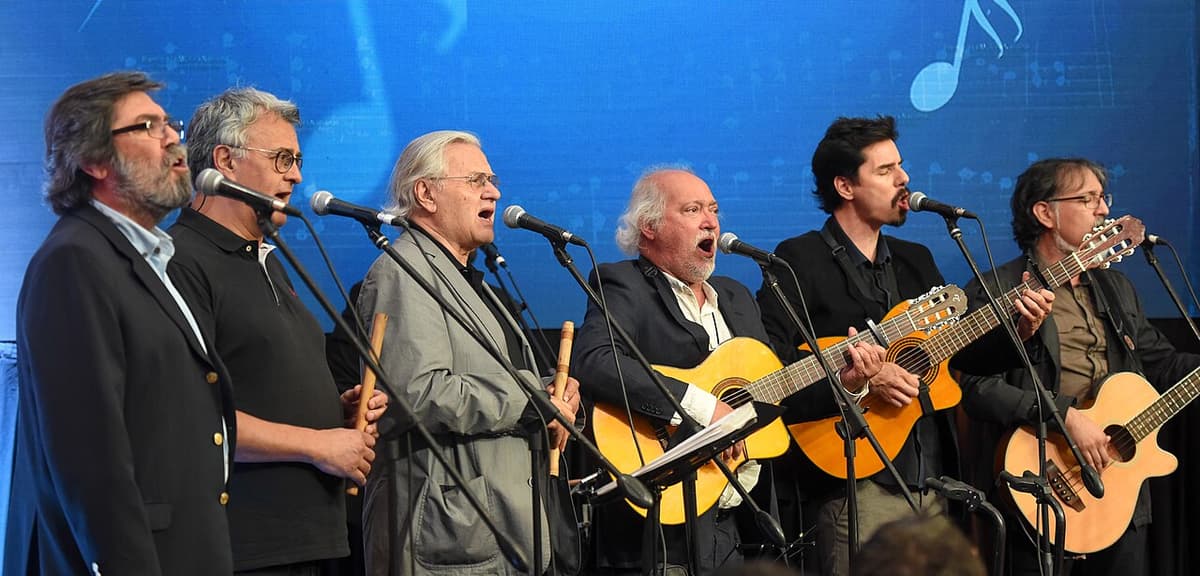
Quilapayún
Stark Andean flutes and thunderous vocal harmonies. This is the sound of collective resistance and the soul of the Chilean Nueva Canción movement.
Stark Andean flutes and thunderous vocal harmonies. This is the sound of collective resistance and the soul of the Chilean Nueva Canción movement.
Quilapayún is a cornerstone of the Nueva Canción Chilena, a movement that revitalized Latin American folk by blending it with leftist political activism. Formed in 1965, the group’s identity was forged under the mentorship of Víctor Jara, leading to a sound that is both musically sophisticated and fiercely populist.
Their work is characterized by the use of indigenous Andean instrumentation, which they used to reclaim cultural identity against Western pop hegemony. Following the 1973 Chilean coup, the band lived in exile in France, which expanded their sonic palette to include more avant-garde and chamber-folk elements while maintaining their role as cultural ambassadors for the resistance. Critically, they are lauded for 'Cantata Santa María de Iquique', a masterpiece that elevated folk music to the level of high-art narrative. Their influence persists in both political music and the global world-folk scene, representing a bridge between traditional indigenous sounds and modern revolutionary song.
Shares flute, chamber folk, open_field, americana (signature)
Shares chamber folk, flute, somber, acoustic folk (signature)
Shares chamber folk, flute, americana, acoustic folk (signature)
Shares chamber folk, americana, acoustic folk, stripped_back (signature)
Shares flute, chamber folk, acoustic folk, bonfire (signature)
Shares open_field, chamber folk, americana, acoustic folk (atmosphere)
Cassette uses generative AI to enrich its catalog. How we use AI →