Quadrophonia captures the exact moment when techno, house, and hip-hop collided in the early 90s European rave scene. Their sound is a relentless barrage of heavy breakbeats layered over driving four-on-the-floor kicks, punctuated by those iconic, aggressive orchestral hits that defined the era. It is music that feels physically large, designed to fill massive industrial spaces with a sense of urgent, futuristic chaos.
What sets them apart is the 'quadrophonic' gimmick turned into a production philosophy. They utilized extreme stereo panning and spatial effects that made the music feel like it was swirling around the listener's head. Combined with Marvin D’s rhythmic rap interjections and a heavy dose of sci-fi sampling, they created a cinematic, almost comic-book version of techno that was as fun as it was intense.
To understand their impact, start with the self-titled track 'Quadrophonia'. It is a masterclass in early rave dynamics, featuring the kind of hooky, abrasive synth work that paved the way for the harder edge of Belgian and Dutch dance music. It is the perfect entry point for anyone wanting to experience the high-octane energy of the pre-trance electronic explosion.
Quadrophonia were a Dutch/Belgian Techno music collective, formed by Olivier Abbeloos (also known as part of T99) and Lucien Foort in the late 1980s, with several of their tracks performed by Marvin D (Marvin Tholen). They had two top 40 hits in the United Kingdom. "Quadrophonia", which reached #14 in April 1991, followed by "The Wave of the Future", which charted at number 40 in July of the same year. Three of their other singles were "Find the Time (Part 1)", "Schizofrenia – The Worst Day of My Life" and "The Man with the Masterplan", all three of which were not successful. Later in the year the group released their only album, Cozmic Jam. Following their work in 1991 and 1992, Quadrophonia went on to release three more singles in 1993. They were "Intergalactic Crosstalk (Amazonia)", "Moondance" and "Warp Factor One"; as well as a couple of remix singles in 1997 and 1998, called "Quadrophonia '97 (Remixes Part 1)" and "Quadrophonia '98 (Remixes Part 2)". Quadrophonia also recorded under the aliases CMOS, Holographic Hallucination, and Warp Factor 1 (as well as Orion on one white label release). Marvin D ultimately introduced his friend Ray Slijngaard to Phil Wilde and Jean-Paul de Coster, who together with Anita Doth later formed 2 Unlimited.

Shares techno, house, big beat (subgenres); sample based, drum machine, compressed loud (production style)
Shares techno, house (subgenres); sample based, drum machine, compressed loud (production style)
Shares sample based, drum machine, compressed loud (production style); techno, house, big beat (subgenres)
Shares energetic, euphoric, intense (moods); sample based, drum machine, compressed loud (production style)
Shares techno, house, big beat (subgenres); rap, processed, spoken word (vocal style)
Shares techno, house, big beat (subgenres); energetic, euphoric, restless (moods)
Shares techno, house, big beat (subgenres); sample based, drum machine, compressed loud (production style)
Shares techno, house, big beat (subgenres); energetic, euphoric, intense (moods)
Shares techno, house, big beat (subgenres); festival, basement show, urban night (atmosphere)
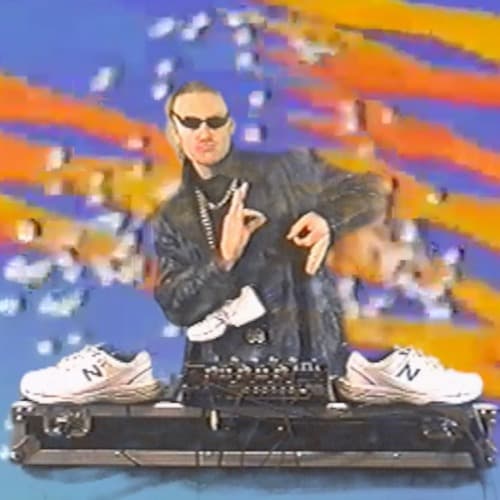
Shares techno, big beat, sample based, turntables (signature)
Shares big beat, sample based, turntables, techno (subgenre)
Cassette uses generative AI to enrich its catalog. How we use AI →