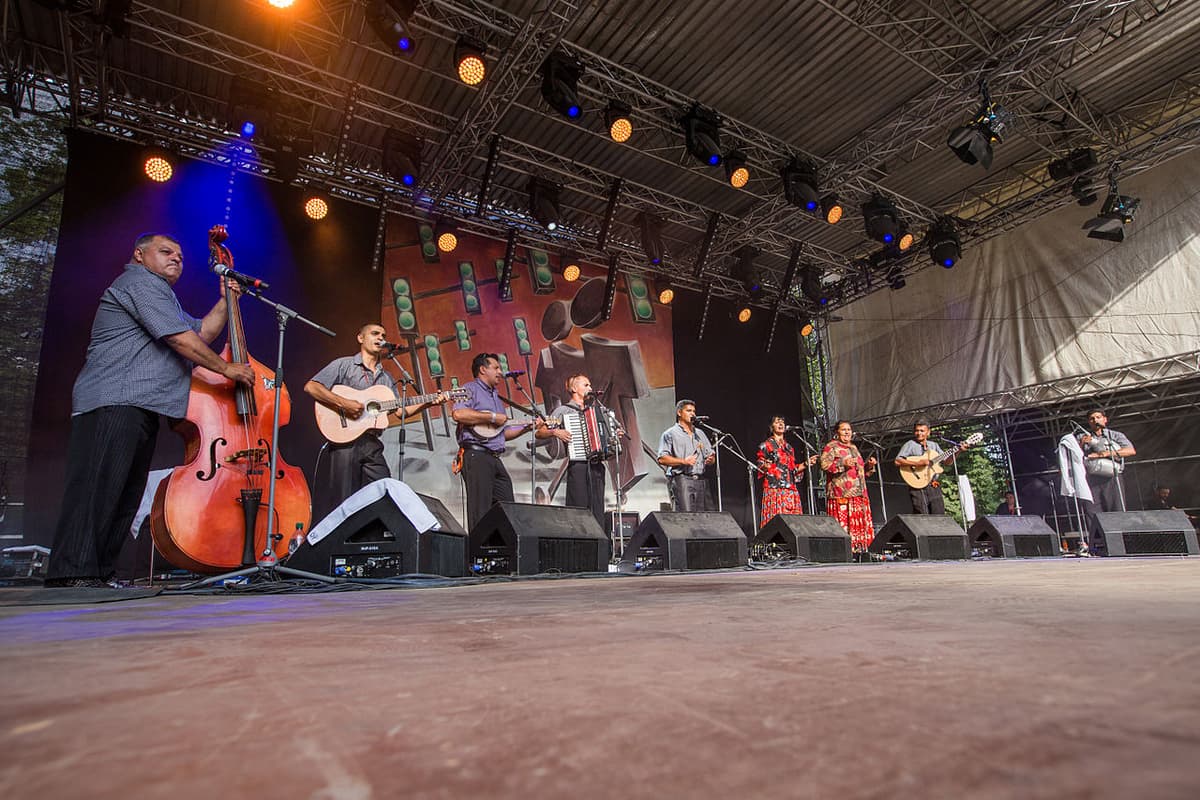
Parno Graszt
High-velocity acoustic Roma music that feels like a village wedding in full swing. Raw, communal, and impossibly joyful folk with a heartbeat of wooden percussion.
High-velocity acoustic Roma music that feels like a village wedding in full swing. Raw, communal, and impossibly joyful folk with a heartbeat of wooden percussion.
This is music that breathes with the collective lungs of a community. Parno Graszt doesn't just perform; they invite you into a centuries-old tradition of celebration that feels entirely present and urgent. The sound is dominated by the frantic, rhythmic strumming of acoustic guitars and the unique, metallic clatter of spoons and milk cans used as percussion. It is high-energy, acoustic, and deeply human.
What sets them apart is the lack of artifice. While many Balkan or Roma acts lean into polished brass or electronic fusion, Parno Graszt remains rooted in the 'Paszab' style. You can hear the floorboards creaking and the spontaneous shouts of dancers in the background. The vocal harmonies are thick and unrefined in the best way, sounding like a family singing together rather than a rehearsed studio ensemble.
Start with 'Járom az utam' to experience their signature blend of melancholy and explosive joy. It is the perfect entry point for anyone who wants to hear folk music that hasn't been sterilized for a concert hall. It’s music for long nights, heavy meals, and the kind of dancing that leaves your shoes ruined.
Parno Graszt is a Roma music ensemble from Paszab, Hungary founded in 1987. "Parno Grast" means "white horse" in the Romani language, with "graszt" using the Hungarian orthography 'sz' for 's'. In the Roma culture white is a symbol of purity and horses are a symbol of freedom. Their debut album Hit the piano reached Number 7 on the World Music Chart Europe in October 2002. In 2004 Hungarian Television and the BBC produced a music documentary about Parno Graszt. After their second album, Járom az utam (2004), Parno Graszt was voted in the top 10 for "best artist of the year", 2005, by the Swiss music magazine Vibrations. In 2016, they competed in A Dal, the national final selection for Hungary in the Eurovision Song Contest with the song Már nem szédülök, and reached the final.
Cassette uses generative AI to enrich its catalog. How we use AI →


