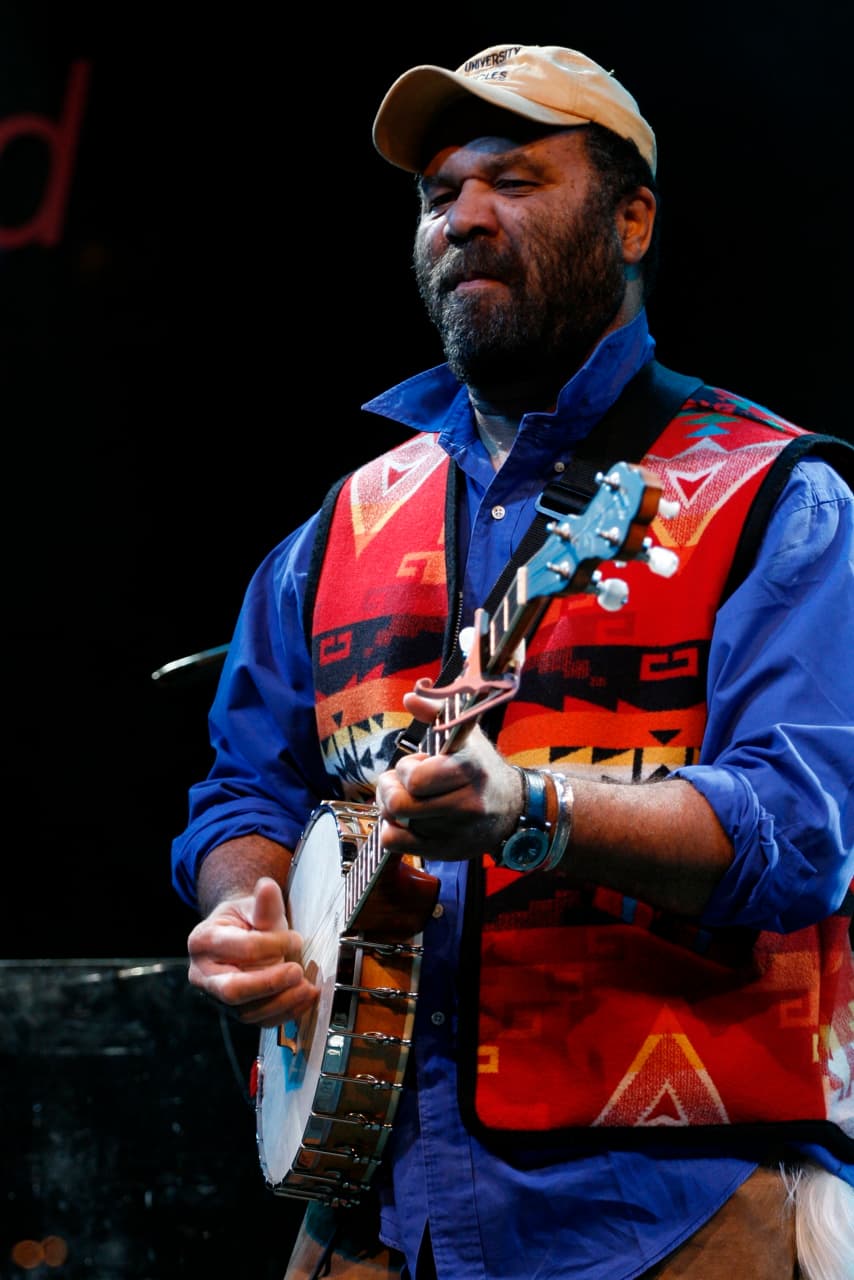
Otis Taylor
Hypnotic, trance-like blues driven by haunting banjo and gritty baritone vocals. Dark, cinematic storytelling for deep reflection and late-night drives.
Hypnotic, trance-like blues driven by haunting banjo and gritty baritone vocals. Dark, cinematic storytelling for deep reflection and late-night drives.
Otis Taylor creates a sound that feels less like a performance and more like an ancient, heavy weather system moving through the room. It is built on the 'trance blues' philosophy: repetitive, circular rhythms that lock into a groove and refuse to let go. The music is often sparse, using the sharp, metallic pluck of the banjo to cut through thick, atmospheric layers of cello, harmonica, and electric guitar. It is a sound that feels both prehistoric and modern, rooted in the dirt but polished by a cinematic eye.
What truly sets Taylor apart is his refusal to follow standard blues structures. He often abandons the typical 12-bar progression in favor of one-chord vamps that build tension without ever providing a cheap resolution. His voice is a rich, weathered baritone that delivers lyrics about historical trauma, social injustice, and the weight of mortality with a calm, almost detached intensity. It is music that demands your full attention, rewarding the listener with a sense of profound, heavy beauty.
Start with 'Recapturing the Banjo' or 'Truth is Not Fiction' to hear how he reclaims the banjo as a fierce, rhythmic engine. These albums showcase his ability to turn a simple folk instrument into something menacing and psychedelic. If you want to hear his most cinematic work, look for 'Nasty Letter' or 'Ten Million Slaves', tracks that have famously anchored gritty film scores.
Otis Taylor (born July 30, 1948, Chicago, Illinois, United States) is an American blues musician. He is a multi-instrumentalist whose talents include the guitar, banjo, mandolin, harmonica, and vocals. In 2001, he was awarded a fellowship to the Sundance Film Composers Laboratory.
Cassette uses generative AI to enrich its catalog. How we use AI →


