Nekromantix
High-octane horror rock led by a custom coffin-shaped bass. It is a graveyard smash of 50s rockabilly swing and 80s punk aggression.
High-octane horror rock led by a custom coffin-shaped bass. It is a graveyard smash of 50s rockabilly swing and 80s punk aggression.
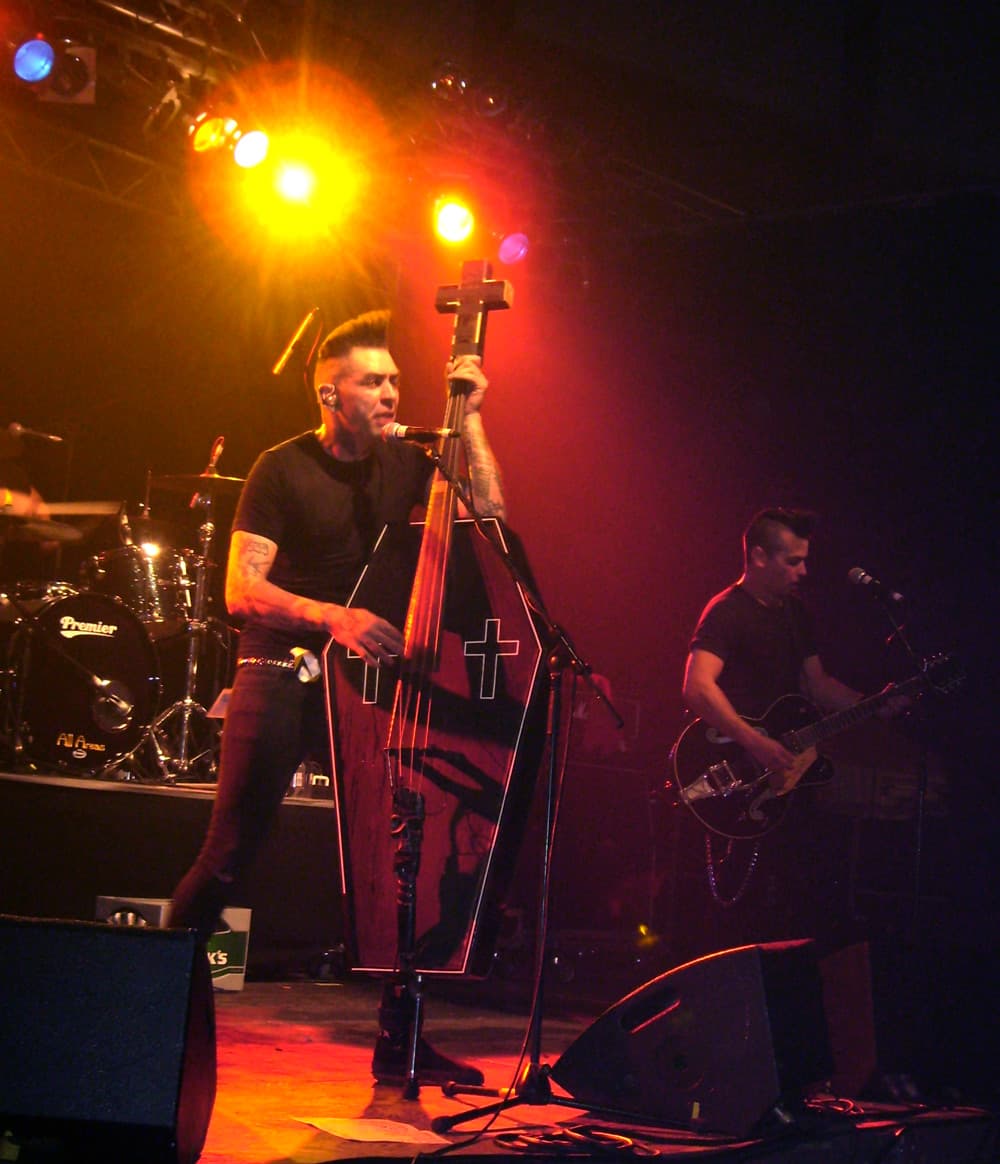
Nekromantix sounds like a midnight double feature at a haunted drive-in. The music is anchored by Kim Nekroman's iconic coffin-shaped upright bass, which provides a percussive, woody thwack that drives the rhythm forward with relentless momentum. It is a sonic collision where the smooth, baritone crooning of early rock and roll meets the jagged, distorted energy of street punk. The guitars alternate between surf-inspired twang and high-speed power chords, creating a sound that is simultaneously vintage and visceral.
What sets them apart is their commitment to the 'horror-billy' aesthetic without ever losing the musicality. While many bands in the genre lean into camp, Nekromantix maintains a genuine sense of technical skill, particularly in the intricate slap-bass patterns and the tight, aggressive drumming. The atmosphere is consistently dark yet celebratory, treating ghouls, monsters, and the macabre with a playful, rebellious spirit that feels like a secret club for the weird and the wired.
Start with 'Curse of the Coffin' to hear the band at their most foundational and raw. It captures the essence of the European psychobilly scene they helped define, showcasing the perfect balance of horror-themed storytelling and high-energy rock and roll that would eventually lead them to a Grammy nomination and a spot on the legendary Hellcat Records roster.
The Nekromantix is a Danish psychobilly band founded in Copenhagen in 1989. Their lyrics are generally structured around monster and horror themes. A central icon of the band's image is founder and frontman Kim Nekroman's "coffinbass", a custom-built double bass with a body in the shape of a coffin and a headstock the shape of a cross. Nekroman has been the sole constant member of the band. The current lineup consists of guitarist Francisco Mesa and drummer Mike Mata. The Nekromantix released five albums on various European record labels during their first decade, then crossed over to American audiences in the early 2000s by signing to Los Angeles–based Hellcat Records, through which they have released three albums since 2002. Their eighth studio album, What Happens in Hell, Stays in Hell, was released in August 2011.
Shares rockabilly, punk rock, garage rock (subgenres); live recording, analog warmth, studio polished (production style)
Shares rockabilly, punk rock, garage rock (subgenres); rebellious, playful, energetic (moods)
Shares rockabilly, punk rock, garage rock (subgenres); rebellious, playful, energetic (moods)
Shares rockabilly, punk rock, garage rock (subgenres); analog warmth, studio polished, live recording (production style)
Shares rockabilly, punk rock, garage rock (subgenres); rebellious, playful, energetic (moods)
Shares rockabilly, punk rock (subgenres); analog warmth, live recording, lo fi (production style)
Shares rockabilly, punk rock, garage rock (subgenres); analog warmth, lo fi, live recording (production style)
Shares horror punk, upright bass, rockabilly, garage rock (signature)
Cassette uses generative AI to enrich its catalog. How we use AI →