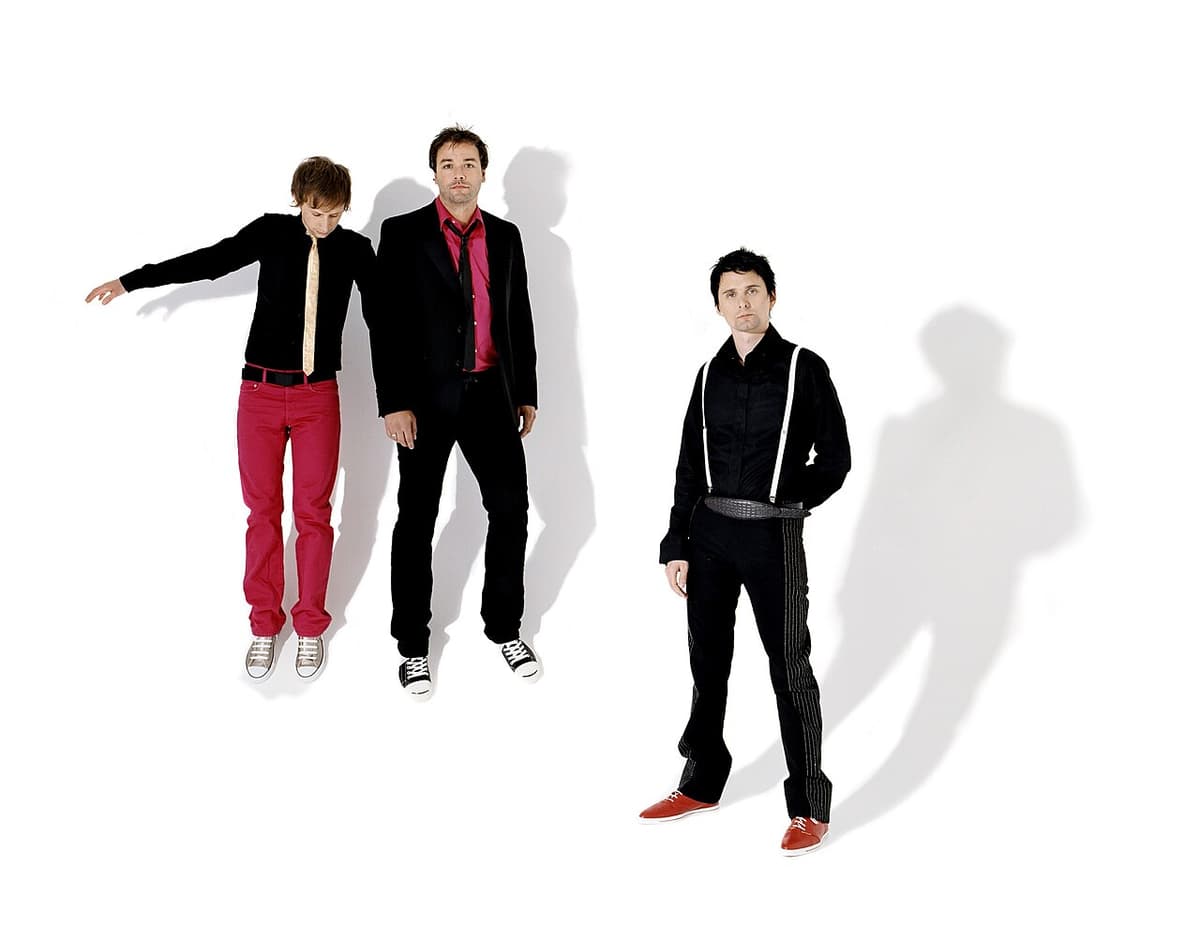
Operatic vocals meet heavy fuzz-bass and symphonic grandeur. High-stakes rock that feels like a rebellion staged in deep space. Best for feeling invincible.


Muse sounds like the end of the world reimagined as a neon-lit rock opera. Their music is defined by a massive, widescreen scale that bridges the gap between Rachmaninoff and Rage Against the Machine. It is characterized by Matt Bellamy’s soaring, vibrato-heavy falsetto and Chris Wolstenholme’s iconic, distorted bass lines that provide a heavy, mechanical pulse. What truly sets them apart is their fearless commitment to the 'too much' aesthetic. They blend classical piano flourishes, space-rock synthesizers, and heavy metal riffs into a singular, paranoid, and exhilarating sonic identity. Every song feels like it is building toward a catastrophic but beautiful explosion, often touching on themes of extraterrestrial life, government surveillance, and human resilience. Start with 'Origin of Symmetry' to hear their raw, experimental power, or 'Black Holes and Revelations' for the perfect intersection of their rock roots and electronic ambitions. They are the ultimate stadium band, turning existential dread into a communal, fist-pumping celebration.
Muse is an English rock band from Teignmouth, Devon, formed in 1994. The band consists of Matt Bellamy (lead vocals, guitar, keyboards), Chris Wolstenholme (bass guitar, backing vocals), and Dominic Howard (drums, percussion). Muse released their debut album, "Showbiz," in 1999, which featured Bellamy's falsetto and a melancholic alternative rock style. Their second album, "Origin of Symmetry" (2001), incorporated wider instrumentation and classical influences and contributed to their reputation for energetic live performances. "Absolution" (2003) included further classical elements, such as strings on tracks like "Butterflies and Hurricanes," and became the first of seven consecutive UK number-one albums. "Black Holes and Revelations" (2006) incorporated electronic and pop elements, as seen in singles such as "Supermassive Black Hole," and helped the band achieve wider international recognition. "The Resistance" (2009) and "The 2nd Law" (2012) explored themes of government control and civil unrest, establishing Muse as a major stadium act. Their seventh album, "Drones" (2015), which topped the US Billboard 200, was a concept album about drone warfare and marked a return to a harder rock sound. "Simulation Theory" (2018) prominently featured synthesizers and drew inspiration from science fiction and the simulation hypothesis. Their ninth album, "Will of the People" (2022), combined elements from previous albums and was released in August 2022. Muse have received multiple awards, including two Grammy Awards, two Brit Awards, five MTV Europe Music Awards, and eight NME Awards. In 2012, they were honored with the Ivor Novello Award for International Achievement by the British Academy of Songwriters, Composers and Authors. As of October 2022, Muse had sold over 30 million albums worldwide. Full Wikipedia article: https://en.wikipedia.org/wiki/Muse_(band) Studio albums Showbiz (1999) Origin of Symmetry (2001) Absolution (2003) Black Holes and Revelations (2006) The Resistance (2009) The 2nd Law (2012) Drones (2015) Simulation Theory (2018) Will of the People (2022) Read more on Last.fm. User-contributed text is available under the Creative Commons By-SA License; additional terms may apply.