Moby Dick is a foundational pillar of the Hungarian metal scene, formed in Sopron in 1980. While they spent the 1980s building a cult following through demos and live performances, their true impact was felt in the early 1990s following the release of their debut 'Ugass kutya!'
Their sound is a localized evolution of thrash metal, incorporating the technical precision of Western influences like Metallica and Slayer but infusing it with a distinctively grim, Eastern European social perspective. Throughout the 90s, they evolved to include more 'groove metal' elements, aligning them with the global shift toward heavier, more rhythmic textures. They are critically regarded as one of Hungary's most successful metal exports, maintaining a consistent presence despite line-up changes. Their influence is visible across the Hungarian rock and metal landscape, bridging the gap between traditional heavy metal and the more aggressive modern subgenres. They occupy a cultural space similar to Sepultura in Brazil or Vader in Poland: national champions of a global sound.


Shares mid-tempo groove breakdowns, galloping palm-muted riffs, thrash metal, heavy metal (detail)
Shares thrash metal, heavy metal, gravelly, rebellious (signature)
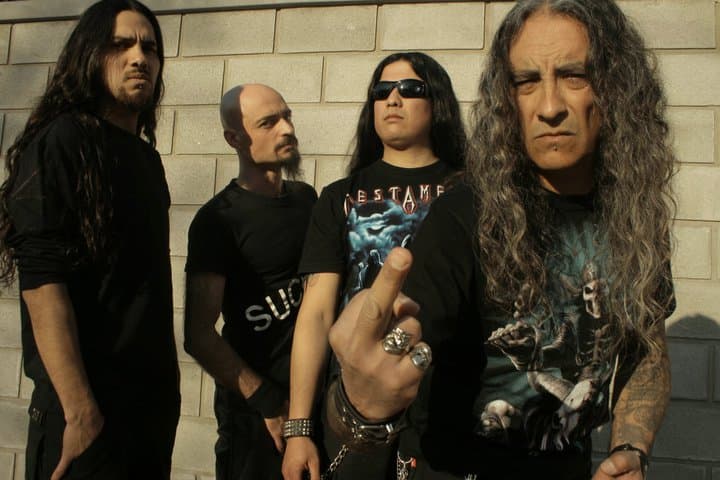
Shares mid-tempo groove breakdowns, snare-heavy d-beat patterns, galloping palm-muted riffs, thrash metal (detail)
Shares dual-guitar harmonic solos, snare-heavy d-beat patterns, galloping palm-muted riffs, thrash metal (detail)
Shares snare-heavy d-beat patterns, galloping palm-muted riffs, thrash metal, heavy metal (detail)
Shares galloping palm-muted riffs, thrash metal, heavy metal, gravelly (detail)
Shares thrash metal, heavy metal, rebellious, aggressive (signature)
Shares galloping palm-muted riffs, thrash metal, heavy metal, defiant (detail)
Shares galloping palm-muted riffs, thrash metal, heavy metal, gravelly (detail)
Cassette uses generative AI to enrich its catalog. How we use AI →