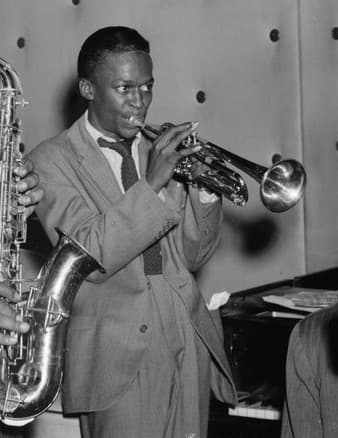
Miles Davis
Cool, detached trumpet lines that define the sound of the city after dark. From quiet modal masterpieces to electric fusion, it is the ultimate late-night companion.
Cool, detached trumpet lines that define the sound of the city after dark. From quiet modal masterpieces to electric fusion, it is the ultimate late-night companion.
After dropping out of Juilliard to play in Charlie Parker's bebop quintet, trumpeter Miles Davis spent five decades reshaping the architecture of American music.
Raised in East St. Louis, the bandleader and composer became the central node of modern jazz, pioneering cool jazz, modal jazz, and electronic fusion. Rather than settling into a singular style, Davis operated as a relentless curator of talent, using his clear signature tone—played sharp and without vibrato—to anchor a succession of historic ensembles that redefined the boundaries of improvisation.

A sharp, clean trumpet blast cuts through the dense clutter of bebop, clearing a path for a revolutionary way of thinking about space. This is the precise moment the sextet traded frantic chord changes for the cool, open expanses of modal jazz, perfecting a sophisticated metropolitan pulse that redefined modern music. While it stands as the final studio gathering of a legendary rhythm section, the record feels less like a farewell and more like a thrilling leap into the future. You can feel the tension release as the band relaxes into these wider, simpler scales, paving the way for everything to come.
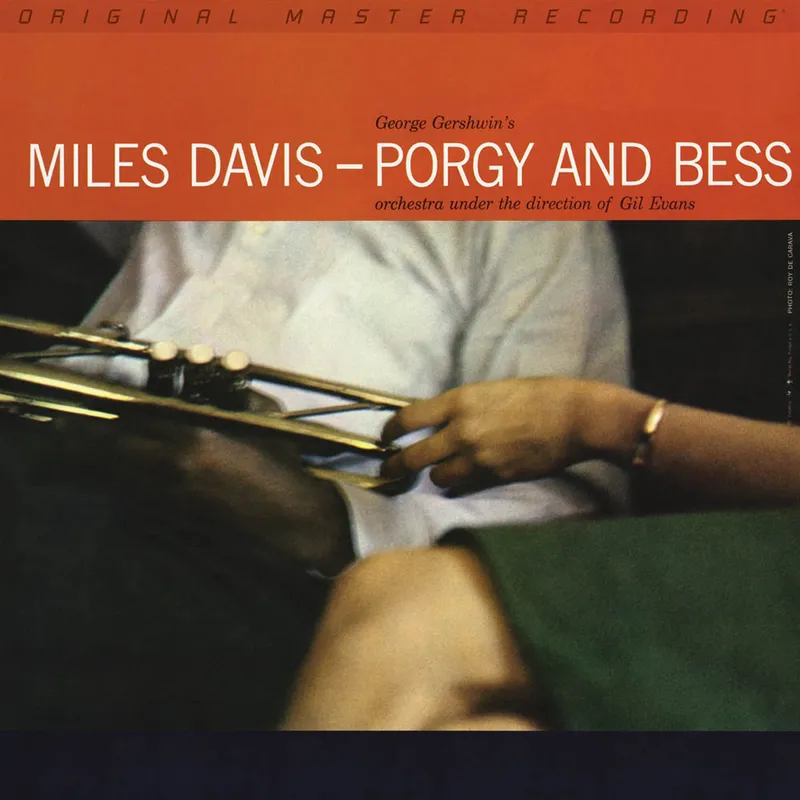
A cool, metallic trumpet line floats over a wall of velvet-thick brass, stepping into the spotlight to sing where a human voice should be. This collaboration does not merely adapt Gershwin; it translates his theater into a late-night dialogue between soloist and orchestra. You are pulled into a dense, shadowed space where the big band breathes as a single instrument, allowing a quiet, piercing melancholy to reshape these familiar melodies from the inside out.
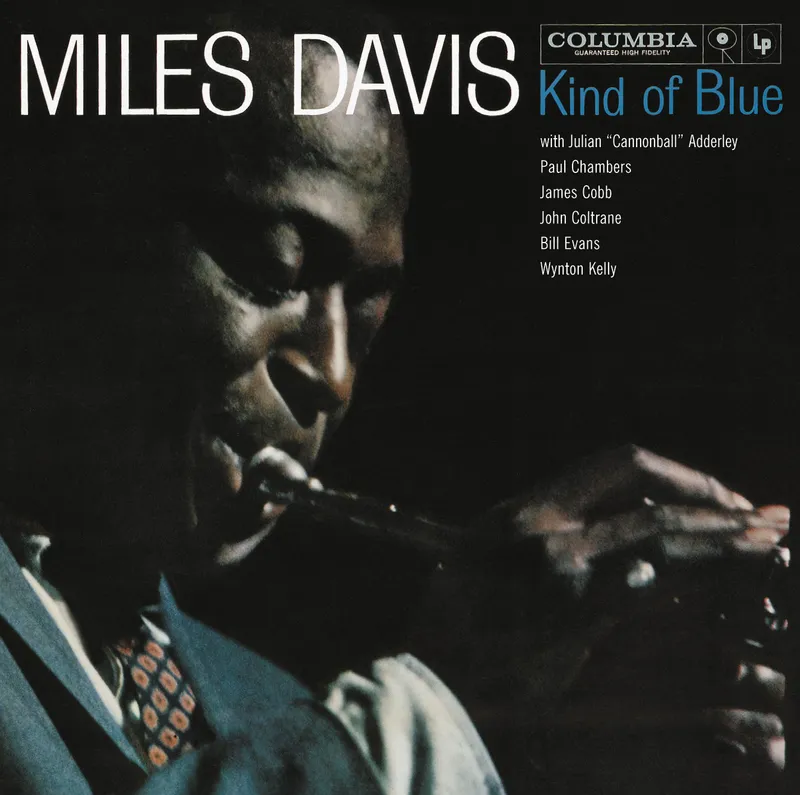
Late-night melancholy suspended in open air
A single, sustained trumpet note hangs in the quiet of a high-ceilinged church studio, clearing away the frantic clutter of bebop to let the music breathe. This session traded rapid chord changes for wide-open modal spaces, perfecting a cool, late-night intimacy that changed how musicians improvise. You can feel the damp New York pavement outside through Bill Evans’s sparse, watery piano chords and the easy, conversational swing of the rhythm section. It is the sound of six masters slowing down, choosing silence over speed, and capturing a blue, smoky atmosphere that feels entirely timeless.

Horns repeat a single, haunting melody like a slow-spinning carousel while the drums and bass fracture into a wild, independent sprint underneath. This is the moment acoustic jazz stopped behaving, abandoning the traditional cycle of solos to let the entire quintet improvise at once. You feel the music hovering in a tense, beautiful suspension, caught between the cool restraint of the past and the electric abstraction just over the horizon. It is a quiet revolution of friction and shadow, where the rhythm section leads the chase and the brass simply watches the world blur by.
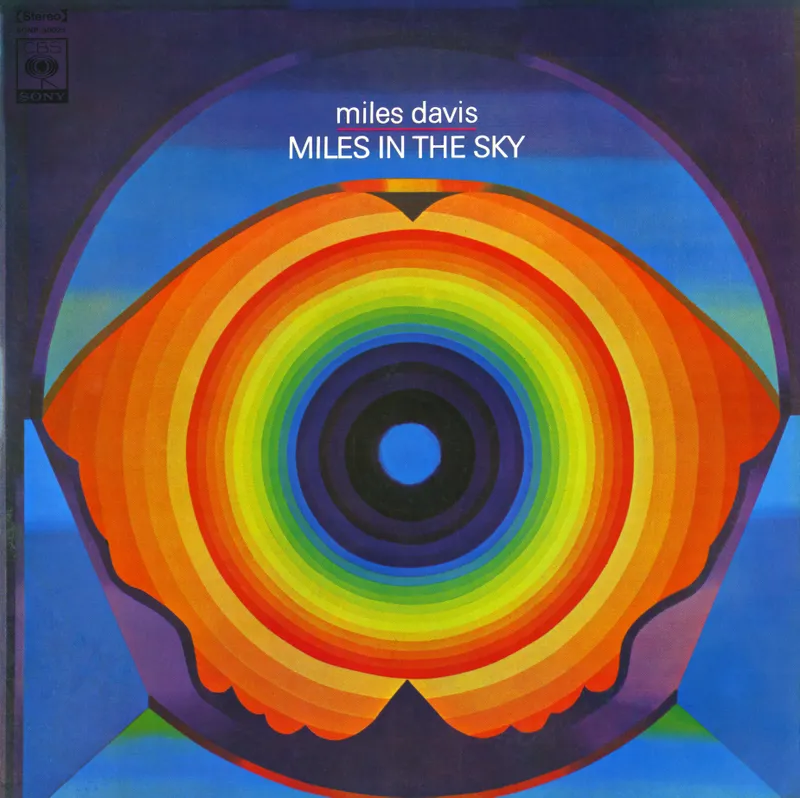
A sharp, metallic hum replaces the warm wooden bass, cutting through the smoky air of the studio. Electric piano keys chime like wet glass over a steady, driving rock beat that refuses to swing. You are sitting in the middle of a sudden, quiet friction, where the trumpet still bites with cool precision but the ground beneath it has turned to wire and current. It is the sound of five men feeling their way into a plugged-in, neon dusk.
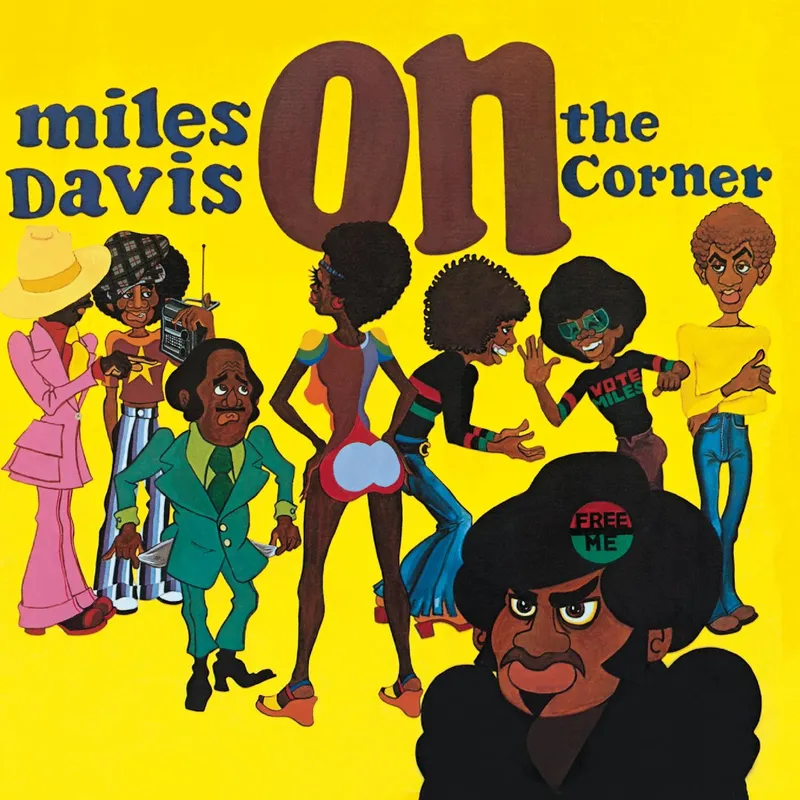
A thick, humid haze of street-corner funk collides with the cold precision of tape splices, trapping you in a crowded, relentless groove. This is not the spacious jazz of the past, but a dense grid of polyrhythms and scratching wah-wah guitars that refuses to let you breathe. By tuning into the frequencies of the youth culture around him, he captured the chaotic, electric friction of a city block at dusk, trading elegance for pure, hypnotic heat.
The trumpeter's death in 1991 closed a five-decade campaign of deliberate, stylistic self-disruption.
What remains is a monumental catalog that resists easy canonization, stretching from acoustic perfection to polarizing, street-level electronics. Even his posthumous, archival releases confirm that his true genius lay not in perfecting a single genre, but in his uncompromising refusal to stand still.
Shares bebop, cool jazz, trumpet, upright bass (subgenre)
Shares bebop, cool jazz, voice_as_instrument, upright bass (subgenre)
Shares cool jazz, trumpet, jazz fusion, instrumental_only (subgenre)
Shares bebop, cool jazz, trumpet, upright bass (subgenre)
Shares cool jazz, trumpet, jazz fusion, instrumental_only (subgenre)
Shares bebop, cool jazz, voice_as_instrument, upright bass (subgenre)
Cassette uses generative AI to enrich its catalog. How we use AI →