Massacre
Gritty skate punk energy meets sophisticated alternative rock. A blend of raw Buenos Aires underground spirit and melodic, surrealist baritone crooning.
Gritty skate punk energy meets sophisticated alternative rock. A blend of raw Buenos Aires underground spirit and melodic, surrealist baritone crooning.
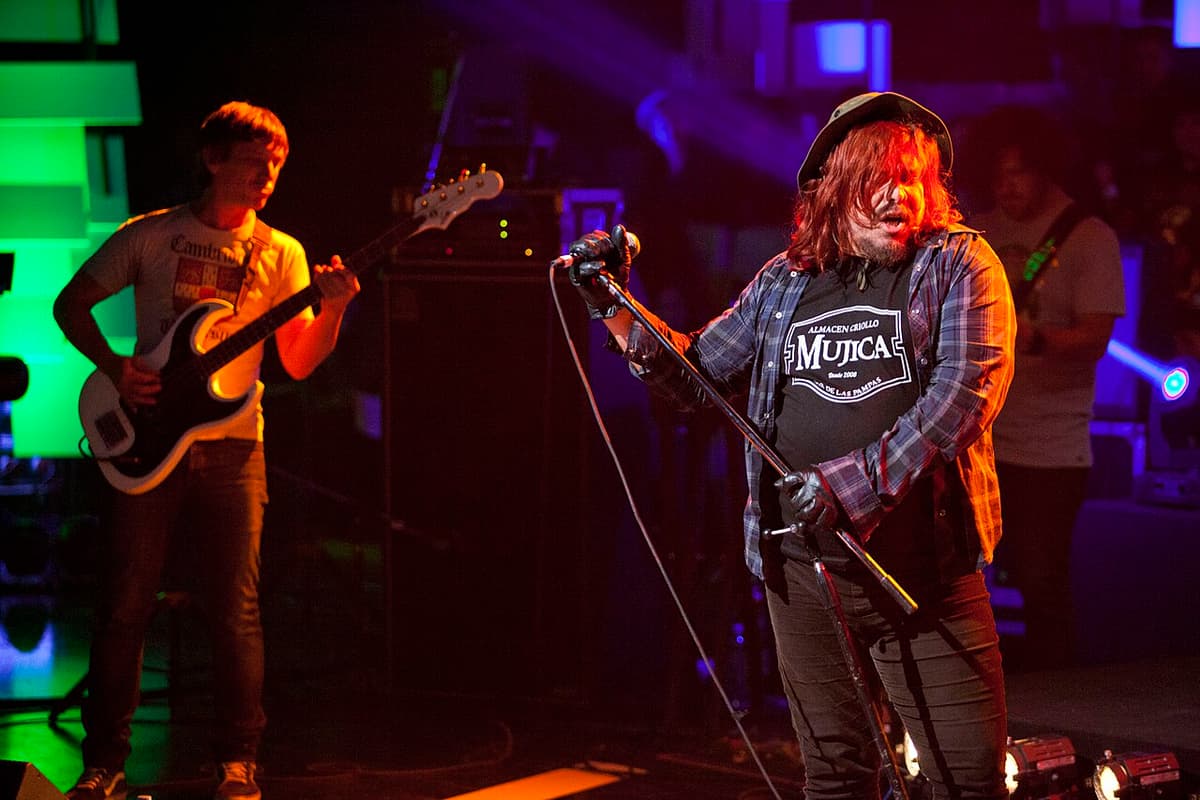
Massacre sounds like the intersection of a dusty skate park and a high-concept art gallery. Their music carries the frantic, propulsive energy of 80s American hardcore, but it is filtered through a uniquely Argentine lens that values melody, atmosphere, and poetic depth. The guitars are thick and overdriven, yet they often spiral into psychedelic textures that suggest a band much more musically curious than your average punk outfit.
What truly sets them apart is the vocal presence of Walas, whose baritone delivery shifts effortlessly from a punk shout to a vulnerable, almost romantic croon. This duality allows the band to occupy a space that is simultaneously aggressive and sentimental. Their evolution from 'Massacre Palestina' to the alternative giants they are today reflects a journey from raw noise to a sophisticated, self-managed sonic identity that defined the independent spirit of Latin American rock.
Start with the album 'El Mamut' to hear them at their most refined and anthemic. It captures the perfect balance of their punk roots and their later-career mastery of big, soaring alternative rock hooks that feel both massive and intimate.
Massacre is an Argentine alternative rock band formed in 1986 in Buenos Aires. It was formed by high school students influenced by American and British bands of the early 80s Alternative Rock movement. Among his influences, artists like Hüsker Dü, TSOL, Dead Kennedys, Black Flag, Nirvana, The Cure, Guns N' Roses, The Ramones, T. Rex, Sumo, Gustavo Cerati, Luis Alberto Spinetta, among others. Taking cues from the Underground rock scene in the United States, they gained notoriety at the time for being an entirely independent group that self-managed its affairs, as well as producing and distributing its own records (attitudes which were still fairly foreign to Latin American rock bands of the era). This helped pave way for the cult status that the band still enjoys within and outside their native Argentina. Originally known as Massacre Palestina, they decided to change their name in 1992, in the wake of the attack on the Embassy of Israel, in order to avoid potential censure and controversy.
Shares lo fi, studio polished, analog warmth (production style); alternative rock, indie rock, post-punk (subgenres)
Shares alternative rock, indie rock, post-punk (subgenres); intense, baritone, crooning (vocal style)
Shares alternative rock, punk rock, indie rock (subgenres); electric guitar, bass, drums (instrumentation)
Shares alternative rock, indie rock, post-punk (subgenres); lo fi, studio polished, analog warmth (production style)
Shares alternative rock, indie rock, punk rock (subgenres); rebellious, nostalgic, energetic (moods)
Shares alternative rock, punk rock, indie rock (subgenres); rebellious, nostalgic, energetic (moods)
Shares alternative rock, punk rock, indie rock (subgenres); electric guitar, drums, bass (instrumentation)
Shares alternative rock, punk rock, indie rock (subgenres); basement show, urban night (atmosphere)
Shares alternative rock, punk rock, post-punk (subgenres); lo fi, studio polished, analog warmth (production style)
Shares alternative rock, punk rock, indie rock (subgenres); studio polished, analog warmth (production style)
Shares baritone, post-punk, indie rock, alternative rock (signature)
Cassette uses generative AI to enrich its catalog. How we use AI →


