Mary Hopkin
Pure, crystalline vocals meet lush 1960s orchestration. Wistful folk-pop that feels like a warm memory of a time you never actually lived through.
Pure, crystalline vocals meet lush 1960s orchestration. Wistful folk-pop that feels like a warm memory of a time you never actually lived through.
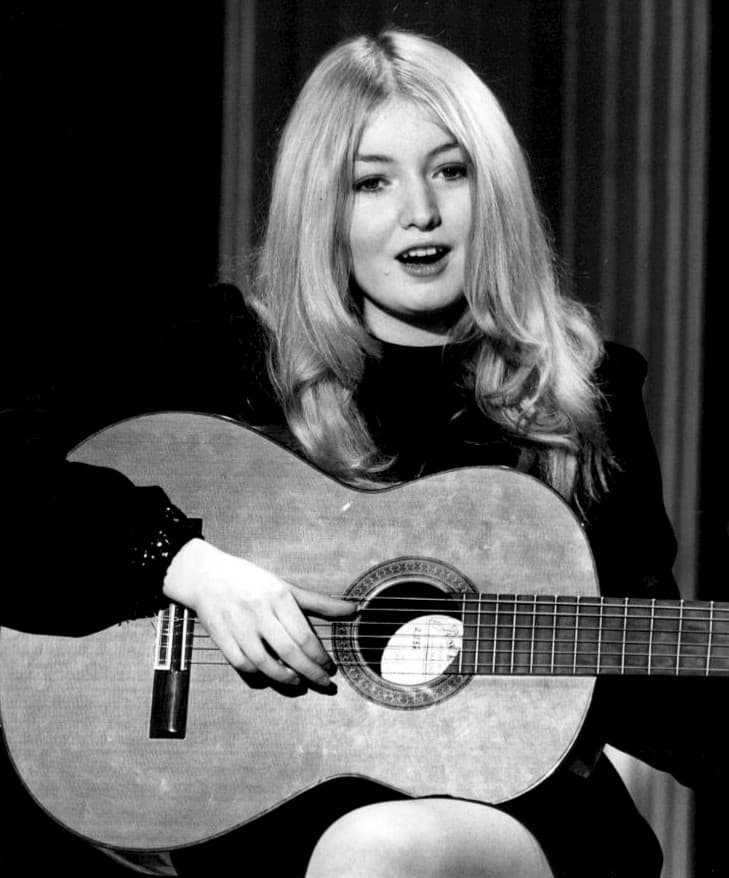
Mary Hopkin is a pivotal figure in the late 1960s British folk-pop transition, famously becoming one of the first signings to the Beatles' Apple Records. Discovered via the talent show 'Opportunity Knocks', her early career was inextricably linked to Paul McCartney, who produced her debut album 'Postcard' and her massive international hit 'Those Were the Days'.
Her sound identity is defined by a 'pure' soprano vocal style that avoided the grit of blues-rock in favor of a crystalline, almost choral precision. Culturally, she represents the 'Apple aesthetic' - a mix of high-budget studio polish, whimsical baroque arrangements, and traditional songwriting values. Her marriage to producer Tony Visconti led to a shift toward more experimental and progressive folk territories, notably on the critically acclaimed 'Earth Song / Ocean Song'. Beyond her pop hits, her influence persists in the 'ethereal wave' and modern chamber folk scenes, and her wordless vocal work for Vangelis on the Blade Runner soundtrack remains a touchstone for atmospheric electronic music. Critically, she is regarded as a vocalist of immense technical skill who chose artistic integrity and family life over the rigors of the pop machine.
Shares chamber pop, baroque pop, acoustic folk, autumn_walk (signature)
Shares soprano, acoustic folk, autumn_walk, cello (signature)
Shares chamber pop, baroque pop, soprano, library (signature)
Shares soprano, chamber pop, baroque pop, cello (signature)
Shares soprano, nostalgic, baroque pop, traditional pop (signature)
Cassette uses generative AI to enrich its catalog. How we use AI →