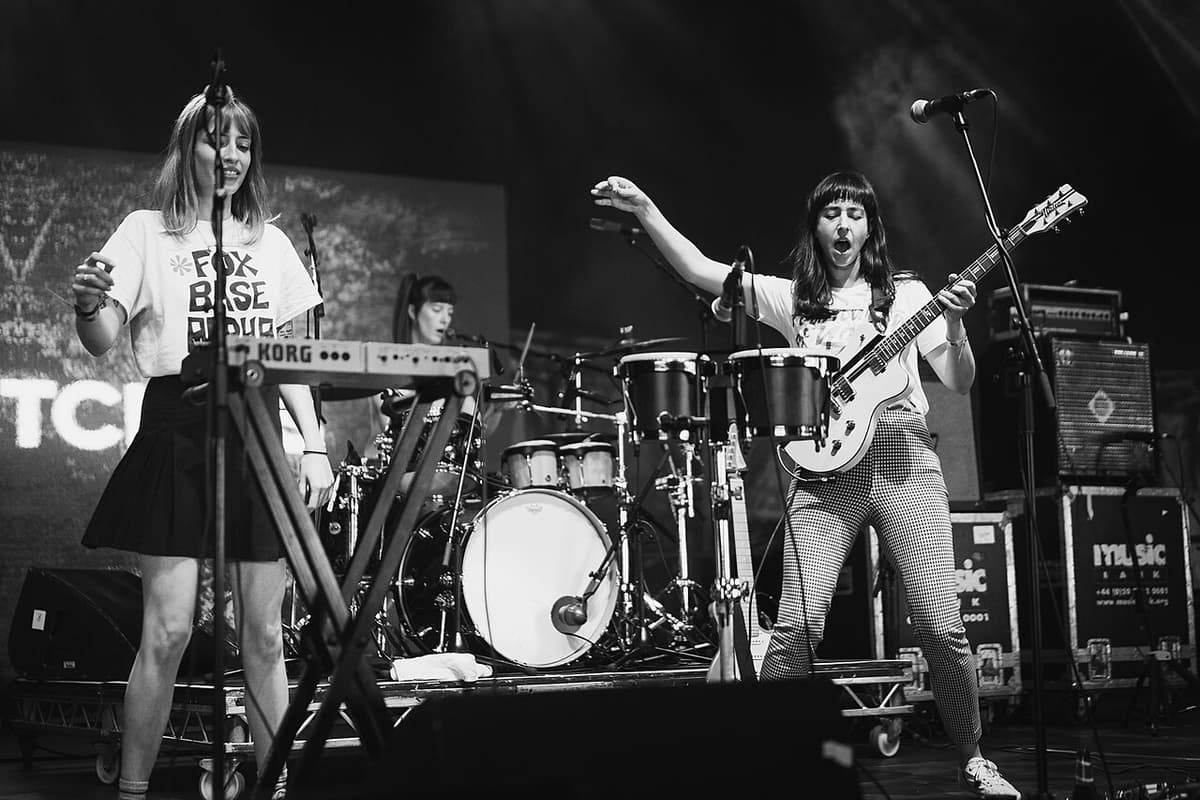
Los Bitchos
Sun-drenched instrumental cumbia meets psychedelic surf rock. High-energy grooves, shimmering guitars, and retro-future vibes for an endless summer party.
Sun-drenched instrumental cumbia meets psychedelic surf rock. High-energy grooves, shimmering guitars, and retro-future vibes for an endless summer party.
Imagine a 1970s beach party in Peru that somehow relocated to a basement in East London. Los Bitchos craft a sound that is instantly recognizable yet geographically impossible, blending the infectious, galloping rhythms of Colombian and Peruvian cumbia with the cool, reverb-soaked aesthetics of classic surf rock. It is music that feels perpetually golden-hour, driven by interlocking percussion and guitar melodies that loop and swirl like heat haze.
What makes them truly distinctive is their 'pan-continental' approach to the groove. While the foundation is Latin American, you can hear the jagged edges of London punk in the drumming and the psychedelic fuzz of Anatolian rock in the guitar leads. The absence of traditional vocals allows the instruments to take on a conversational quality, with keytars and guitars trading playful, melodic barbs over a rock-solid rhythmic pocket.
Start with their debut album, 'Let the Festivities Begin!', for a masterclass in modern instrumental world-fusion. It is the perfect entry point for anyone who wants the sophistication of global psych-rock without losing the danceable, unpretentious energy of a garage band. It is music designed for movement, celebration, and the specific joy of a night that refuses to end.
Los Bitchos is a pan-continental band based in London, England. The band consists of Western Australian-born Serra Petale (guitar), Uruguayan Agustina Ruiz (keytar, synthesisers), Swede Josefine Jonsson (bass guitar), and South London-born Nic Crawshaw (drums, percussion). They predominantly play instrumental music in the style of cumbia from the 1970s and 1980s.
Cassette uses generative AI to enrich its catalog. How we use AI →

