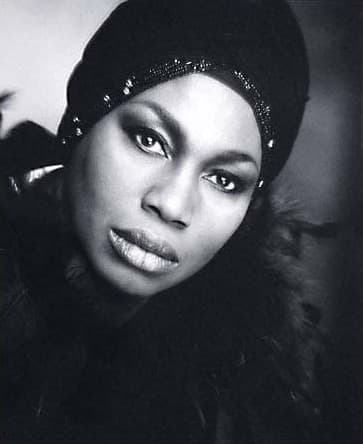
Leontyne Price
Rich, velvet-textured soprano vocals that command the room. Operatic mastery that feels both technically perfect and deeply, humanly vibrant. For the grandest moments.
Rich, velvet-textured soprano vocals that command the room. Operatic mastery that feels both technically perfect and deeply, humanly vibrant. For the grandest moments.
Listening to Leontyne Price is like watching gold being poured into a mold. Her voice possesses a unique 'lirico-spinto' quality, meaning it has the lyrical beauty of a lighter soprano but the 'pushed' power to cut through a massive orchestra. It is a sound of immense physical weight that somehow remains agile and shimmering, particularly in her legendary upper register where her notes seem to float above the music like light reflecting off water.
What truly distinguishes Price is the 'smoky' or 'dusky' quality of her middle and lower registers. While many sopranos sound thin when they descend, Price maintains a rich, molasses-like texture that adds a layer of soulful gravity to her performances. This tonal complexity allowed her to 'own' roles like Aida, where she could pivot from regal authority to heartbreaking vulnerability within a single phrase.
For those new to her work, the 'Prima Donna' series offers a spectacular overview of her range. However, her recordings of Verdi's 'Aida' remain the definitive starting point. It is here that you hear her full emotional spectrum, from the hushed, prayer-like whispers of 'O patria mia' to the soaring, triumphant climaxes that defined a generation of American classical singing.
Leontyne Price ( LEE-ən-teen, lee-ON-teen; born Mary Violet Leontine Price, February 10, 1927) is an American singer who was the first African-American soprano to receive international acclaim. From 1961 she began a long association with the Metropolitan Opera, becoming the first black singer to maintain a sustained relationship with the company. She regularly appeared at the world's major opera houses, including the Vienna State Opera, the Royal Opera House, San Francisco Opera, Lyric Opera of Chicago, and La Scala. She was particularly renowned for her performances of the title role in Giuseppe Verdi's Aida. Born in Laurel, Mississippi, Price studied music at the College of Education and Industrial Arts in Wilberforce, Ohio which at the beginning of her education was a department inside Wilberforce University. By the time she graduated in June 1948 with a degree in music education the department had split from Wilberforce and become its own separate institution, the State College of Education and Industrial Arts at Wilberforce (now known as Central State University). She pursued further studies at the Juilliard School from 1948 until 1952, where she was trained as a soprano by Florence Kimball. Price developed a close relationship with Kimball and continued to study with her until Kimball's death in 1977. Price's first significant professional engagement was in Virgil Thomson's Four Saints in Three Acts which she performed both on Broadway and in Paris at a music festival held by the Congress for Cultural Freedom in 1952. While performing in Paris she continued her education through studies at the Fontainebleau School. Later that same year she starred as Bess in the third revival of George Gershwin's Porgy and Bess, a production which she remained with through the end of 1954 for performances throughout the United States (including a Broadway run), and on two tours to Europe. She married her co-star, bass-baritone William Warfield who portrayed Porgy, just prior to beginning the first European portion of the tour in 1952. They later divorced in 1973. The success of the stage production of Porgy and Bess led to other opportunities for Price, including frequently singing excerpts from that opera with major orchestras across the United States. Other opportunities evolved from these on the concert and recital stage, with Beethoven's Symphony No. 9 and Verdi's Requiem in particular becoming works which she performed frequently on the concert stage. She began a long association with composer Samuel Barber in 1953 when she performed the world premiere of his Hermit Songs with the composer as her accompanist at the Library of Congress; it was the first of many works by Barber which she premiered during her career. They later repeated performances of the piece multiple times, including in 1954 for Price's lauded New York recital debut at Town Hall and in Rome at the International Society for Contemporary Music's Twentieth Century Music Conference. Price also sang Hermit Songs with Barber for her first professional recording for Columbia Masterworks in 1955. In 1955 Price became the first African American to star in a televised opera when she portrayed the title role in Puccini's Tosca with the NBC Opera Theatre. This event was widely viewed as a significant moment in breaking the color barrier for black opera singers who were historically barred from appearing on the opera stage. The success of this performance led to her first contract with an American opera company, the San Francisco Opera, and she made her debut with this organization in 1957 as Madame Lidoine in the United States première, in English, of Poulenc's Dialogues des Carmélites. With the aid of her manager, André Mertens, Price developed a relationship with conductor Herbert von Karajan which launched her international career through many appearances at the Vienna State Opera and the Salzburg Festival among other venues. In the 1958–1959 season she became an internationally lauded artist when she triumphed as Aida for performances in Vienna, Verona, and London. She also had a major success in this role at La Scala in 1960. Price made a successful debut at the Metropolitan Opera (Met) in 1961, as Leonora in Verdi's Il trovatore. Continuing her career there, she starred in a multitude of operas for 20 years, securing her place among the leading performers of the century. One of these works was Barber's Antony and Cleopatra, which she starred in for its world premiere for the grand opening of the newly built Metropolitan Opera House at Lincoln Center on September 16, 1966. She made her farewell opera performance at the Met in 1985 in Aida. In interviews, Price referred to her own voice as that of a lyric soprano. However, critical assessment of her voice has not uniformly agreed. Some writers have referred to her as a lyric soprano and others as a dramatic soprano. Still others have designated her voice as a spinto or "lirico spinto" (Italian for "pus
Cassette uses generative AI to enrich its catalog. How we use AI →


