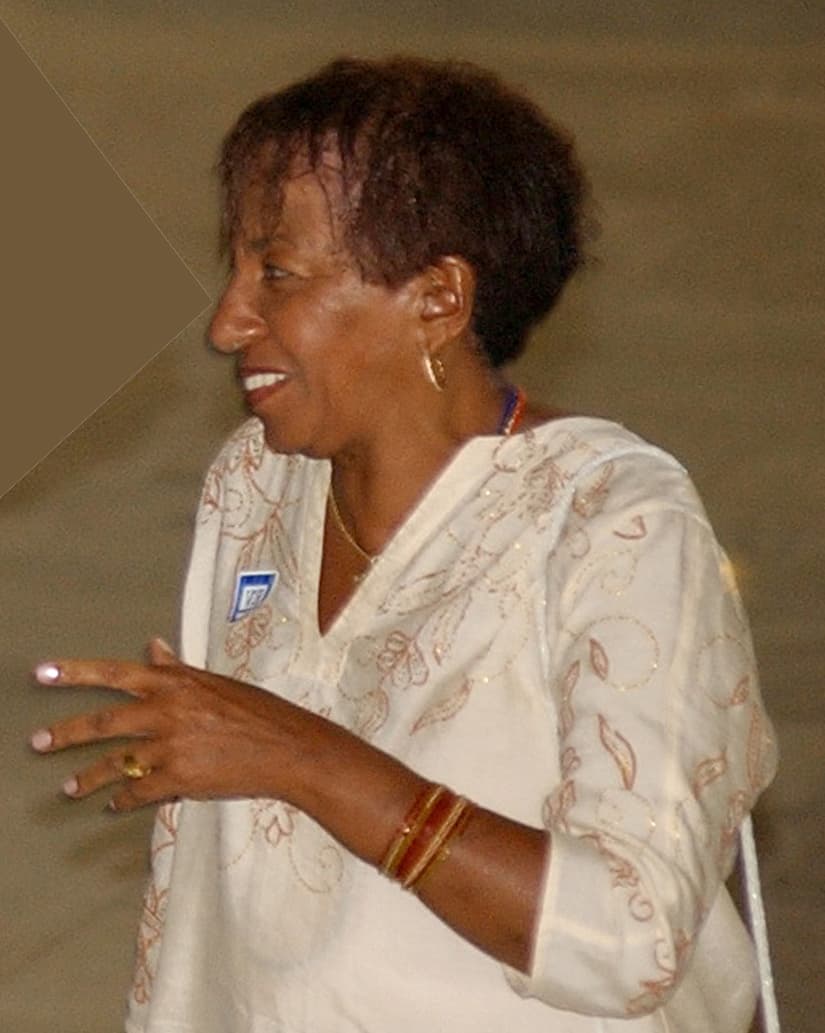
Leci Brandão
Rhythmic, defiant samba that carries the weight of social history with a smile. Warm acoustic grooves and powerful alto vocals for moments of collective strength.
Rhythmic, defiant samba that carries the weight of social history with a smile. Warm acoustic grooves and powerful alto vocals for moments of collective strength.
Leci Brandão’s music is the heartbeat of the Rio de Janeiro suburbs, a rich tapestry of syncopated percussion, bright cavaquinho melodies, and a voice that feels like a firm, supportive hand on your shoulder. It is music that refuses to separate joy from struggle, wrapping sharp social critiques in the irresistible, swaying warmth of traditional samba and MPB.
What makes her truly distinctive is her role as a 'cronista' - a chronicler of the everyday lives of Black Brazilians and the LGBTQ+ community long before it was safe to be so vocal. Her arrangements often lean into the 'partido-alto' style, characterized by a driving, communal energy where the call-and-response between her and the backing choir feels like a conversation between friends.
Start with her 1975 debut 'Antes Que Eu Volte A Ser Nada' to hear the raw, poetic foundations of her sound, or jump into 'A Cara Do Povo' for the high-energy, celebratory spirit that defined her later career. It is essential listening for anyone who believes that a great groove can be a revolutionary act.
Leci Brandão (Portuguese pronunciation: [leˈsi brɐ̃nˈdɐ̃w], Rio de Janeiro, September 12, 1944) is a Brazilian politician, singer and composer of Brazilian Popular Music (Música Popular Brasileira or MPB). She is the daughter of Dona Lecy (Lecy de Assumpção Brandão). Her performance of "Quero Sim" won the National Meeting of Samba Composers in 1973 and her debut album came out in 1974. She received other awards during her career and, in the 1980s, she became a popular commentator for Brazil's TV channel's coverage of famous samba school carnival parades. One of Leci Brandão's latest performances was in 2005 with Raça Brasileira: 20 Anos (DVD: 'Raca Brasileira', rated NR, one hour/2005) with many other Brazilian samba greats (i.e. Beth Carvalho, Arlindo Cruz, Almir Guineto, etc.). As a Black Brazilian, a woman, and an artist, Leci Brandão has long taken opportunities to declare herself against racism and all other forms of discrimination. She came out as gay in an interview in 1978. She has lent her name, voice and cache by performing in LGBT events against homophobia. In the 2012 carnival, she was honored by the Escola de samba Académicos del Tatuapé.
Cassette uses generative AI to enrich its catalog. How we use AI →


