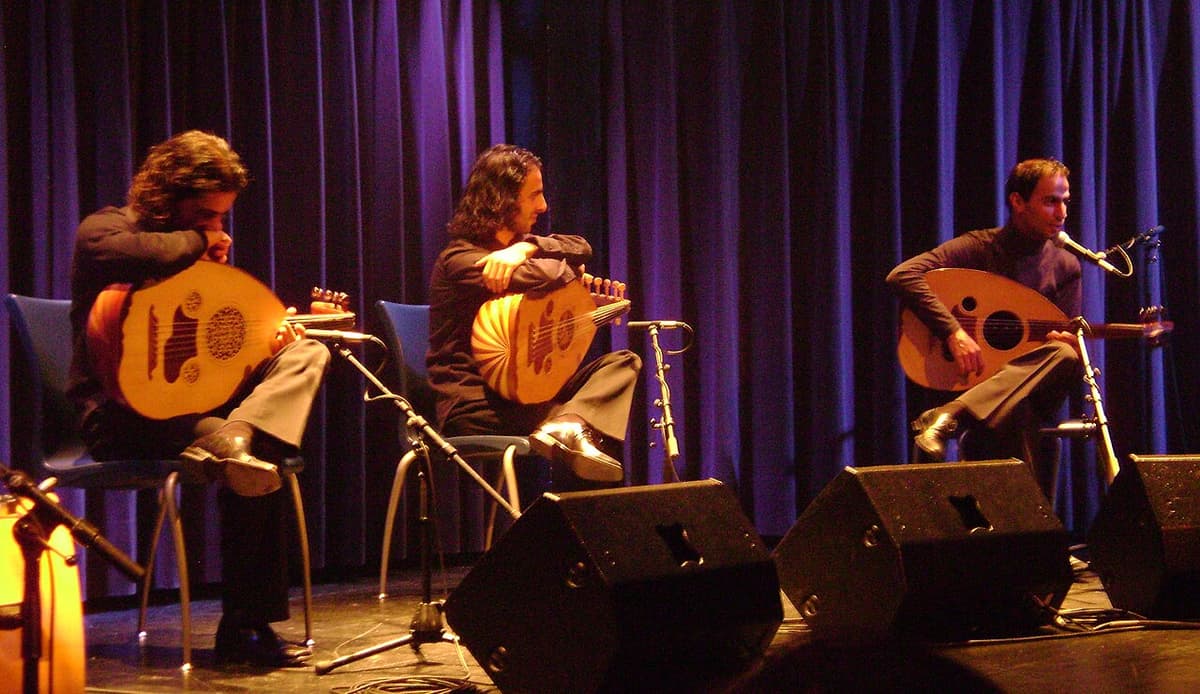
Le Trio Joubran
Intricate, interlocking oud melodies that breathe with the weight of history. Palestinian chamber music that feels both ancient and urgently modern.
Intricate, interlocking oud melodies that breathe with the weight of history. Palestinian chamber music that feels both ancient and urgently modern.
Listening to Le Trio Joubran is like entering a conversation held entirely in wood and wire. The sound is defined by the unique interplay of three ouds, creating a dense, polyphonic texture that traditional solo performance cannot reach. It is earthy and grounded, yet the melodies often spiral upward into moments of intense, spiritual yearning. The resonance of the instruments is so clear you can almost feel the grain of the wood.
What sets them apart is their ability to treat the oud not just as a melodic lead, but as a rhythmic and harmonic engine. They use the bodies of their instruments for percussion, tapping out complex meters that underpin their soaring improvisations. There is a profound sense of brotherhood in the timing; the three players move as a single organism, anticipating each other's microtonal shifts and dynamic swells with telepathic precision.
Start with the album Majâz to hear their most focused melodic work, or explore AsFâr for a more expansive, atmospheric journey. This is music for when you want to feel the gravity of the world but also the possibility of grace within it. It demands your full attention and rewards it with a deep, resonant peace.
Le Trio Joubran (Arabic: الثلاثي جبران) is an oud trio playing traditional Palestinian music. The trio consists of brothers Samir, Wissam, and Adnan Joubran, originally from Nazareth and currently dividing their time between Nazareth, Ramallah and Paris. The Joubran brothers come from a well-known family with a rich artistic heritage. Their mother, Ibtisam Hanna Joubran, sang the Muwashahat (poems that originated in Arab Spain) while their father, Hatem, is among the most renowned stringed-instrument makers in Palestine and in the Arab world. They are the first oud trio.
Cassette uses generative AI to enrich its catalog. How we use AI →


