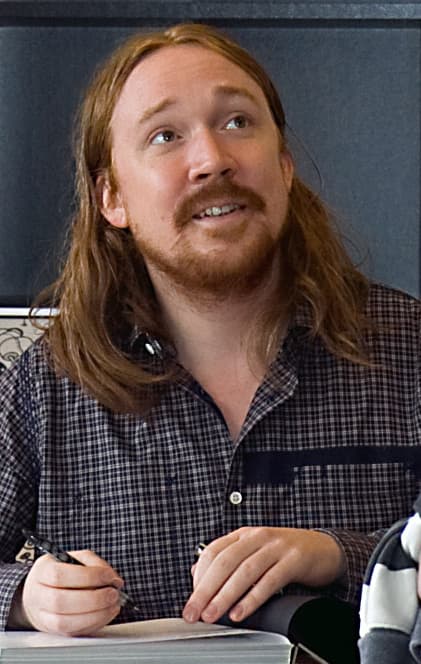
Lars Winnerbäck
Bittersweet Swedish folk-rock that captures the quiet ache of small-town roots and big-city loneliness. Perfect for rainy commutes and reflective autumn evenings.
Bittersweet Swedish folk-rock that captures the quiet ache of small-town roots and big-city loneliness. Perfect for rainy commutes and reflective autumn evenings.
Lars Winnerbäck is the definitive voice of Swedish melancholy, crafting songs that feel like a long, thoughtful walk through a darkening landscape. His music sits at the intersection of traditional Swedish folk balladry and modern heartland rock, characterized by organic instrumentation, warm acoustic guitars, and a voice that carries the weight of lived experience. It is music that doesn't rush, preferring to let its stories breathe against a backdrop of sweeping strings or steady, driving rhythms.
What truly sets him apart is his lyrical geography. He masterfully navigates the emotional distance between the provincial comfort of Linköping and the anonymous bustle of Stockholm. His songs are populated by characters dealing with ordinary heartbreaks, social alienation, and the persistent tug of nostalgia. There is a specific 'Winnerbäckian' mood: a mixture of cynicism and deep romanticism that feels uniquely Scandinavian, delivered with a raspy, conversational baritone that makes every listener feel like they are the only one in the room.
For those new to his catalog, Daugava is the essential starting point. It represents his peak folk-rock period, where the production is lush yet intimate, and the songwriting is at its most evocative. From there, explore his earlier punk-influenced folk or his later, more atmospheric and experimental works like Hosianna to see the full breadth of his evolution as Sweden's premier modern troubadour.
Lars Mattias Winnerbäck (born 19 October 1975) is a Swedish singer and songwriter. He was born in Stockholm but spent his childhood in Vidingsjö, Linköping, where he attended Katedralskolan. He moved back to Stockholm in 1996, the same year he released his first album, Dans med svåra steg. He is now one of Sweden's most popular artists. The influence of songwriters like Carl Michael Bellman, Evert Taube, Bob Dylan, Ulf Lundell and Cornelis Vreeswijk shines through in Winnerbäck's exclusively Swedish lyrics, which deal with shallowness, prejudice in society, as well as romance, relationships and anxiety. Several songs depict the difference between living in small town Linköping and the capital Stockholm. His vinyl records were re-released in October 2011, many of them charting again on the Sverigetopplistan, the official Swedish Albums Chart. Winnerbäck has been the subject of two full-length documentary films, Solen i ögonen – En film om Lars Winnerbäck (2008, directed by Magnus Gertten) and Winnerbäck - Ett slags liv (2017, directed by Øystein Karlsen).
Cassette uses generative AI to enrich its catalog. How we use AI →