Laibach
Stentorian vocals and martial rhythms that transform pop hits into totalitarian anthems. Provocative, orchestral industrial for deep ideological questioning.
Stentorian vocals and martial rhythms that transform pop hits into totalitarian anthems. Provocative, orchestral industrial for deep ideological questioning.
Laibach sounds like the official state orchestra of a country that doesn't exist, or perhaps one that exists only in the darkest corners of the 20th-century psyche. Their music is a massive, monolithic wall of sound where Wagnerian opera meets the cold, repetitive precision of a factory floor. Deep, gravelly vocals deliver lyrics with a terrifying authority that makes even the most banal pop chorus sound like a terrifying decree. It is music that demands your attention, vibrating with a sense of historical weight and architectural scale.
What truly sets them apart is their mastery of 'over-identification.' By adopting the aesthetics of totalitarianism with such absolute, humorless conviction, they force the listener to confront the inherent power structures in all music, especially pop. Their covers of bands like Queen or Opus are not mere parodies; they are surgical deconstructions that reveal the latent militarism and crowd-control mechanics hidden within stadium rock. It is a high-concept art project disguised as a band, using irony as a blunt-force instrument.
For the uninitiated, the best entry point is the 'Opus Dei' era or their 'Anthems' compilation. These tracks showcase their ability to take familiar melodies and wrap them in layers of industrial percussion and choral grandeur. It is the perfect soundtrack for moments when you want music that feels intellectually challenging, sonically overwhelming, and deeply, uncomfortably powerful.
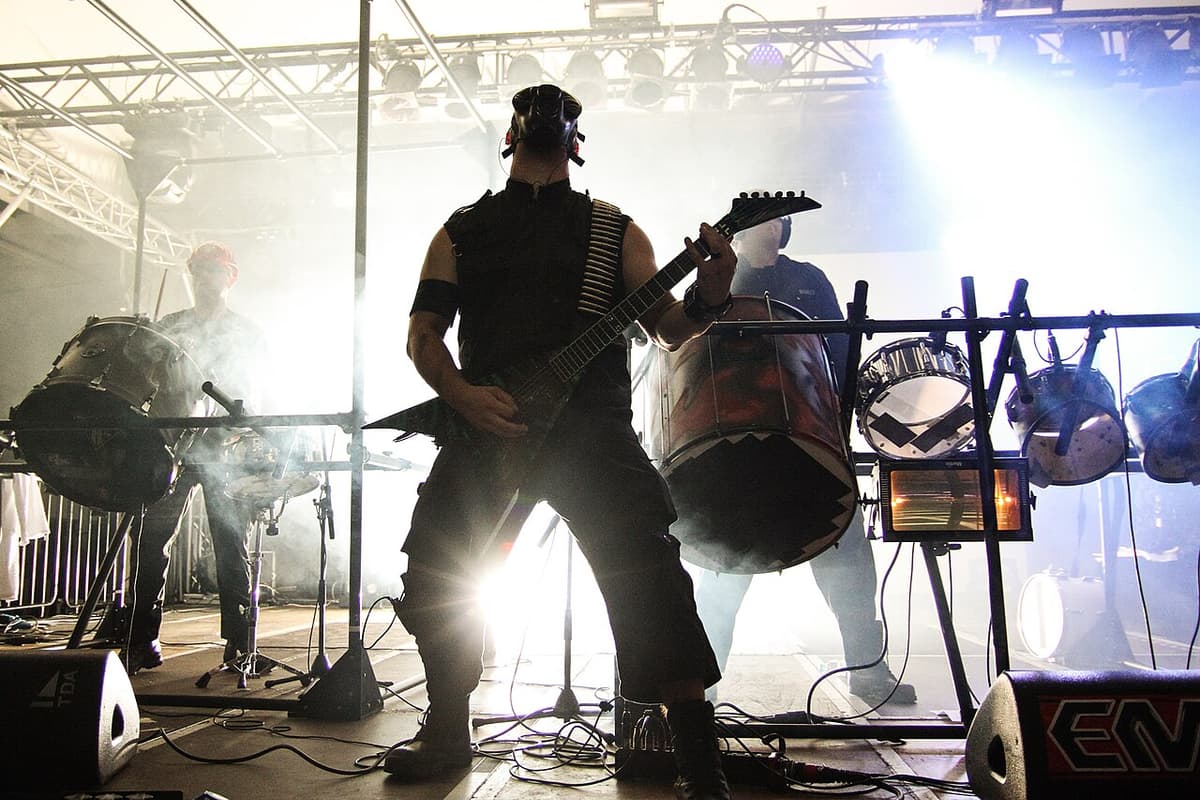
Laibach (German pronunciation: [ˈlaɪbax] ) is a Slovenian avant-garde music group associated with the industrial, martial, and neoclassical genres. Formed in 1980 in the mining town of Trbovlje, Slovenia (at the time the SR Slovenia within Yugoslavia), Laibach represents the musical wing of the Neue Slowenische Kunst (NSK) artist collective, a group which Laibach co-founded in 1984. From the early days, the band was subject to controversies and bans due to their use of iconography with parodies and pastiches of elements from totalitarianism, nationalism and militarism, a concept they have preserved throughout their career. Censored in Yugoslavia, receiving a dissident status and a cult following in their home country, the band embarked on international tours and gradually acquired international fame, which led to wider acceptance by Yugoslav public and to attention of the country's mainstream media. After Slovenia became independent in 1991, Laibach's status in the country has turned from rejection by a part of the public to promotion into a national cultural icon. Early Laibach albums were industrial-oriented, marked by heavy rhythms and roaring vocals. Later in the mid-1980s, their sound became more richly layered, featuring samples from pop and classical music. The band's lyrics, variously written in Slovene, German and English, are usually delivered by the deep bass vocals of lead vocalist Milan Fras. Initially the lyrics handled war and military themes; later, the focus turned to any highly charged political issue of the moment, sending intentionally ambiguous messages. They recorded a number of cover versions of popular songs, often turning light melodies into sinister-sounding gothic tunes. The band has seen numerous line-up changes, with Milan Fras (lead vocals), Dejan Knez (bass guitar, keyboards, drums), Ervin Markošek (drums, keyboards, electronics) and Ivan "Jani" Novak (stage effects) forming the best-known line-up. They have worked with a number of collaborators and guest musicians. During their career, Laibach have also recorded film and theatre music and produced works of visual arts, while the band members have embarked on a number of side projects.
Shares industrial, darkwave, techno (subgenres); defiant, intense, mysterious (moods)
Shares industrial, darkwave, techno (subgenres); defiant, intense, mysterious (moods)
Shares defiant, intense, mysterious (moods); industrial, darkwave (subgenres)
Shares industrial, darkwave, techno (subgenres); maximalist, sample based, compressed loud (production style)
Shares industrial, darkwave (subgenres); maximalist, orchestral arrangement, compressed loud (production style)
Shares industrial, darkwave, techno (subgenres); defiant, intense, mysterious (moods)
Shares maximalist, choir/choral, industrial, darkwave (signature)
Cassette uses generative AI to enrich its catalog. How we use AI →