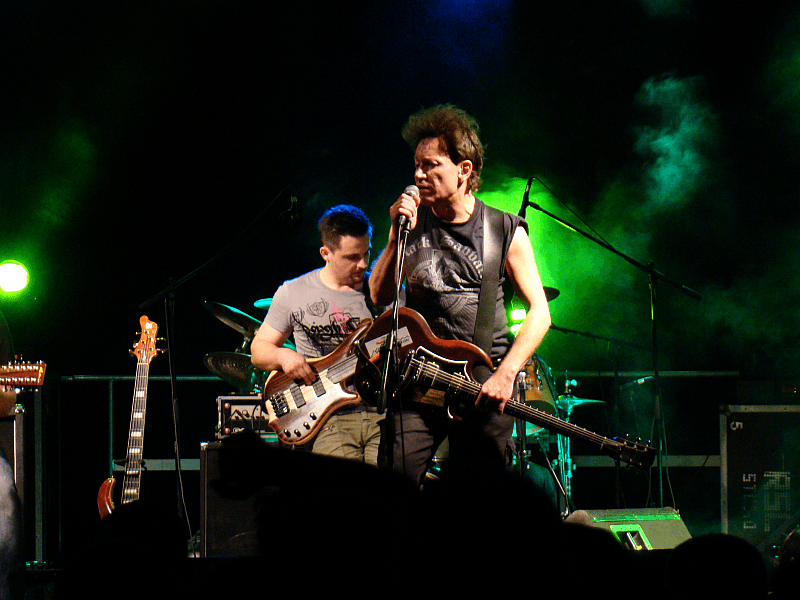
KSU
Gritty, melodic Polish punk born in the Bieszczady mountains. Anthemic energy meets raw regional pride and sharp social critique for long drives and loud nights.
Gritty, melodic Polish punk born in the Bieszczady mountains. Anthemic energy meets raw regional pride and sharp social critique for long drives and loud nights.
KSU sounds like the collision of 1977 London energy and the rugged isolation of the Polish mountains. Their music carries a distinct weight, balancing the aggressive, fast-paced drive of classic punk rock with surprisingly melodic, almost folk-like sensibilities that reflect their rural origins. It is music that feels lived-in, weathered by time and political shifts, yet never loses its defiant spark.
What truly sets them apart is the 'Bieszczady' factor. While their peers in Warsaw or Krakow were reacting to urban decay, KSU infused their punk with a sense of place, referencing the landscape and local identity. This creates a sound that is both universal in its rebellion and deeply specific in its geography, often featuring acoustic interludes or anthemic choruses that invite communal participation.
Start with the album 'Pod prąd' to hear them at their most foundational, or dive into '21' for a more polished but equally biting take on their signature sound. It is the perfect entry point for anyone wanting to understand the soul of Eastern European punk rock.
KSU is a Polish punk rock band and one of the earliest representatives of punk in Poland, founded in 1977 in the southeastern town of Ustrzyki Dolne in the Bieszczady Mountains. Young musicians from Ustrzyki met to play covers of Black Sabbath, Deep Purple and Led Zeppelin songs which they had heard on a radio tuned into Western European radio stations, beyond the Iron Curtain. In 1978 they came up with the name KSU, which comes from car license plates, issued by the Krosno Voivodeship authorities for vehicles from Ustrzyki Dolne. With a new name came new music - KSU was now motivated by Sex Pistols, Damned, and UK Subs. In 1980, due to friendship with Kazimierz Staszewski, KSU travelled across Poland to Kolobrzeg, to participate in the New Wave Festival. The band was dubbed a sensation, but soon afterwards its members were one after one called up to the Polish Army and KSU ceased to exist. In 1988 KSU recorded an LP "Pod prąd" ("Against the flow"), which was warmly welcomed by its fans. Currently KSU consists of four members, including Olejarczyk. Its lyrics are in most cases written by Maciej Augustyn, the brother of former singer Bogdan "Bohun" Augustyn.
Cassette uses generative AI to enrich its catalog. How we use AI →


