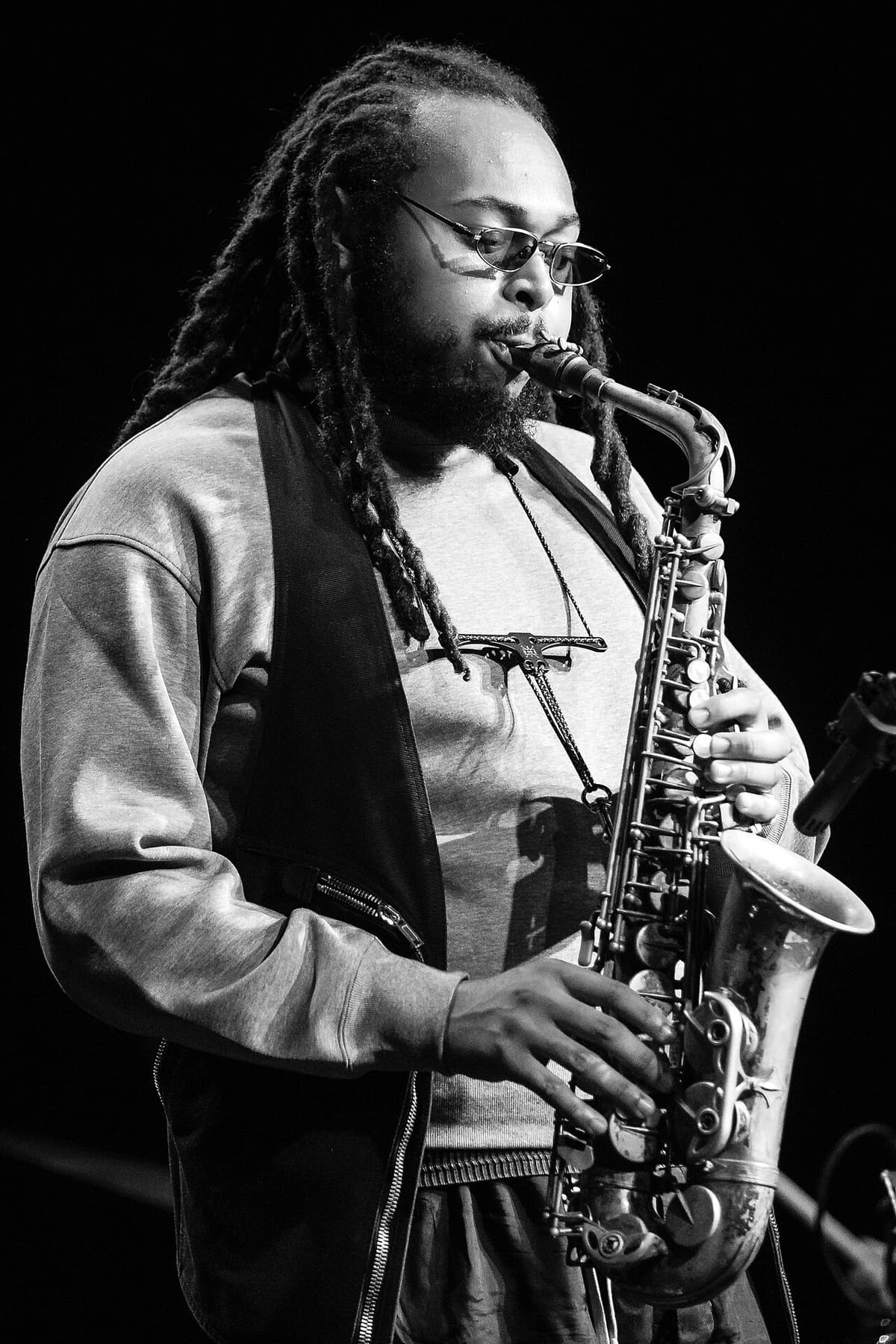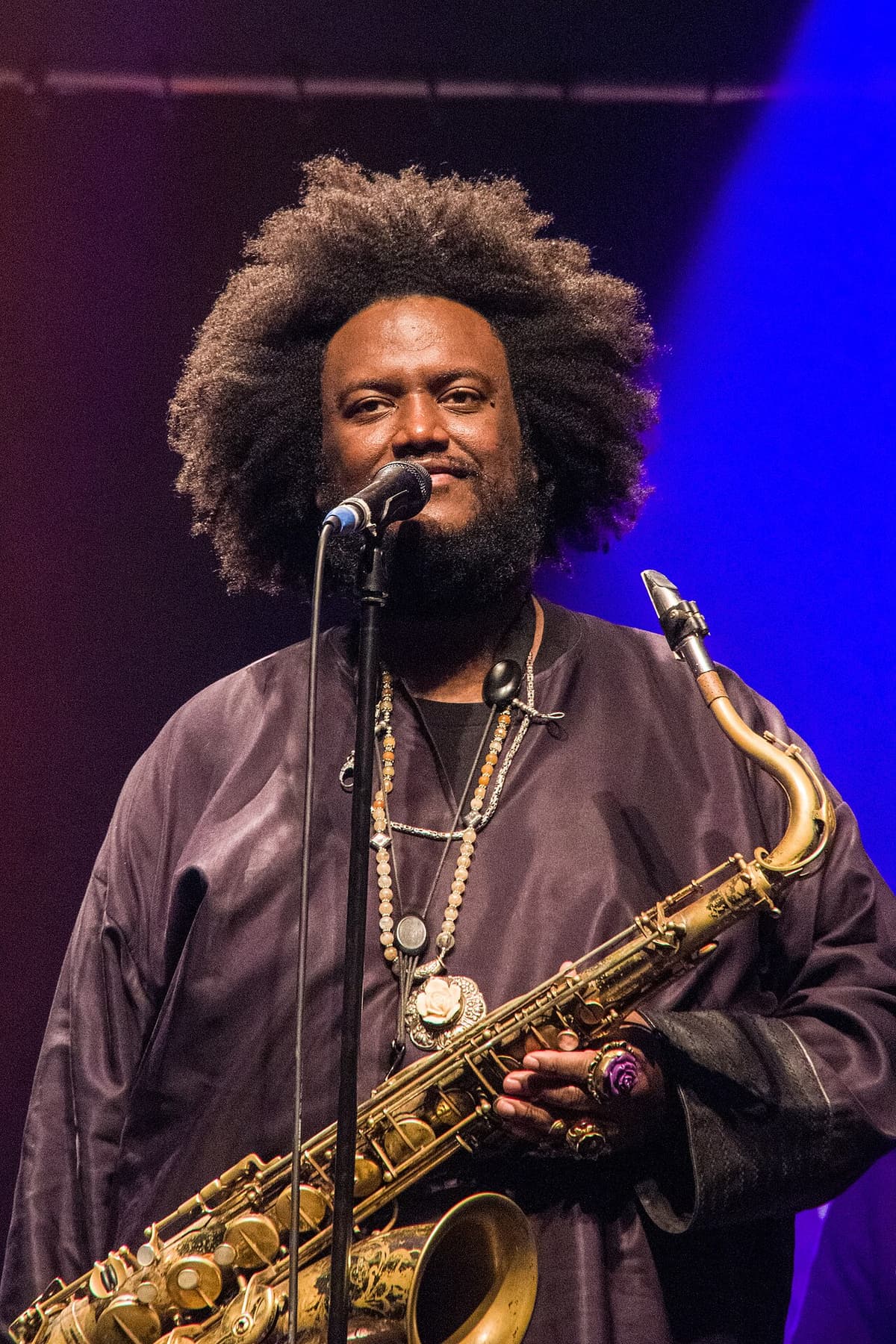
Kamasi Washington
Massive, cinematic jazz that pairs soaring choral arrangements with explosive saxophone solos. It feels like a cosmic ceremony designed for the biggest possible room.
Massive, cinematic jazz that pairs soaring choral arrangements with explosive saxophone solos. It feels like a cosmic ceremony designed for the biggest possible room.
Raised in a musical Los Angeles household, saxophonist and composer Kamasi Washington emerged as a central figure in modern jazz by bridging classic big-band traditions with contemporary hip-hop and soul.
After studying ethnomusicology at UCLA and touring with artists ranging from Gerald Wilson to Snoop Dogg, he established himself as a key anchor of the West Coast Get Down collective, bringing a dense, spiritual, and maximalist approach to the tenor saxophone.

A sweaty basement wall absorbs the raw acoustic room bleed of five competing horn players.
Furious, unpolished post-bop and spiritual jazz. Recorded long before the massive choirs, this is Kamasi Washington's raw, hungry, and acoustic debut.
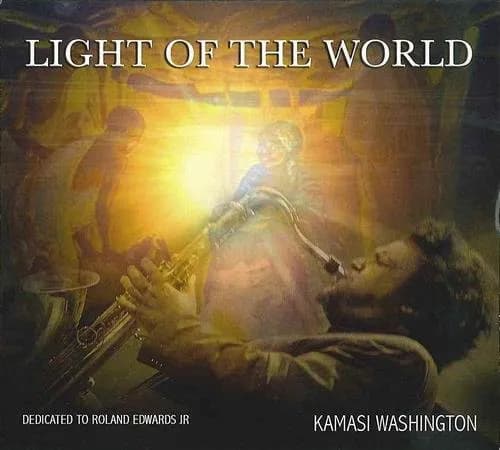
You sit on a hard wooden bench in an empty sanctuary, letting the warm gospel jazz fusion wash over your shoulders like a sudden summer rain.
Seventy minutes of raw, independent spiritual jazz. A deeply personal, gospel-infused precursor to his later cinematic masterpieces.
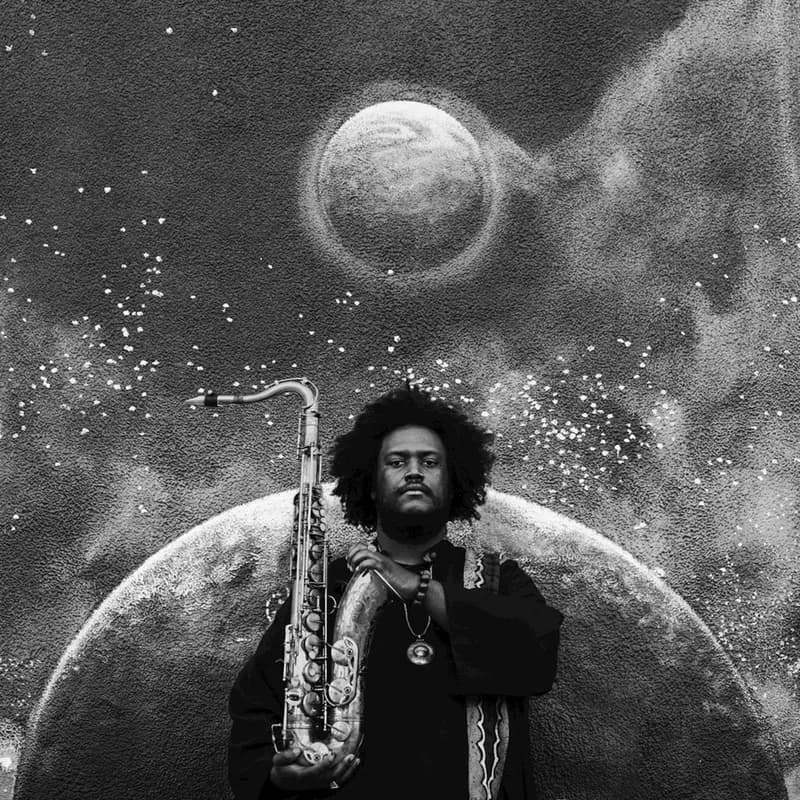
Cosmic jazz scaled to cinematic heights
A wall of brass colliding with dual-drummer thunder and a soaring operatic choir instantly redefined the scale of twenty-first-century jazz. This three-hour monument is the exact point where spiritual jazz shed its academic constraints to become a cinematic, populist force. By anchoring cosmic, avant-garde fusion in the heavy groove of modern street-level bass, the record perfected a maximalist language that felt both ancient and urgent. You are not just listening to a post-bop revival; you are witnessing a sprawling, ecstatic reclamation of Black classical music, played with the fearless gravity of a generation claiming its absolute sovereignty.
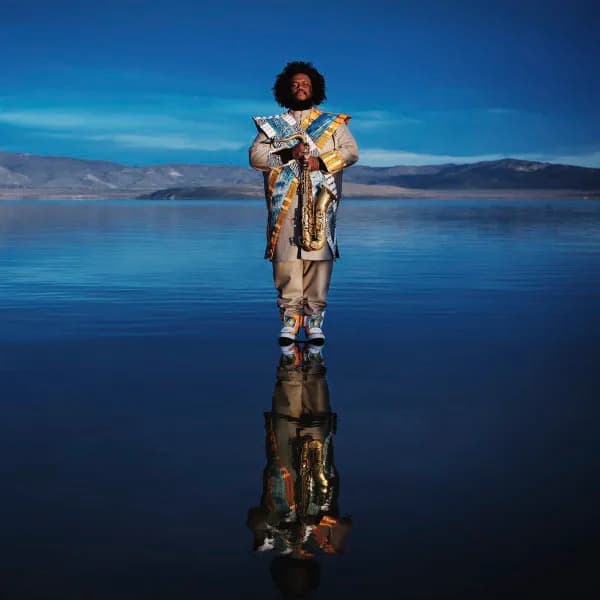
A massive choir collides with a wall of brass, turning a basement club sound into a towering, cinematic monument of spiritual jazz. This is where the sprawling, cosmic ambitions of the West Coast scene finally lock into a perfect, heavy groove. You can feel the physical weight of the double-album in the thick basslines and the sharp, bright bite of the saxophone cutting through orchestral clouds. It is a massive, exhausting, and triumphant stretch of music that demands you sit with its sheer scale, proving that modern jazz can still feel as vast and urgent as a summer thunderstorm.
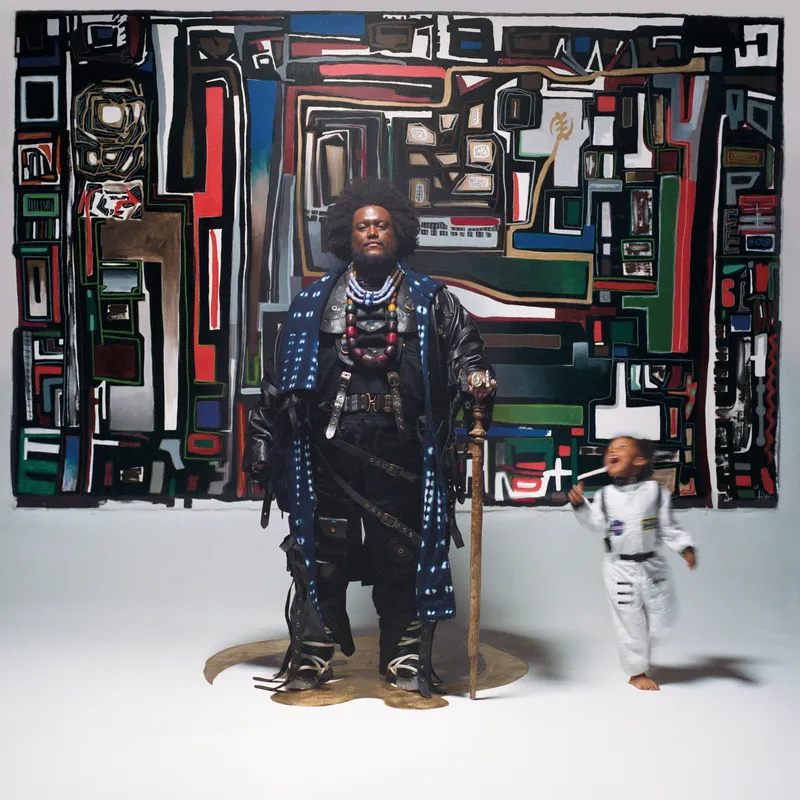
A heavy clay vase spins on a potter’s wheel, shaped by the friction of earthy polyrhythmic grooves.
A vibrant, rhythm-heavy pivot toward the physical. Kamasi Washington trades cosmic abstraction for earthy, dance-inspired grooves and brilliant collaborations.
Washington remains a vital, active force, steering his large-scale ensembles through extensive global tours following his 2024 release.
Rather than retreating into academic preservation, he continues to champion a widescreen fusion that links street-level groove with orchestral ambition, proving that his expansive vision of jazz is a living, breathing community asset rather than a museum piece.
Shares spiritual jazz, post-bop, avant-garde jazz, jazz fusion (signature)
Shares spiritual jazz, avant-garde jazz, violin, jazz fusion (signature)
Shares spiritual jazz, post-bop, avant-garde jazz, jazz fusion (signature)
Shares spiritual jazz, avant-garde jazz, jazz fusion, chanting (signature)
Shares spiritual jazz, avant-garde jazz, jazz fusion, cathedral (signature)
Cassette uses generative AI to enrich its catalog. How we use AI →