Joaquín Sabina
Gravelly, nicotine-stained storytelling that finds poetry in dive bars and heartbreak. The ultimate soundtrack for urban nights and beautiful losers.
Gravelly, nicotine-stained storytelling that finds poetry in dive bars and heartbreak. The ultimate soundtrack for urban nights and beautiful losers.
Listening to Joaquín Sabina feels like sitting in a dimly lit Madrid tavern at 3:00 AM, listening to a man who has seen too much tell you the truth about love and the city. His voice is a weathered instrument, raspy and heavy with the weight of a thousand cigarettes and late nights, yet it carries an undeniable warmth and wisdom. It is music that doesn't try to hide its scars; instead, it wears them as badges of honor.
What truly sets Sabina apart is his 'baroque' approach to songwriting. He elevates the grit of the street, the lives of the marginalized, and the sting of betrayal into high art through dense, metaphorical poetry. He is the chronicler of the 'city fish,' the drunks, and the dreamers, blending the DNA of American folk-rock with the traditional Spanish 'trova' and a healthy dose of anti-establishment cynicism.
For the uninitiated, '19 días y 500 noches' is the essential gateway. It captures his peak cynical-romantic persona perfectly. From there, dive into 'Física y Química' for his most iconic melodies, or 'La Mandrágora' to hear the raw, controversial wit that made him a cultural lightning rod in post-Franco Spain.
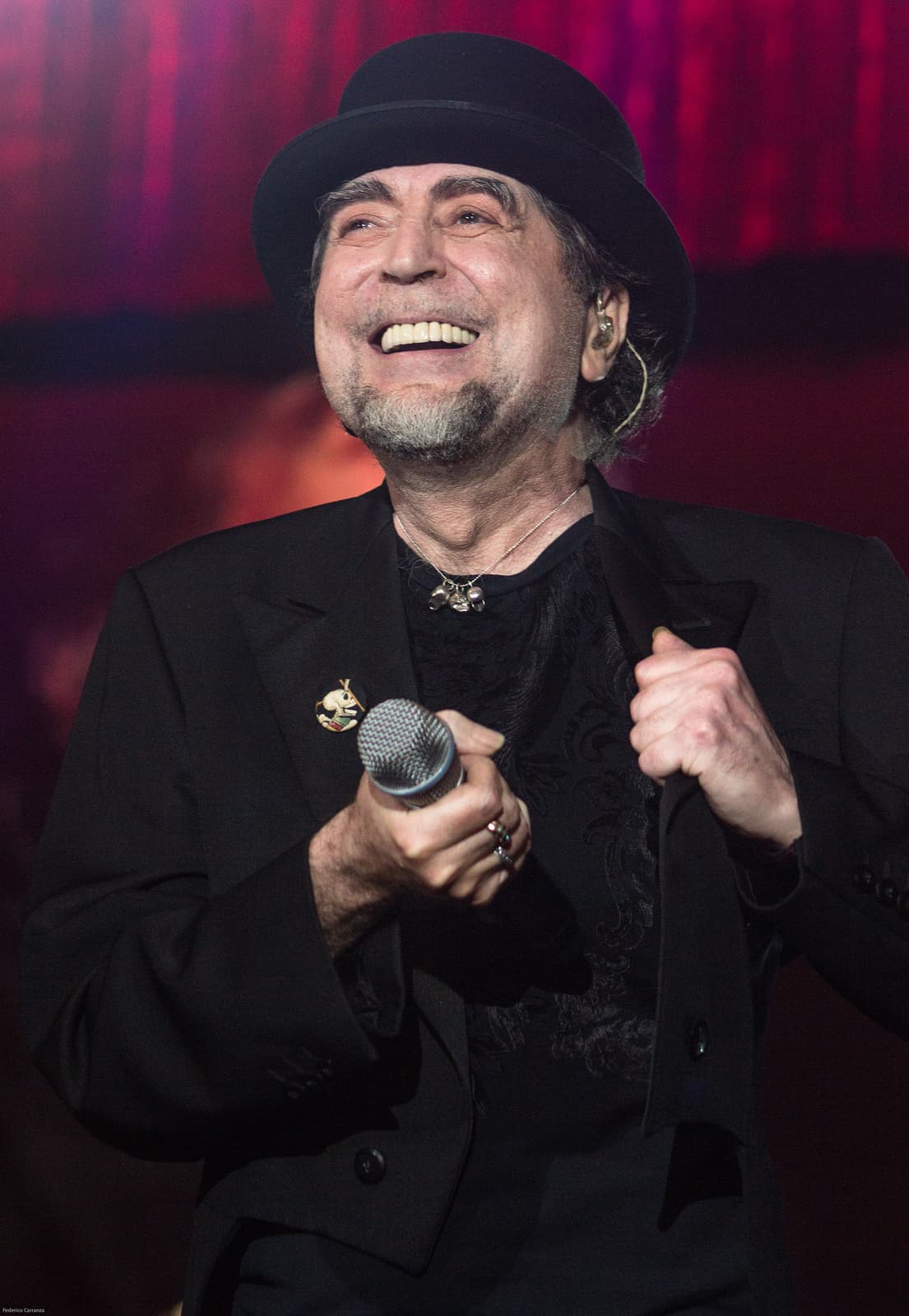
Joaquín Ramón Martínez Sabina (born 12 February 1949) is a Spanish musician, singer, composer, and poet. His songs usually treat love, heartbreaks and society with significant use of literary figures as in the baroque-literature style. He has released fourteen studio albums, two live albums, and three compilation albums. Some of his best-known songs are "Calle Melancolía" ("Melancholy street"), "19 días y 500 noches" ("19 days and 500 nights"),"¿Quién me ha robado el mes de Abril?" ("Who stole the month of April from me?"), "Pongamos que hablo de Madrid" ("Lets say I'm talking about Madrid"), "Y sin embargo" ("However"), "Contigo" ("With you") or "Peces de ciudad" ("City fish") He performed both solo and with a group for his live albums, performing with Javier Krahe and Alberto Pérez in La mandrágora, the group Viceversa in a 1986 concert, and with Joan Manuel Serrat in Dos pájaros de un tiro (Two birds with one stone). Sabina suffered a stroke in 2001 and although he physically recovered, he entered a deep depression which resulted in a four-year-long concert hiatus. He recovered and released his eighteenth album, Alivio de Luto, in November 2005 and in 2009 he released his album, Vinagre y rosas. In 2012 he released his latest album in collaboration with Joan Manuel Serrat: La Orquesta Del Titanic. On June 29, 2020, Sabina married Jimena Coronado in a private ceremony in Madrid
Cassette uses generative AI to enrich its catalog. How we use AI →