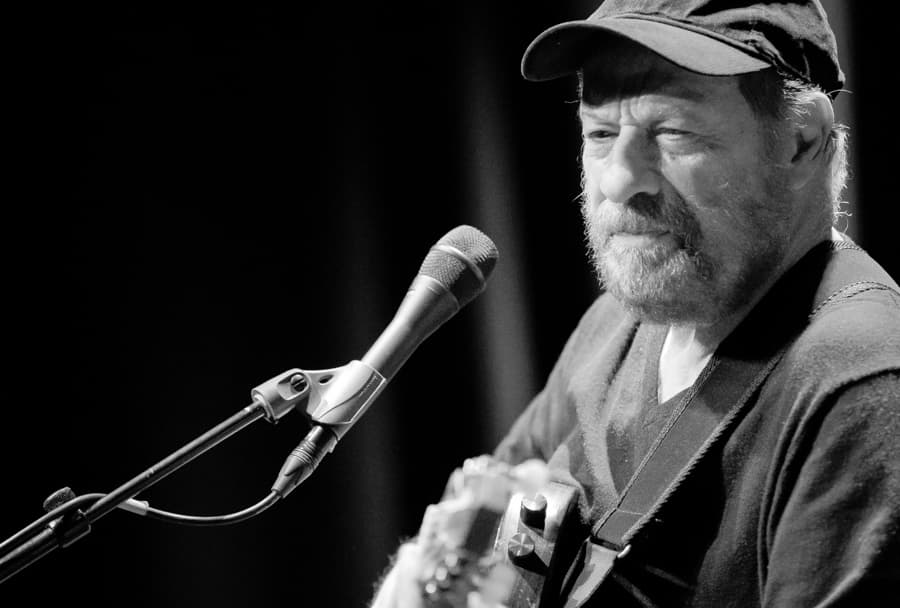
João Bosco
High-velocity acoustic guitar meets intricate Afro-Brazilian rhythms and Arabesque melodies. A masterclass in percussive soul and sophisticated storytelling.
High-velocity acoustic guitar meets intricate Afro-Brazilian rhythms and Arabesque melodies. A masterclass in percussive soul and sophisticated storytelling.
João Bosco sounds like a one-man orchestra disguised as a guitarist. His music is a whirlwind of kinetic energy, where the acoustic guitar isn't just a melodic tool but a drum kit, a bass, and a rhythmic anchor all at once. There is a grit to his delivery that separates him from the smoother edges of Bossa Nova; it is the sound of the street, the bar, and the protest line filtered through a sophisticated jazz lens.
What makes Bosco truly distinctive is his 'singular fusion' - a phrase often used to describe how he weaves his Lebanese heritage with Afro-Brazilian samba and American jazz. His vocal style is equally athletic, frequently breaking into rapid-fire scatting that mimics the percussion, creating a seamless blur between the voice and the instrument. It is music that feels intellectually dense yet physically undeniable.
Start with 'Galos de briga' to hear the peak of his 1970s collaboration with lyricist Aldir Blanc. It captures the tension and triumph of the era with incredible rhythmic precision. From there, move to 'Comissão de frente' to hear how he expanded his sound into the 80s without losing an ounce of his signature percussive bite.
João Bosco de Freitas Mucci, (born July 13, 1946) known professionally as João Bosco (; Portuguese pronunciation: [ʒuˈɐ̃w ˈbosku]) is a Brazilian singer-songwriter and guitarist. In the 1970s he established his reputation in música popular Brasileira (Portuguese: "Brazilian pop music") with lyricist Aldir Blanc. Born in Ponte Nova, Minas Gerais, Brazil, Bosco's profession was engineering when he moved to Rio de Janeiro, where his songs were recorded by Elis Regina. In the introduction to his three-volume Songbook, Almir Chediak wrote, "Brilliant composer João Bosco's melodic and harmonic constructions are among the most auspicious in Brazilian music." Chapter Five of Masters of Contemporary Brazilian Song: MPB 1965-1985 by Charles A. Perrone is dedicated to the work of Bosco and Blanc. His father was Lebanese.
Cassette uses generative AI to enrich its catalog. How we use AI →


