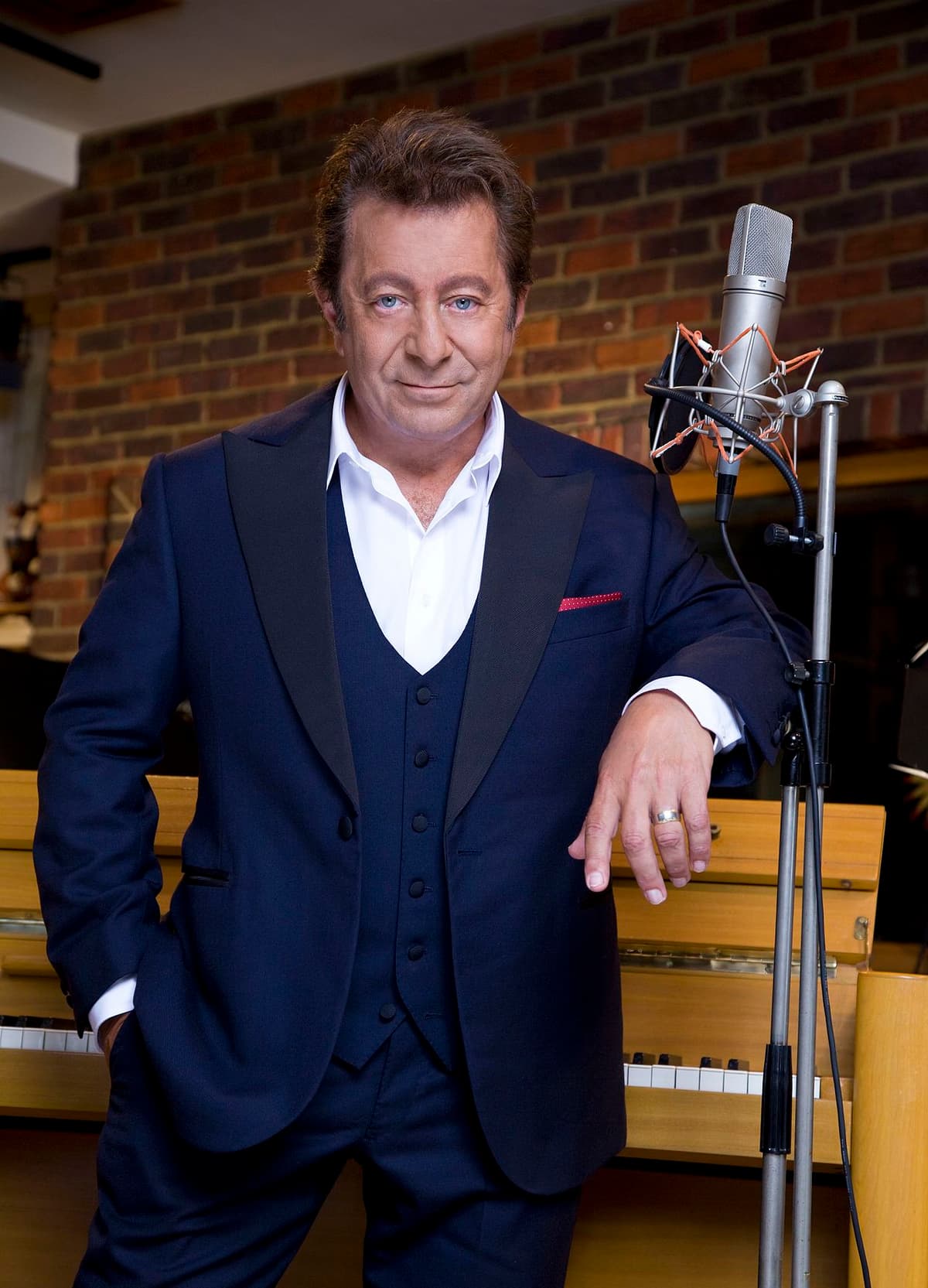
Jeff Wayne
Cinematic progressive rock that feels like a vintage radio play. Sweeping strings, pulsing synths, and dramatic narration for a high-stakes listening experience.
Cinematic progressive rock that feels like a vintage radio play. Sweeping strings, pulsing synths, and dramatic narration for a high-stakes listening experience.
Jeff Wayne creates music that is fundamentally widescreen. It is the sound of 1970s ambition, where the grit of a rock band meets the scale of a full orchestra and the narrative structure of a radio play. The textures are thick and saturated, defined by that specific era of analog synthesis that feels both futuristic and warmly nostalgic. It is music that demands your full attention, unfolding like a Victorian thriller updated for the space age.
What sets Wayne apart is his ability to blend disparate worlds: the driving, almost disco-influenced basslines of the late 70s, the soaring melodicism of art-pop, and the gravitas of Shakespearean narration. There is a palpable sense of dread and wonder in his arrangements, often anchored by recurring musical motifs that act as characters themselves. It is maximalist in the best way, filling every corner of the stereo field with intent.
The essential entry point is his 1978 masterpiece, 'The War of the Worlds'. It is a singular achievement in the concept album format, featuring iconic performances from Richard Burton and David Essex. Start here to experience how he turns a literary classic into a pulsing, terrifying, and ultimately beautiful sonic journey that has never truly been replicated.
Jeffry Wayne (born July 1, 1943) is an American-British composer, musician and lyricist. In 1978, he released Jeff Wayne's Musical Version of The War of the Worlds, his musical adaptation of H. G. Wells' science-fiction novel The War of the Worlds. Wayne wrote approximately 3,000 advertising jingles in the 1970s which appeared on television in the United Kingdom, including a Gordon's Gin commercial which was covered by the Human League. Wayne also composed numerous television themes, including Good Morning Britain (TV-am), ITV's The Big Match and World of Sport, and the BBC's Sixty Minutes. Wayne wrote feature film and documentary film scores and was musical director for various artists. Wayne published a book called The Book of Tennis and created, produced and scored eight thirty-minute episodes of The Book of Tennis Chronicles that was distributed by Fox Sports in approximately twenty countries, and was broadcast in the US on the Tennis Channel between 2005 and 2008.
Shares progressive rock, art rock, synth-pop (subgenres); maximalist, orchestral arrangement, analog warmth (production style)

Shares progressive rock, art rock (subgenres); maximalist, orchestral arrangement, analog warmth (production style)
Shares progressive rock, art rock, synth-pop (subgenres); keys/synth, electric guitar, bass (instrumentation)
Shares progressive rock, art rock (subgenres); keys/synth, electric guitar, bass (instrumentation)
Shares progressive rock, art rock (subgenres); analog warmth, orchestral arrangement, studio polished (production style)
Shares progressive rock, art rock, synth-pop (subgenres); maximalist, orchestral arrangement (production style)
Shares progressive rock, art rock (subgenres); keys/synth, electric guitar, bass (instrumentation)
Shares progressive rock, art rock, synth-pop (subgenres); maximalist, orchestral arrangement, analog warmth (production style)
Shares progressive rock, art rock (subgenres); maximalist, orchestral arrangement, studio polished (production style)
Shares narrating, progressive rock, cathedral, art rock (vocal style)
Cassette uses generative AI to enrich its catalog. How we use AI →