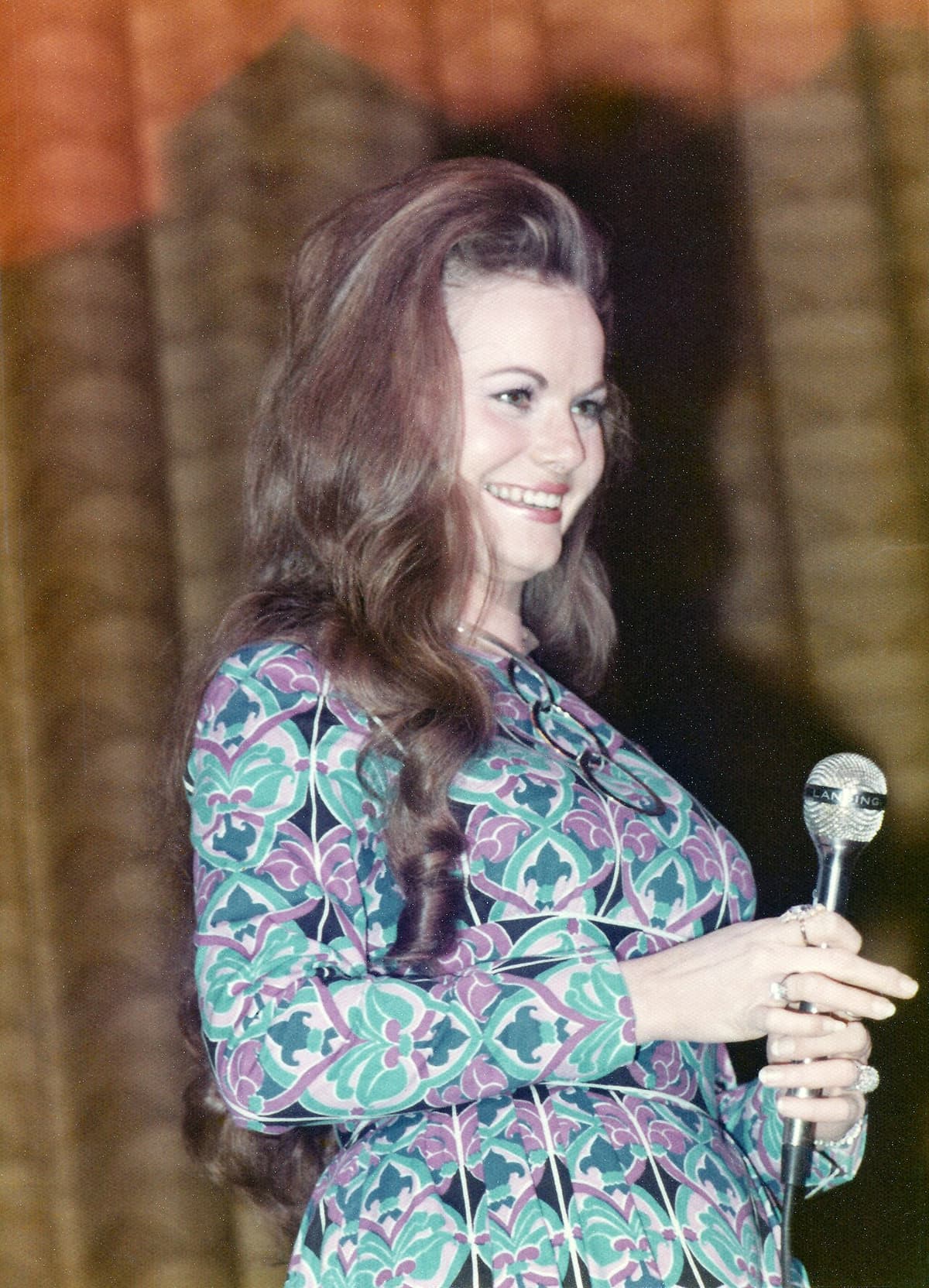
Jeannie C. Riley
Sharp-tongued country with a pop crossover pulse. Defiant storytelling that pairs 60s Nashville twang with a bold, rebellious attitude.
Sharp-tongued country with a pop crossover pulse. Defiant storytelling that pairs 60s Nashville twang with a bold, rebellious attitude.
Jeannie C. Riley sounds like the moment a small-town outsider finally stops caring what the neighbors think. Her music is anchored by a crisp, rhythmic Nashville sound, but it is her voice that commands the room: a distinctive, slightly raspy southern drawl that carries both a smirk and a sting. It is music that feels lived-in, dusty, and undeniably authentic to the late-60s transition from traditional honky-tonk to high-gloss country pop.
What makes her truly distinctive is the 'attitude' she brought to the genre during an era of more reserved female vocalists. While her contemporaries often leaned into heartbreak and domesticity, Riley leaned into confrontation and social satire. Her delivery is punchy and rhythmic, often mimicking the cadence of speech to drive home a narrative point, backed by twangy guitars and a steady, driving backbeat that made her as much a pop sensation as a country star.
Start with the 1968 album 'Harper Valley P.T.A.' to hear the blueprint for the 'sassy country' archetype. It captures the height of her cultural impact and showcases her ability to weave complex social narratives into catchy, three-minute radio hits that still feel sharp today.
Jeannie C. Riley (born Jeanne Carolyn Stephenson; October 19, 1945) is an American country music and gospel singer. She is best known for her 1968 country and pop hit "Harper Valley PTA", which reached number-one on the Billboard Country and Pop charts. Riley later saw moderate country music chart action but never again duplicated the success of "Harper Valley PTA". She became a born-again Christian in the mid-1970s and began recording gospel music during the late 1970s.
Cassette uses generative AI to enrich its catalog. How we use AI →


