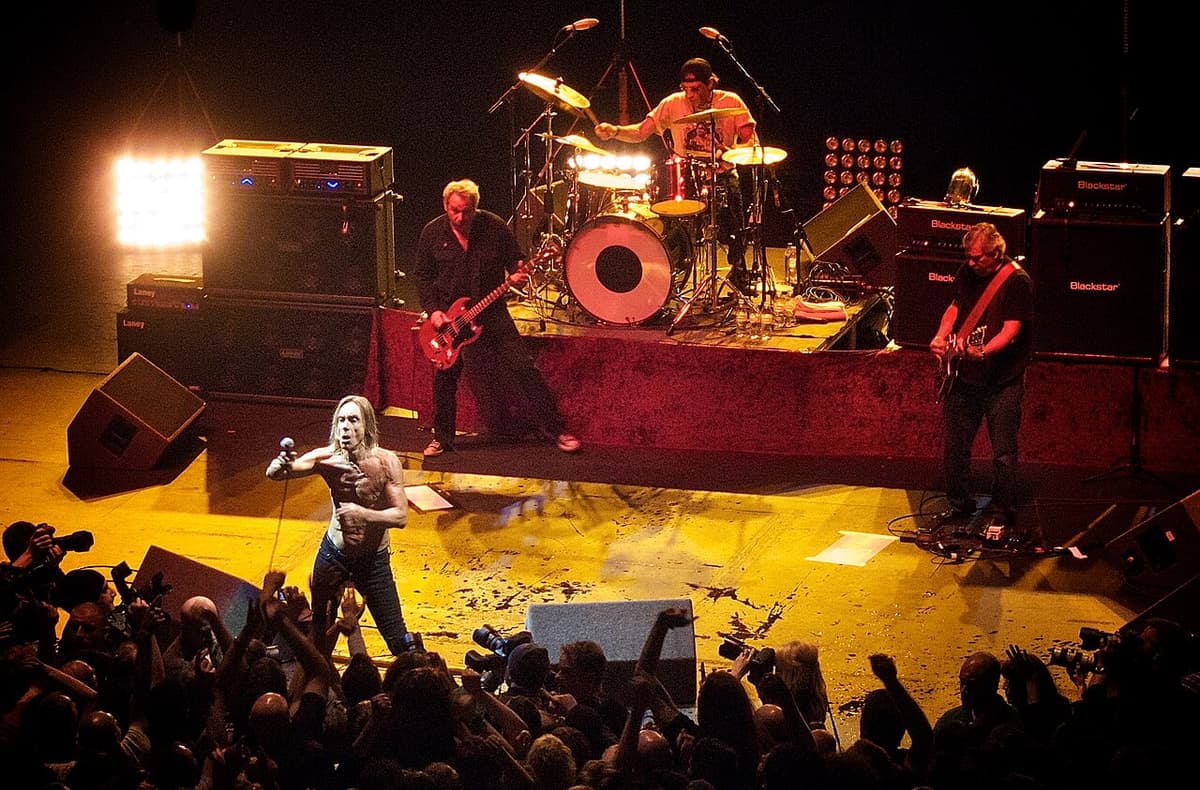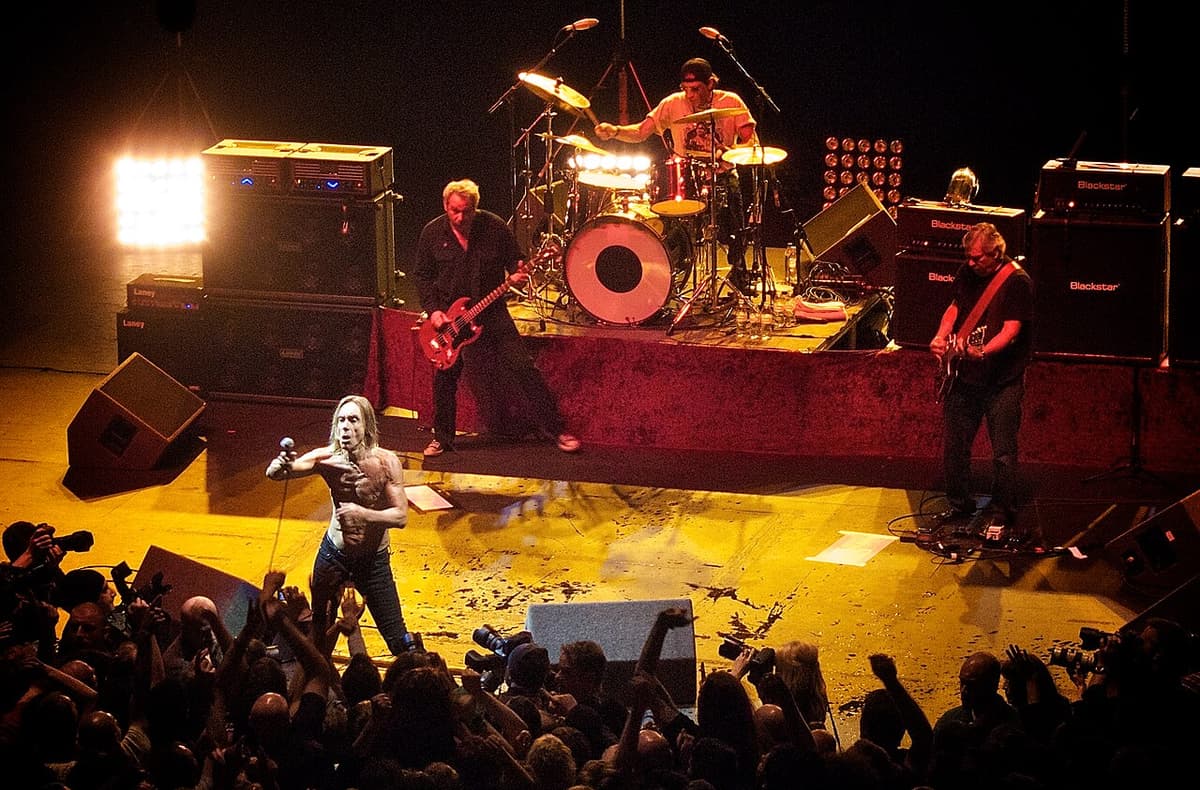
Iggy and The Stooges
Aggressive, unhinged rock and roll that defined the punk aesthetic. Raw guitars and confrontational vocals for when you need to burn it all down.
Aggressive, unhinged rock and roll that defined the punk aesthetic. Raw guitars and confrontational vocals for when you need to burn it all down.
Listening to Iggy and the Stooges feels like standing in the middle of a controlled explosion. The sound is dominated by James Williamson's piercing, treble-heavy guitar work and Iggy Pop's feral, unpredictable vocal delivery. It is music that refuses to be polite, characterized by primitive rhythms and a sense of impending collapse that somehow stays on the tracks. It is the sonic equivalent of a live wire sparking in a dark room.
What sets them apart is the sheer level of confrontation baked into the recording. While their contemporaries were leaning into progressive complexity or soft rock, the Stooges doubled down on a 'street-walking cheetah' energy that was both nihilistic and strangely empowering. The production, especially on Raw Power, is famously abrasive, pushing the instruments into a red-lined distortion that feels dangerous even decades later.
Start with the 1973 masterpiece Raw Power. It is the definitive document of their most volatile era, containing anthems like 'Search and Destroy' that serve as the blueprint for everything punk would become. If you want to hear the band at their most chaotic, seek out the live recording Metallic K.O., which captures the literal sound of a band disintegrating in front of a hostile audience.
The Stooges (also known as Iggy and the Stooges) were an American rock band formed in Ann Arbor, Michigan, in 1967 by singer Iggy Pop, guitarist Ron Asheton, drummer Scott Asheton, and bassist Dave Alexander. Initially playing a raw, primitive style of rock and roll, the band sold few records in their original incarnation and gained a reputation for their confrontational performances, which sometimes involved acts of self-mutilation by Iggy Pop. After releasing two albums – The Stooges (1969) and Fun House (1970) – the group disbanded briefly, and reformed with an altered lineup (with Ron Asheton replacing Dave Alexander on bass and James Williamson taking up guitar) to release a third album, Raw Power (1973), before breaking up again in 1974. The band reunited in 2003 with Ron Asheton moving back to guitar and Mike Watt on bass, and the addition of saxophonist Steve Mackay, who had played saxophone on Fun House. Ron Asheton died in 2009 and was replaced by James Williamson, and the band continued to play shows until 2013, when they also released their last album, Ready to Die. The Stooges formally announced their breakup in 2016 due to the deaths of Scott Asheton and saxophonist Steve Mackay. The Stooges are widely regarded as a seminal proto-punk act. The band was inducted into the Rock and Roll Hall of Fame in 2010. In 2004, Rolling Stone ranked them 78th on their list of the 100 greatest artists of all time. In 2007, they were awarded the Mojo Lifetime Achievement Award at the Mojo Awards.

Shares lo fi, noise textured, compressed loud (production style); punk rock, garage rock, noise rock (subgenres)
Shares lo fi, noise textured, compressed loud (production style); punk rock, garage rock, noise rock (subgenres)
Shares punk rock, garage rock, hard rock (subgenres); basement show, dive bar, urban night (atmosphere)
Shares punk rock, hard rock, garage rock (subgenres); gravelly, intense, raspy (vocal style)
Shares punk rock, hard rock, garage rock (subgenres); basement show, dive bar, festival (atmosphere)
Shares punk rock, garage rock, noise rock (subgenres); lo fi, noise textured, compressed loud (production style)
Shares lo fi, noise textured, compressed loud (production style); basement show, dive bar, urban night (atmosphere)
Shares lo fi, noise textured, live recording (production style); punk rock, garage rock, noise rock (subgenres)
Shares raw, intense, garage rock, punk rock (signature)
Shares unhinged vocal delivery, noise rock, intense, garage rock (detail)
Cassette uses generative AI to enrich its catalog. How we use AI →