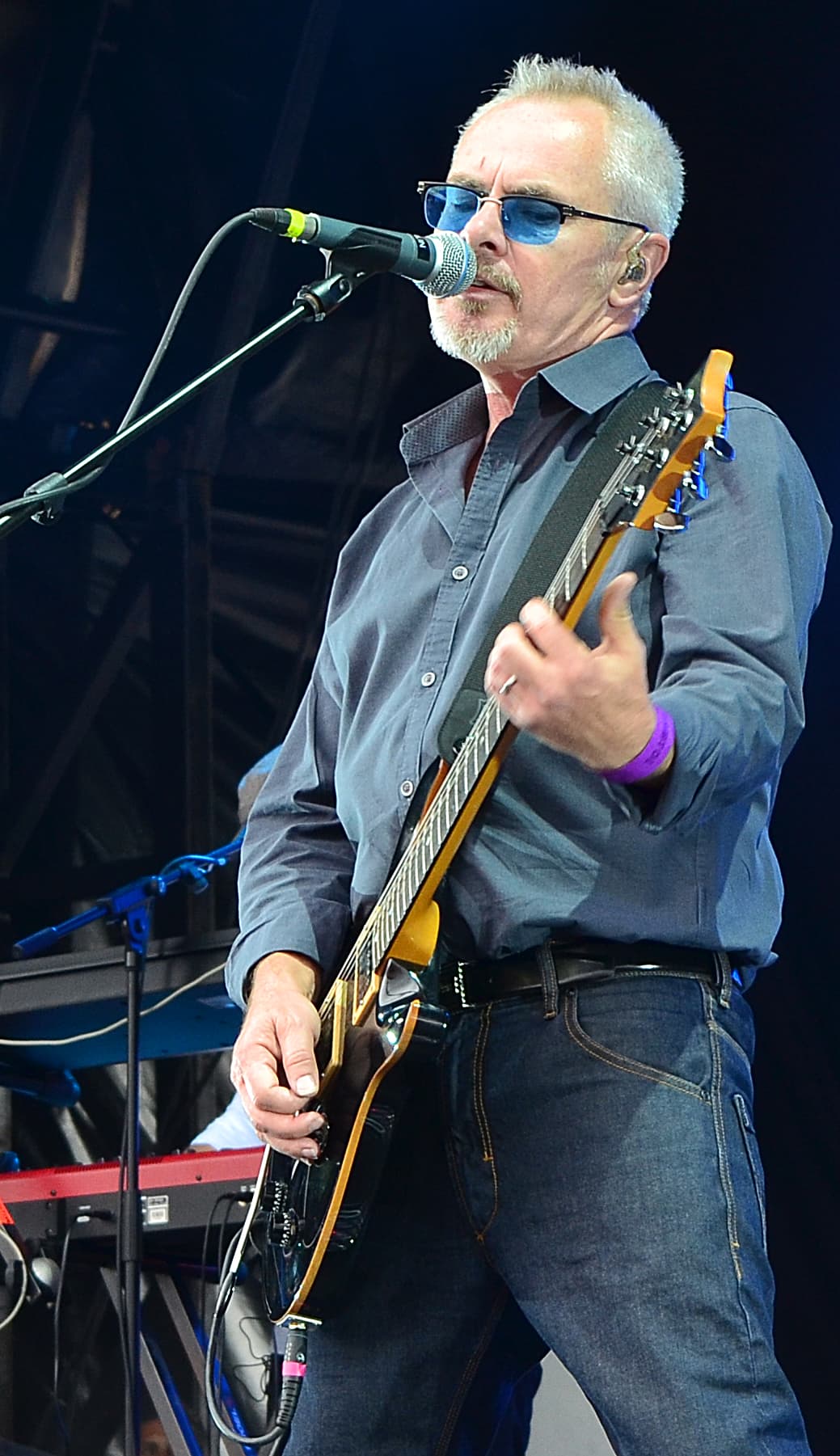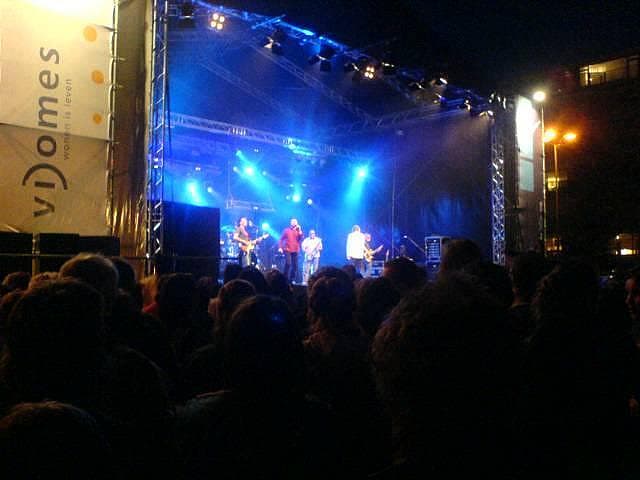
Het Goede Doel
Energetic 80s synth-pop with a sharp wit and anthemic choruses. The sound of a restless Dutch generation finding its voice through clever, melodic new wave.
Energetic 80s synth-pop with a sharp wit and anthemic choruses. The sound of a restless Dutch generation finding its voice through clever, melodic new wave.
Het Goede Doel represents the sophisticated peak of the Nederpop movement, blending the neon energy of the 1980s with a distinctly Dutch sense of irony and observation. Their sound is defined by the interplay between Henk Westbroek and Henk Temming, whose vocals trade off between conversational storytelling and soaring, harmonized hooks. It is music that feels both physically large, thanks to lush synth arrangements, and intellectually intimate.
What truly sets them apart is their lyrical depth. While their contemporaries often leaned into pure escapism, Het Goede Doel mastered the art of the 'thinking person's pop song.' They could tackle geopolitical longing, the complexities of friendship, or the banality of modern life, all while maintaining a groove that demands movement. The production is quintessential 80s: gated reverb, shimmering guitars, and brassy keyboard stabs that feel nostalgic yet remarkably sturdy.
Start with their debut album, België. It captures a band at the height of their creative powers, delivering some of the most enduring melodies in the Dutch canon. From the frantic, geography-hopping title track to the tender, build-up of 'Vriendschap,' it serves as the perfect entry point into a discography that balances humor with genuine heart.
Het Goede Doel (English: The Charity or The Good Cause) is a Dutch pop-group fronted by Henk Westbroek and Henk Temming as founding members. The original line-up, formed in 1979, was completed by Sander van Herk (guitar), Ronald Jongeneel, Stephan Wienjus (bass) and Ab Tamboer (drums). Others joining in later included Arnold van Dongen (guitar), Lené te Voorhuis (bass), Toni Peroni (the father of Tony Junior; drums) and Danny Sahupala (drums). In 1982 they had their breakthrough hit with "België (Is er leven op Pluto?)"; inspired by the international success of VOF de Kunst's "Suzanne" they released an English version ("Luxemburg") in 1985, naming themselves either HGD or The Good Cause. Afterwards the group was reduced to a nucleus of Westbroek, Temming and Van Herk; they broke up in 1991 and focused on solo projects. In 2001 the band played a reunion-show in the classic line-up to celebrate their 10th break-up anniversary. Westbroek and Temming continued and released three more albums.
Shares baritone, harmonized, belting (vocal style); studio polished, analog warmth, layered dense (production style)
Shares synth-pop, new wave, art pop (subgenres); playful, nostalgic, wistful (moods)
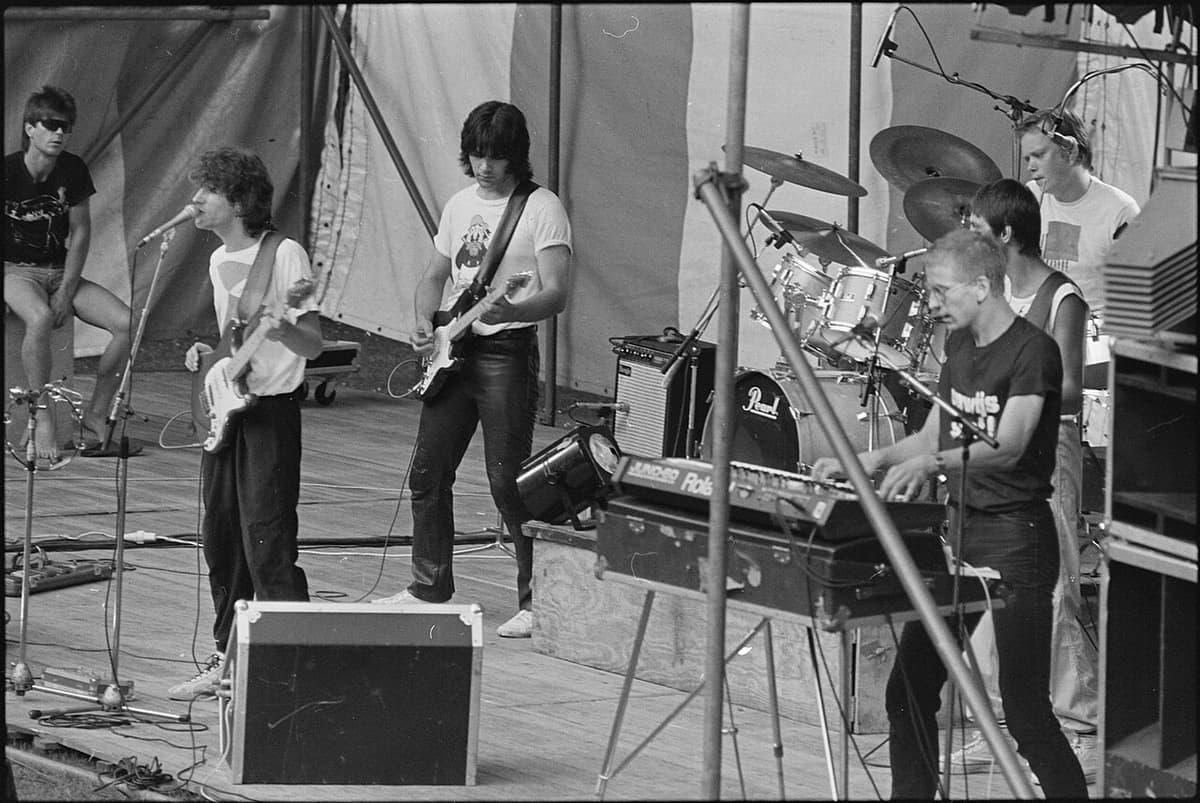
Shares synth-pop, new wave, art pop (subgenres); analog warmth, studio polished, layered dense (production style)
Shares synth-pop, new wave (subgenres); studio polished, digital clarity, layered dense (production style)
Shares playful, nostalgic, wistful (moods); synth-pop, new wave (subgenres)
Shares synth-pop, new wave, art pop (subgenres); studio polished, digital clarity, layered dense (production style)
Shares analog warmth, studio polished, layered dense (production style); synth-pop, new wave, art pop (subgenres)
Shares synth-pop, new wave, art pop (subgenres); analog warmth, studio polished, layered dense (production style)
Shares analog warmth, studio polished, layered dense (production style); playful, nostalgic, wistful (moods)
Shares new wave, art pop, synth-pop, road trip (signature)
Cassette uses generative AI to enrich its catalog. How we use AI →