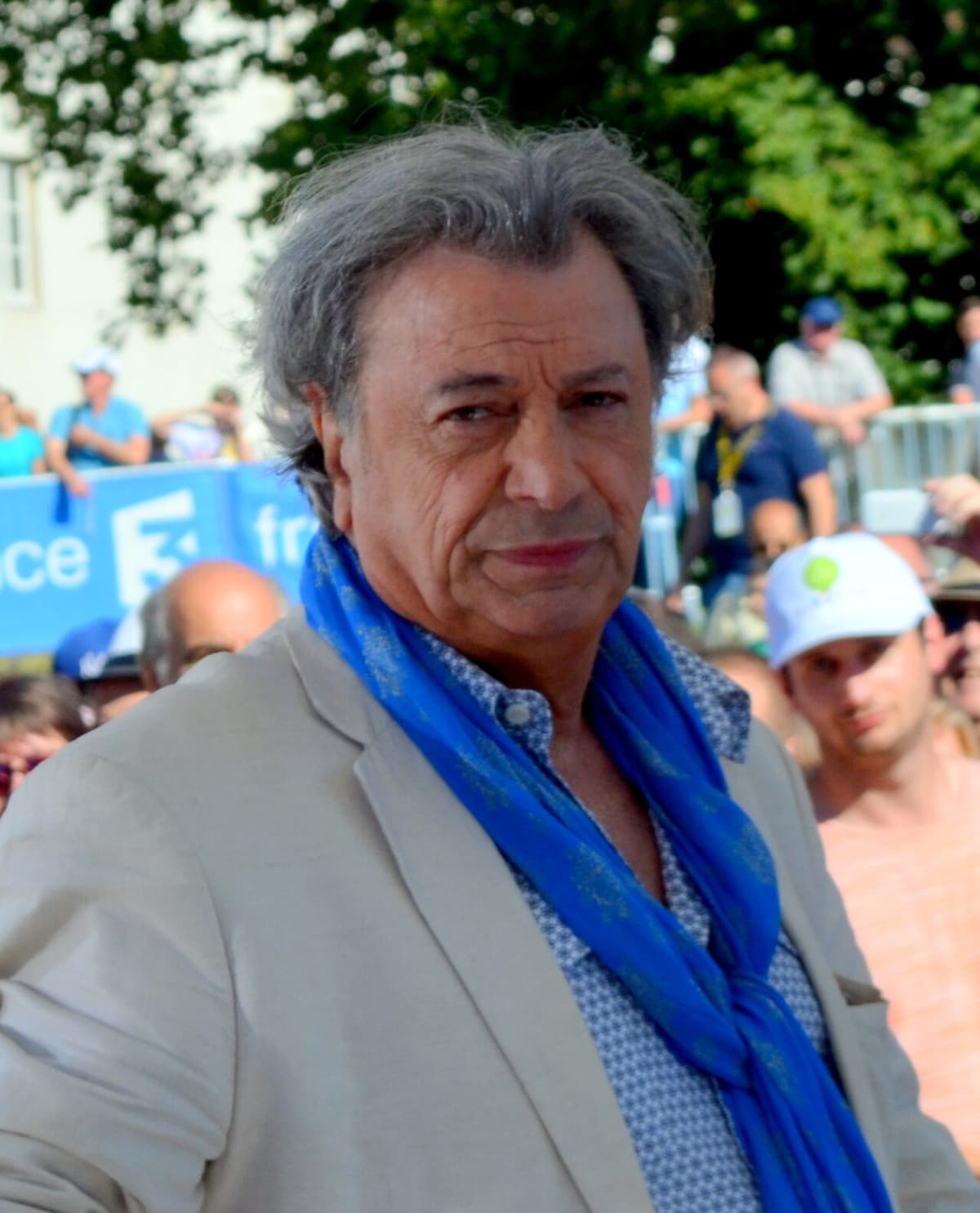
Hervé Vilard
Sweeping orchestral pop and velvet-voiced chanson that feels like a sunset over the Mediterranean. Dramatic, romantic, and deeply nostalgic music for long goodbyes.
Sweeping orchestral pop and velvet-voiced chanson that feels like a sunset over the Mediterranean. Dramatic, romantic, and deeply nostalgic music for long goodbyes.
Hervé Vilard is the architect of the grand French pop heartbreak. His music is defined by a lush, widescreen orchestral sound that balances the intimacy of traditional chanson with the soaring drama of 1960s and 70s variety pop. It is music that feels expensive and emotional, characterized by sweeping string sections, bright brass flourishes, and a vocal delivery that moves effortlessly from a confidential whisper to a powerful, stage-filling belt.
What truly sets Vilard apart is his unique cross-cultural DNA. Having spent a significant portion of his career in Latin America, his sound incorporates a specific Mediterranean warmth and a rhythmic sensibility that bridges the gap between Paris and Buenos Aires. His voice carries a certain 'patina' of experience, making even his most polished studio recordings feel grounded in real, lived-in sentimentality.
New listeners should start with his iconic breakthrough 'Capri c'est fini' to understand his foundational impact on the French canon. From there, explore his late-70s work like 'Nous' to hear how he successfully integrated modern pop sensibilities into his classic crooner identity. It is the perfect soundtrack for moments that require a touch of cinematic melodrama.
Hervé Vilard (born René Vilard; 24 July 1946 in Paris, France) is a French pop singer, who first became famous in the 1960s. His first single "Capri c'est fini" became an international hit in 1965 and rendered him instantaneously famous. The song sold 3.3 million copies. "Nous" (1979), "Reviens" (1981) and "Méditerranéenne" (1983) are among his other big hits. He is famous in Latin America, as he settled there between 1969 and 1978, singing in Spanish. His long national and international musical career as a singer, songwriter and stage performer spans four decades. In 1992, in recognition of his contributions to French culture, he was awarded the Ordre national du Mérite in a ceremony at the Parisian Théâtre des Variétés hosted by Jean-Paul Belmondo.
Shares traditional pop, soft rock, latin pop (subgenres); orchestral arrangement, studio polished, analog warmth (production style)

Shares orchestral arrangement, studio polished, analog warmth (production style); latin pop, traditional pop (subgenres)
Shares traditional pop, soft rock, latin pop (subgenres); orchestral arrangement, studio polished, analog warmth (production style)
Shares traditional pop, soft rock, latin pop (subgenres); sentimental, melancholic, romantic (moods)

Shares traditional pop, soft rock, latin pop (subgenres); orchestral arrangement, studio polished, analog warmth (production style)
Shares traditional pop, soft rock, latin pop (subgenres); orchestral arrangement, studio polished, analog warmth (production style)
Shares traditional pop, soft rock, latin pop (subgenres); orchestral arrangement, studio polished, analog warmth (production style)
Shares traditional pop, soft rock, latin pop (subgenres); analog warmth, orchestral arrangement, studio polished (production style)
Shares romantic, melancholic, sentimental (moods); traditional pop, soft rock (subgenres)
Cassette uses generative AI to enrich its catalog. How we use AI →