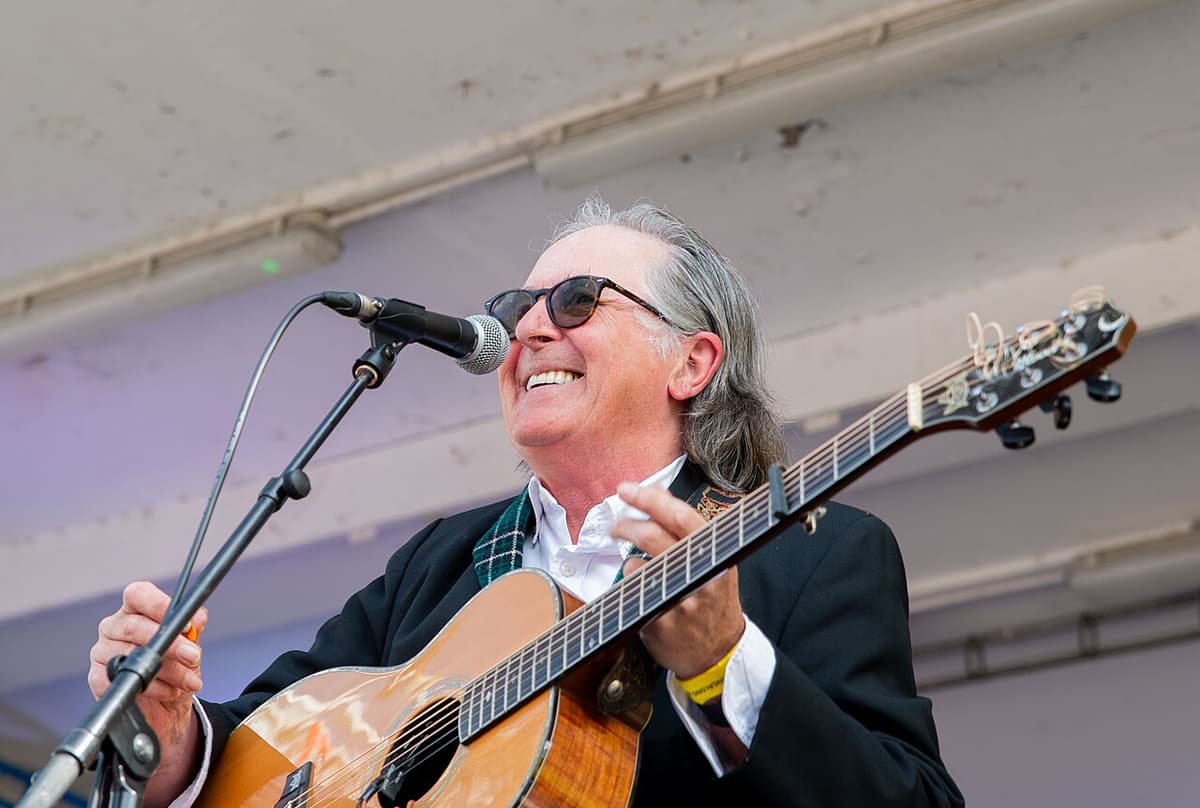
Gilles Servat
Stirring Breton folk that balances militant protest with ancient maritime mythology. A deep, resonant baritone voice carrying the soul of the Celtic coast.
Stirring Breton folk that balances militant protest with ancient maritime mythology. A deep, resonant baritone voice carrying the soul of the Celtic coast.
Gilles Servat is a foundational figure in the Breton cultural revival of the late 20th century. Born in Tarbes but rooted in the Nantes region, his career was ignited by the 1972 release of 'La Blanche Hermine', a song that transformed into a de facto national anthem for Brittany.
His sound identity is defined by a rich baritone vocal style and a commitment to the Breton language, often blending traditional Celtic instrumentation with the structural sensibilities of the French 'chanson' tradition. Throughout the 1990s, his participation in Dan Ar Braz's 'Héritage des Celtes' project solidified his status as a pan-Celtic ambassador. Critically, he is respected for his refusal to allow his work to be co-opted by extremist political groups, famously re-asserting the inclusive, regionalist intent of his lyrics. Beyond music, his work as a fantasy novelist informs the deep mythological layers of his songwriting, creating a unique synthesis of maritime realism and Celtic lore.
Shares neofolk, flute, narrating, acoustic folk (subgenre)
Shares celtic, fiddle, flute, narrating (signature)
Shares baritone, flute, ocean, acoustic folk (signature)
Shares baritone, ocean, narrating, acoustic folk (signature)
Shares harp, neofolk, acoustic folk, bonfire (instrumentation)
Shares celtic, flute, narrating, acoustic folk (signature)
Shares neofolk, flute, narrating, acoustic folk (subgenre)
Shares harp, neofolk, fiddle, flute (instrumentation)
Shares neofolk, flute, acoustic folk, bonfire (subgenre)
Cassette uses generative AI to enrich its catalog. How we use AI →