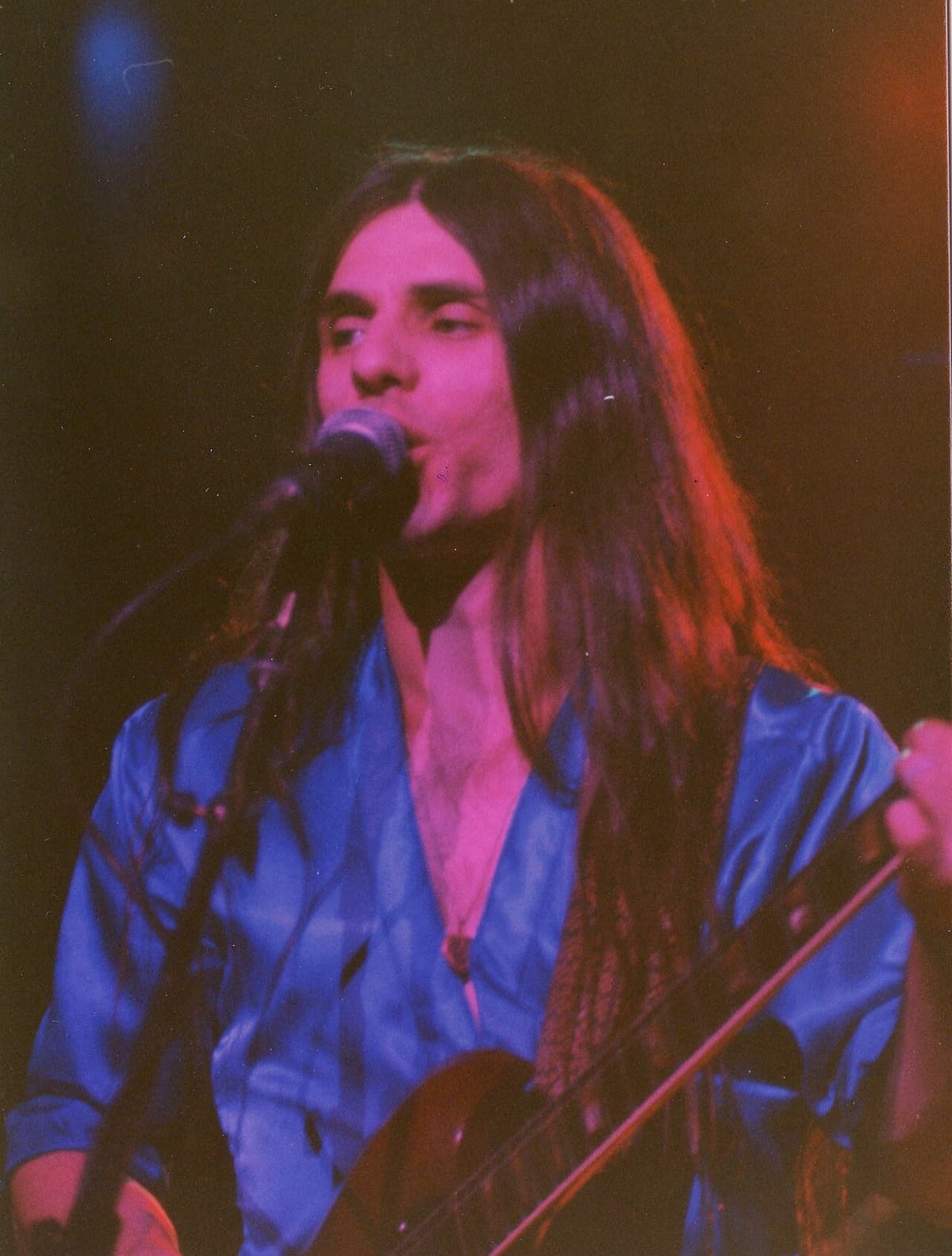
Frank Marino & Mahogany Rush
High-velocity psychedelic blues that pushes the electric guitar to its absolute limit. Intense, improvisational, and deeply rooted in the heavy sounds of the 1970s.
High-velocity psychedelic blues that pushes the electric guitar to its absolute limit. Intense, improvisational, and deeply rooted in the heavy sounds of the 1970s.
Imagine a wall of vintage amplifiers glowing hot in a dark room, vibrating with the sound of a guitar that seems to have a mind of its own. This is music that lives in the space between a heavy blues shuffle and a cosmic psychedelic journey. It is fast, loud, and technically staggering, but it never loses that thick, analog warmth that defines the best of 70s hard rock. The energy is constant, driven by a rhythm section that holds the line while the lead guitar takes flight into the stratosphere.
What truly sets this apart is the sheer velocity and fluidity of the lead playing. While many of their contemporaries were content with standard blues licks, Frank Marino introduced a level of jazz-influenced precision and speed that was years ahead of its time. The use of effects like wah and phase shifting isn't just for decoration; it's used to sculpt a sound that feels liquid and alive, mirroring the 'mahogany rush' of a psychedelic experience without ever becoming aimless or soft.
For the uninitiated, the best way to experience the band is through their live recordings. Start with the 1978 'Live' album to hear the raw power and improvisational fire that made them a legendary touring act. It captures the transition from their early psychedelic roots into the more muscular, hard-driving sound that would influence generations of guitar virtuosos.
Mahogany Rush was a Canadian rock band led by guitarist Frank Marino. Formed in Montreal, Quebec in 1969, the band had its peak of popularity in the 1970s, playing venues as large as California Jam II. The band is perhaps best known for Marino's soaring lead guitar which bears a strong resemblance to the playing of Jimi Hendrix. Long-term members of the band have included bassist Paul Harwood and drummer Jimmy Ayoub, and Frank's brother Vince on guitar; Frank Marino is the sole continuous member of the band. Starting in the late 1970s, the group recorded and toured as Frank Marino & Mahogany Rush.
Shares psychedelic rock, hard rock, blues rock (subgenres); analog warmth, live recording, dynamic range (production style)
Shares psychedelic rock, hard rock, blues rock (subgenres); analog warmth, live recording, reverb heavy (production style)
Shares hard rock, psychedelic rock, progressive rock (subgenres); analog warmth, live recording, reverb heavy (production style)
Shares analog warmth, live recording, reverb heavy (production style); psychedelic rock, hard rock, blues rock (subgenres)
Shares hard rock, psychedelic rock, progressive rock (subgenres); electric guitar, drums, bass (instrumentation)
Shares psychedelic rock, hard rock, blues rock (subgenres); analog warmth, live recording, dynamic range (production style)
Shares psychedelic rock, hard rock, blues rock (subgenres); analog warmth, live recording, reverb heavy (production style)
Shares analog warmth, live recording, reverb heavy (production style); hard rock, progressive rock, psychedelic rock (subgenres)
Shares psychedelic rock, hard rock, blues rock (subgenres); live recording, analog warmth, dynamic range (production style)
Shares progressive rock, hard rock, jazz fusion (subgenres); intense, restless, mysterious (moods)
Shares psychedelic rock, blues rock, progressive rock, electric guitar (signature)
Cassette uses generative AI to enrich its catalog. How we use AI →


