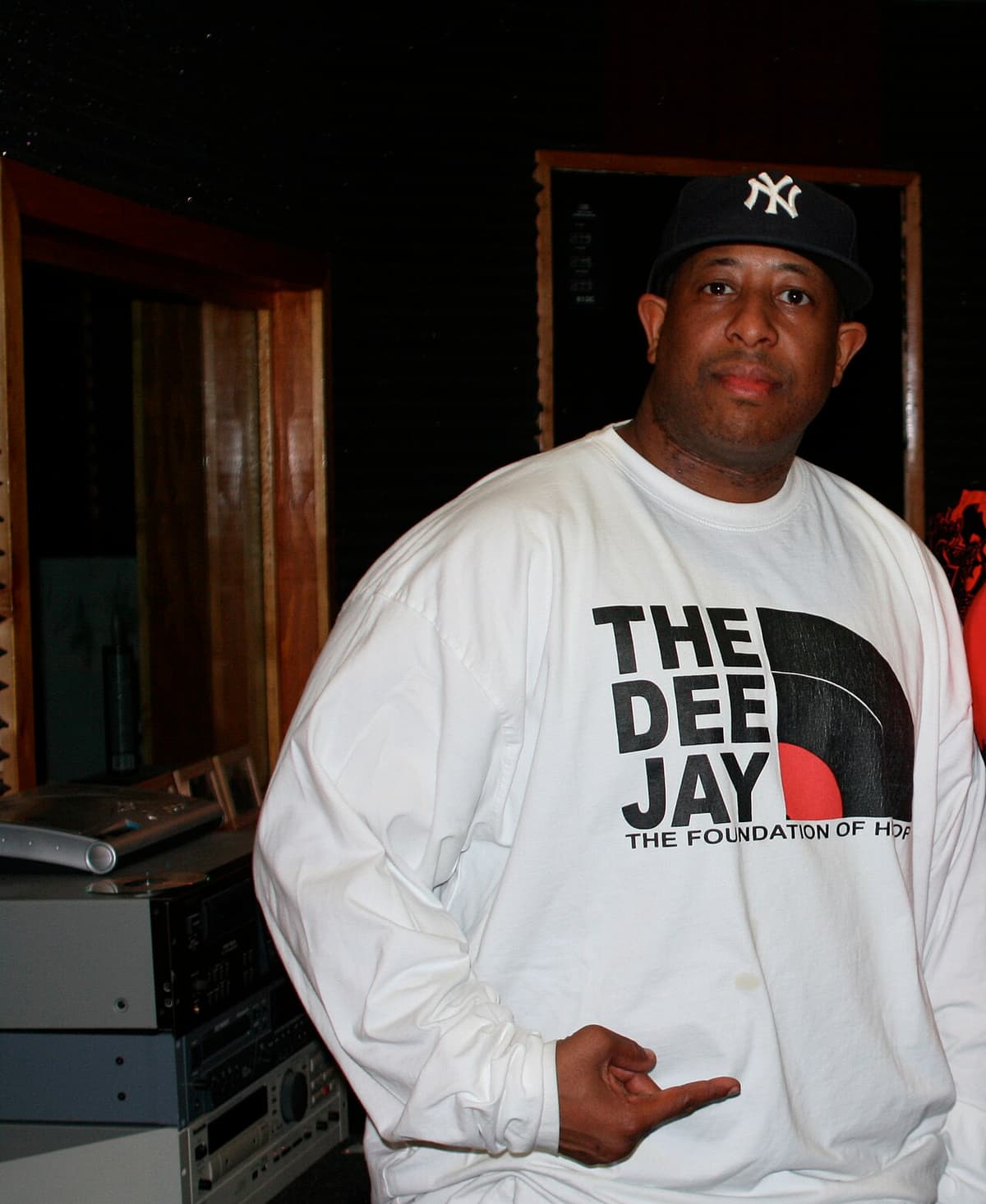
DJ Honda
Gritty, transpacific boom bap built on surgical turntablism and dusty jazz loops. The sound of a 1990s New York midnight through a Japanese lens.
Gritty, transpacific boom bap built on surgical turntablism and dusty jazz loops. The sound of a 1990s New York midnight through a Japanese lens.
DJ Honda (Katsuhiro Honda) is a pivotal figure in global hip-hop, serving as the primary bridge between the Japanese and American underground scenes during the 1990s. Emerging from a rock background, Honda pivoted to turntablism and achieved international recognition after placing as runner-up in the 1992 New Music Seminar Battle for World Supremacy.
His sound is defined by a strict adherence to the boom bap aesthetic, characterized by dusty samples, high-precision scratching, and a gritty, urban atmosphere. His career arc is notable for his move to the United States, where he collaborated with a 'who's who' of hip-hop royalty, including Gang Starr, Wu-Tang Clan, and The Alkaholiks. Beyond music, he established one of the first successful hip-hop lifestyle brands with his 'h' logo apparel. Critical consensus positions him as a 'producer's producer' whose technical skill on the turntables influenced a generation of DJs. His work remains a cornerstone for collectors of 90s underground rap and those interested in the globalization of hip-hop culture.
Shares boom bap, abstract hip-hop (subgenres); confident, brooding, nostalgic (moods)
Shares boom bap, abstract hip-hop (subgenres); confident, nostalgic (moods)
Shares boom bap, abstract hip-hop (subgenres); rap, spoken_word (vocal style)
Shares boom bap, abstract hip-hop (subgenres); sample_based, lo_fi, analog_warmth (production style)
Shares boom bap, abstract hip-hop (subgenres); sample_based, lo_fi, analog_warmth (production style)
Shares boom bap, abstract hip-hop (subgenres); confident, brooding, nostalgic (moods)
Shares boom bap, abstract hip-hop (subgenres); confident, brooding, nostalgic (moods)
Shares boom bap, abstract hip-hop (subgenres); rap, spoken_word, instrumental_only (vocal style)
Cassette uses generative AI to enrich its catalog. How we use AI →