Die Ärzte
High-energy German punk rock that balances razor-sharp satire with massive pop hooks. It is the sound of a stadium-sized band that refuses to take itself seriously.
High-energy German punk rock that balances razor-sharp satire with massive pop hooks. It is the sound of a stadium-sized band that refuses to take itself seriously.
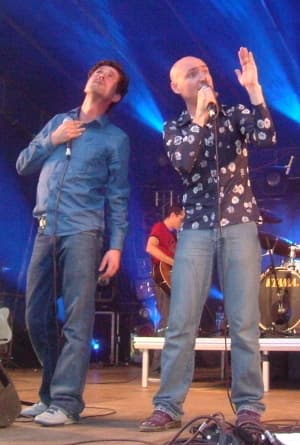
Die Ärzte are one of Germany's most commercially successful and culturally significant rock bands, often cited alongside Die Toten Hosen as the twin pillars of German punk. Formed in West Berlin in 1982, the trio of Farin Urlaub, Bela B, and Rodrigo González (who joined in 1993) evolved from the underground 'Fun-Punk' scene into a mainstream phenomenon.
Their sound identity is built on a foundation of 70s punk and 60s beat music, characterized by sophisticated vocal harmonies and a high level of technical proficiency rarely seen in the genre. Throughout their career, they have navigated censorship battles, a high-profile breakup in 1988, and a triumphant reunion in 1993. Their cultural position is that of the 'eternal teenagers' of German rock, using humor as a weapon against both the establishment and the self-seriousness of the music industry. Critically, they are lauded for their lyrical dexterity and their ability to maintain a DIY punk ethos while selling out stadiums. They remain a massive influence on German-language rock, bridging the gap between alternative subcultures and broad pop appeal.
Shares studio_polished, maximalist, hand_played (production style); playful, rebellious, bittersweet (moods)

Shares playful, rebellious, bittersweet (moods); studio_polished, hand_played, maximalist (production style)
Shares punk rock, pop rock, new wave (subgenres); playful, rebellious, energetic (moods)
Shares playful, rebellious, bittersweet (moods); pop rock, power pop, new wave (subgenres)
Shares pop rock, power pop, punk rock (subgenres); playful, rebellious, bittersweet (moods)
Shares playful, rebellious, energetic (moods); punk rock, power pop (subgenres)
Cassette uses generative AI to enrich its catalog. How we use AI →