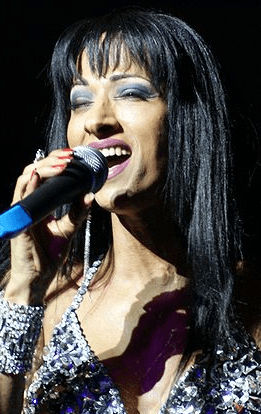
Dana International
High-energy Eurodance anthems and Mediterranean pop hooks. Empowering, theatrical club music that feels like a victory lap under neon lights.
High-energy Eurodance anthems and Mediterranean pop hooks. Empowering, theatrical club music that feels like a victory lap under neon lights.
Dana International delivers a high-octane blend of Eurodance and Mediterranean pop that is unapologetically theatrical and relentlessly catchy. Her sound is defined by driving four-on-the-floor rhythms, shimmering synth layers, and a vocal delivery that oscillates between club-ready grit and operatic grandiosity. It is music designed for the biggest possible stage, carrying an inherent sense of celebration and defiance.
What truly distinguishes her is the seamless integration of Middle Eastern melodic sensibilities with the polished, synthetic gloss of late-90s European club music. Her tracks often feature dramatic builds and explosive choruses that feel like a sonic manifestation of self-actualization. There is a specific warmth to her electronic arrangements that bridges the gap between the cold precision of techno and the organic soul of Israeli pop.
Start with the 1998 hit 'Diva' to understand her cultural impact and signature anthemic style. From there, explore the album 'Free' for a more globalized take on her dance-pop formula, or 'Umpatampa' for the raw, high-energy club roots that first made her a household name in Israel.
Sharon Cohen (Hebrew: שרון כהן; born 2 February 1969), professionally known as Dana International (Hebrew: דנה אינטרנשיונל), is an Israeli pop singer. She has released eight albums and three additional compilation albums. She was the winner of the Eurovision Song Contest 1998 in Birmingham with the song "Diva". After consolidating her initial commercial success with the albums Umpatampa (1994) and Maganuna (1996), she was selected in 1998 to represent Israel in the Eurovision Song Contest with her song "Diva". Placing first at the international competition, she came to public attention throughout Europe. Dana following up this success with the albums Free (1999), Yoter VeYoter (2001), HaHalom HaEfshari (2002) and Hakol Ze Letova (2007), she represented Israel in Eurovision a second time in 2011, this time with the song "Ding Dong", which failed to make it into the final. The same year, she became a judge on the Israeli television music talent contest Kokhav Nolad.

Shares electropop, dance-pop, synth-pop (subgenres); studio polished, drum machine, maximalist (production style)
Shares dance-pop, eurodance, synth-pop (subgenres); studio polished, drum machine, maximalist (production style)
Shares studio polished, drum machine, maximalist (production style); dance-pop, electropop, eurodance (subgenres)

Shares studio polished, drum machine, maximalist (production style); electropop, dance-pop, synth-pop (subgenres)
Cassette uses generative AI to enrich its catalog. How we use AI →